 [Herald Business = Reporter Ham Young-hoon] The Punch Bowl in Yanggu County — where the bravery of South Korea’s military is remembered — sits in Haean-myeon. The name locally translates to “where pigs played,” a phrase that also hints at an old meaning tied to the seaside.
Locals say the site was once a massive lake. Over time, erosion left a circular ridge while the standing water drained, transforming the area into a bowl-shaped plain that people liken to a giant fruit bowl or basin.
Across Asia, large lakes were often called “seas.” For example, the Malgal people — a branch of the Korean ethnicity that later migrated west and founded what Westerners confusingly link with the Huns and call Hungary (Magyarország) — named lakeside villages with characters meaning “sea village.” Korean and Chinese historical records likewise show communities near the Yalu River describing large lakes as seas.
Local cultural tourism guides explain that the place was originally called a coastal area meaning “great lake or sea.” After the water drained and snakes became common, villagers released many pigs to control the snakes. Because pigs then roamed the area freely, people began calling it a place where pigs relaxed (亥安), a name that evolved into today’s Punch Bowl.
Determined soldiers pushed into and occupied this area near the end of the Korean War. Today, peace has returned, and the calm fields grow healthy crops like potatoes and siraegi (dried radish greens). For border communities in Yanggu as well as Cheorwon, Hwacheon, Inje and Goseong, peace means food, sunshine and a chance to thrive.
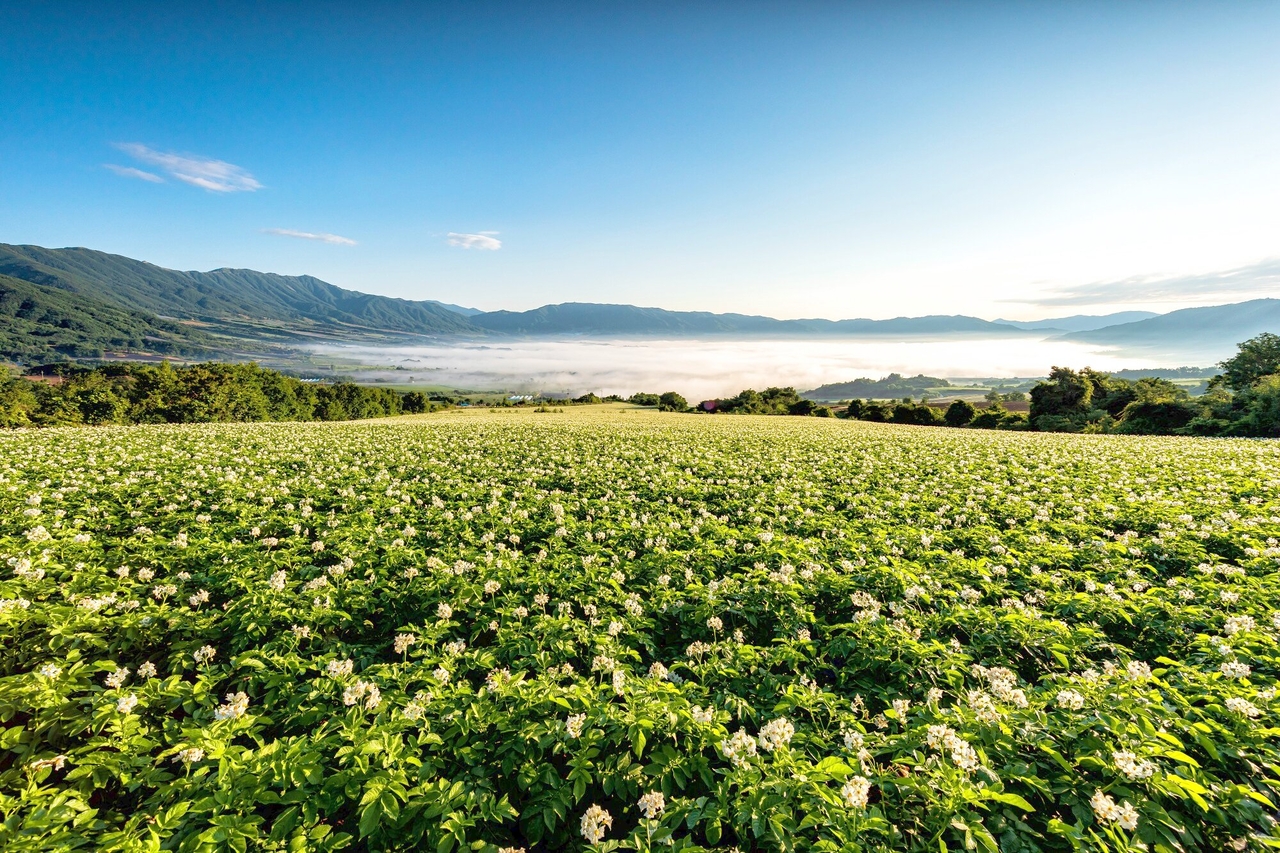
One of the DMZ Peace Trail routes drawing public attention is the Punch Bowl circuit in Yanggu, where organizers will hold a two-day “2026 Potato Blossoms & Forest Walk” on June 6–7. The festival blends pristine ecology, cultural storytelling, wholesome local food and the warm hospitality of Yanggu residents.
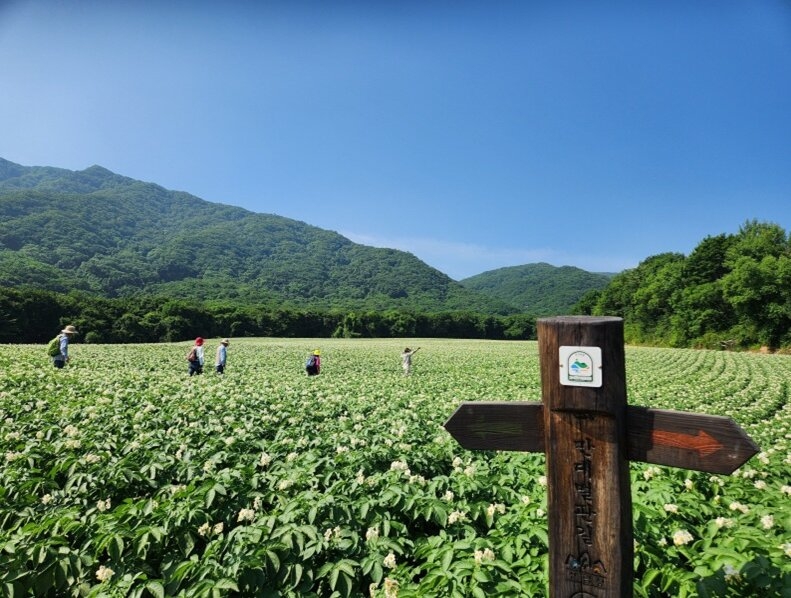 Yanggu County and the Korea Mountain & Trekking Support Center organized the event so participants can enjoy early-summer potato blossoms across the Punch Bowl area and experience the DMZ forest trails up close.
Walkers will cover a 6.6㎞ route (about 4.1 miles) that highlights the DMZ Punch Bowl ring trail’s signature stretches, including the Mandae Plain Path and O-yubat Path. The circular course starts at the DMZ Native Plant Garden, then continues to the Songgabong rest area, Da-eam Valley, the Potato Blossom Path and Mandae Reservoir before returning to the plant garden.
The experience pairs the hike with local flavors and hands-on activities. At the outdoor Seonghwangdang rest area, all participants will be served a “forest meal” made with regional specialties and wild greens. At the Mandae Reservoir rest stop, visitors can try making potato pancakes — Gangwon-style “buchigi” — and savor light snacks.
A market featuring regional farm products will also run during the event. Visitors can shop for siraegi, apples, honey, dried vegetables and pickled specialties made from plantain, Jerusalem artichoke shoots and mountain garlic.
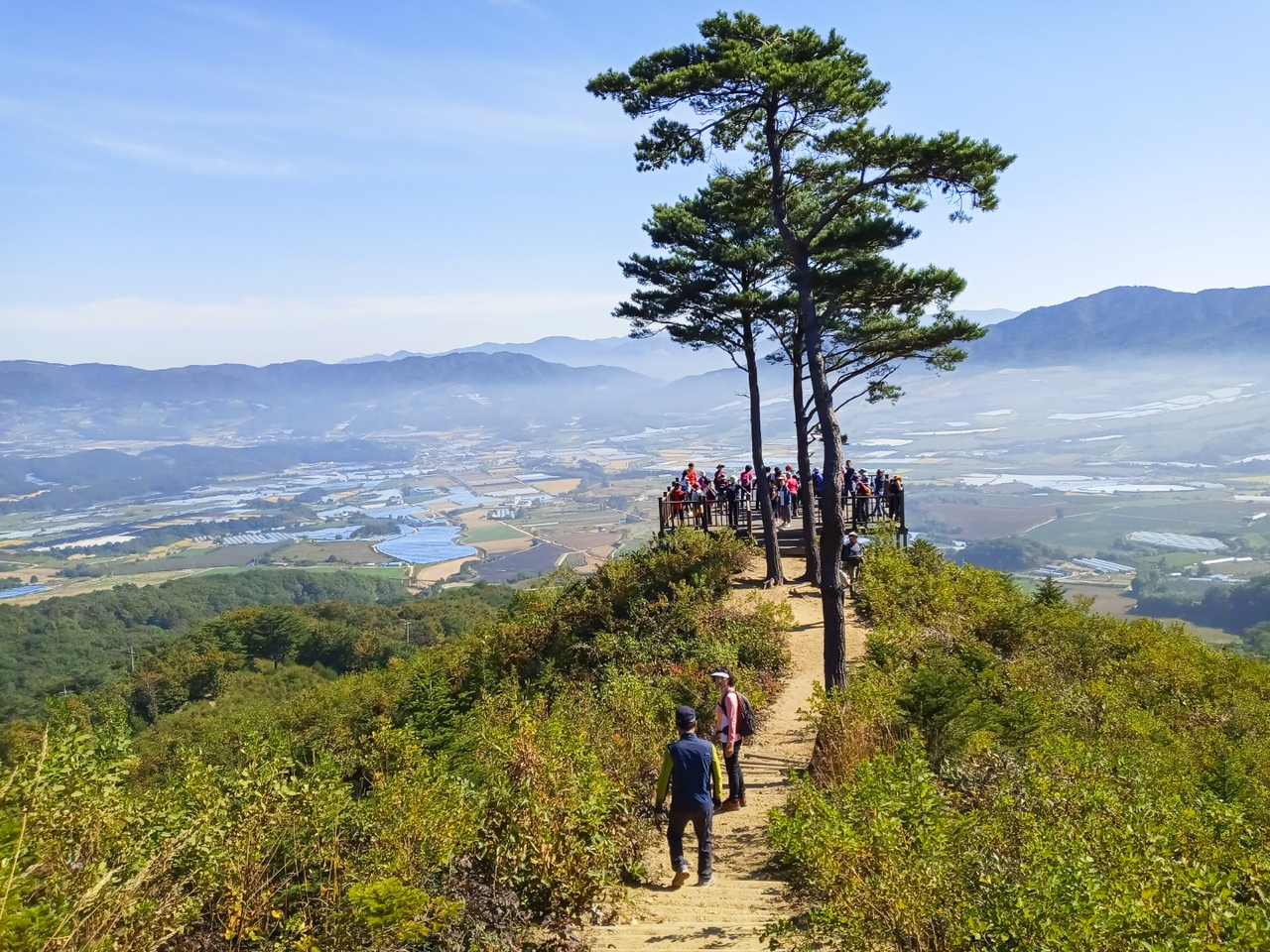 This event is more than a group walk — it’s a chance to feel the layered history of a divided nation, to reflect on the meaning of peace at the Punch Bowl, to appreciate nature’s value and the local ecosystem, and to find renewal for body and mind.
Attendance is limited to 200 people total — 100 on June 6 and 100 on June 7 — with registration handled on a first-come, first-served basis through the “Supnadeul-e” website. The 10,000-won participation fee will be fully refunded as Yanggu Love gift certificates (approximately $7.50 USD).