On the afternoon of the 25th, at about 4 p.m., an elementary school student crossing a crosswalk near the central intersection in Songu-ri, Soheul-eup, Pocheon, Gyeonggi Province had his neck caught on an illegally secured banner cord. He fell and briefly lost consciousness.
The 11-year-old boy, identified only as A, was crossing with friends on a holiday when a thin, hard-to-see banner fastening cord caught his neck and knocked him to the ground.
The impact to his neck caused him to lose consciousness temporarily at the scene.
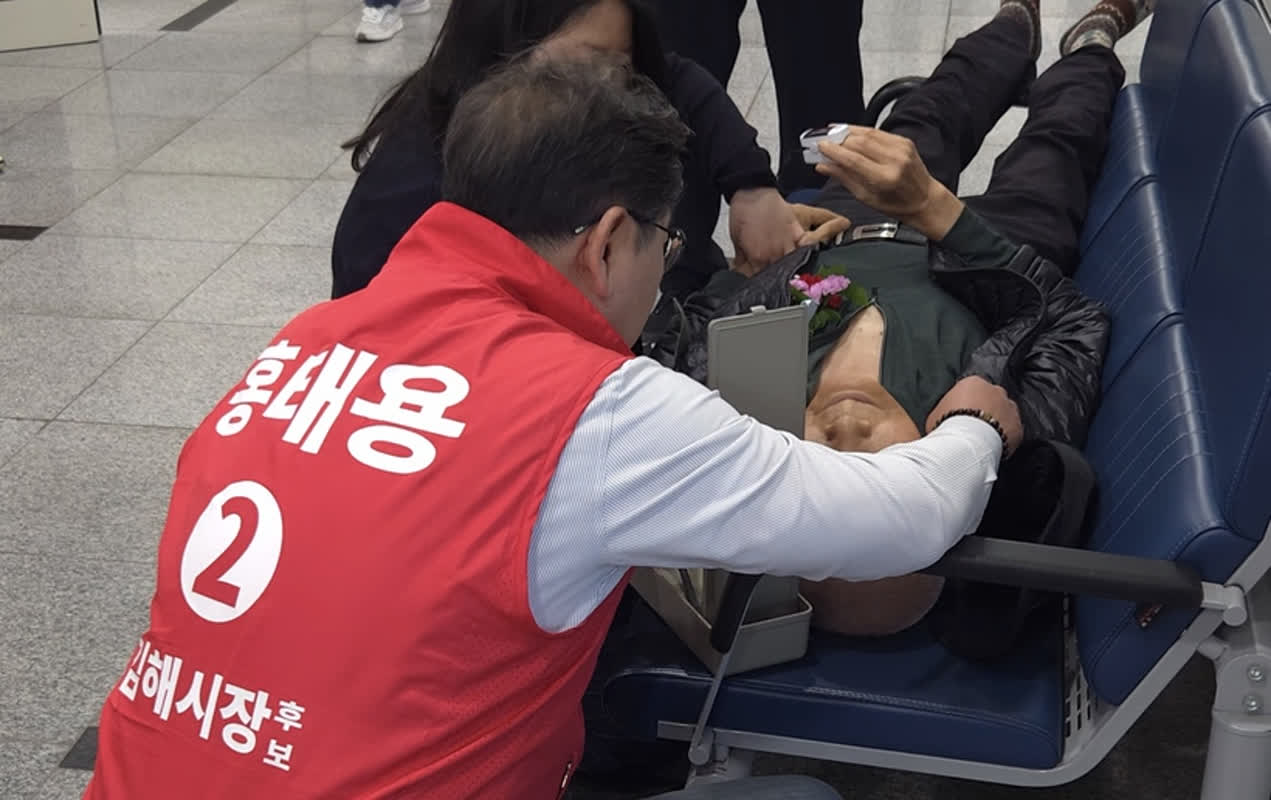
Pocheon City Councilor Kim Hyun-kyu happened to be passing by, witnessed the accident and called 119, South Korea's emergency services.
The fire department said the student had abrasions and other injuries to his neck and experienced a temporary loss of consciousness. He was transported to a hospital for further testing to determine his exact condition.
Residents have long complained that the central intersection in Songu-ri, where the incident occurred, is cluttered with advertising and event banners, posing a threat to pedestrian safety.
The area, with small parks and a cluster of shops, attracts many children and older adults. Despite that, low-hanging banner cords along pedestrian routes have been left in place.

Residents are calling the accident a preventable disaster.
One resident said, \"The thin cord is nearly invisible at children's eye level,\" adding that the situation goes beyond neglect and reflects a dangerous complacency about safety.
The problem persisted after the accident.
At the time of reporting, banners remained in place and had not been removed. The cords are even harder to see in dim evening light, raising concerns about additional accidents.
Another resident said, \"Crosswalks should be the safest spaces, but this one has become dangerous. It's hard to accept that it was left as-is after the accident. Even on holidays, we need prompt action and sustained maintenance and monitoring.\"
Pocheon city officials said they are investigating how the banners were installed and how they were managed.