A poll taken three days before the Democratic Party’s Gyeonggi governor primary confirms a two-horse dynamic at the top. The race is shaping into a test of whether the frontrunner can consolidate a majority and a tight contest between second and third place to reach a possible runoff.
The People Power Party’s contest, by contrast, is defined more by an absence of consolidated candidates than by head-to-head competition: the undecided share exceeds support for any individual contender. The overall party preference margin also tilts heavily toward the Democratic Party, with more than a twofold advantage in some measures.
On April 2, Incheon Ilbo published results from a Hangil Research survey of 1,003 Gyeonggi residents aged 18 and older, conducted March 30–April 1 (margin of error ±3.1 percentage points). The survey found a 28.2-point gap in overall support between the Democratic Party and the People Power Party. When respondents evaluated party candidates specifically, that gap widened to 32.3 points.
Those results indicate the broader electoral terrain currently favors the Democratic Party.
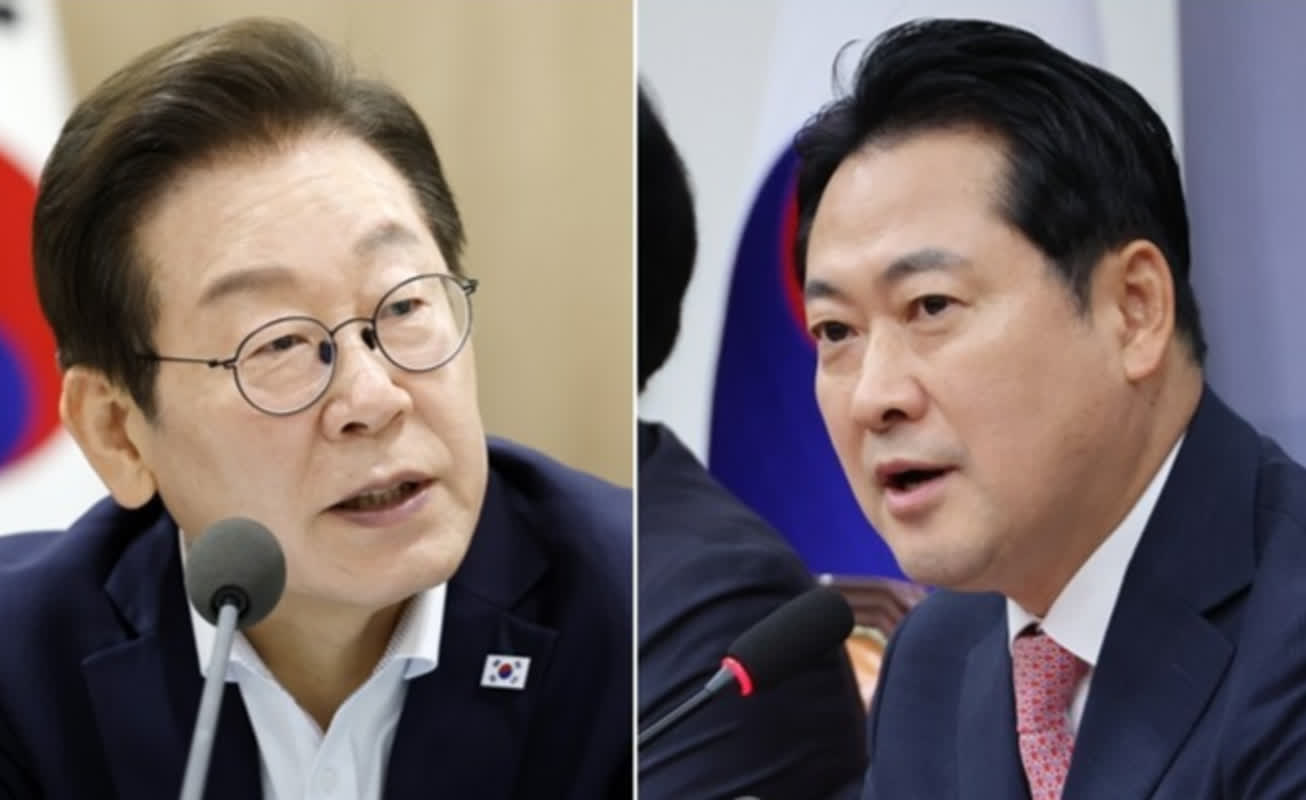
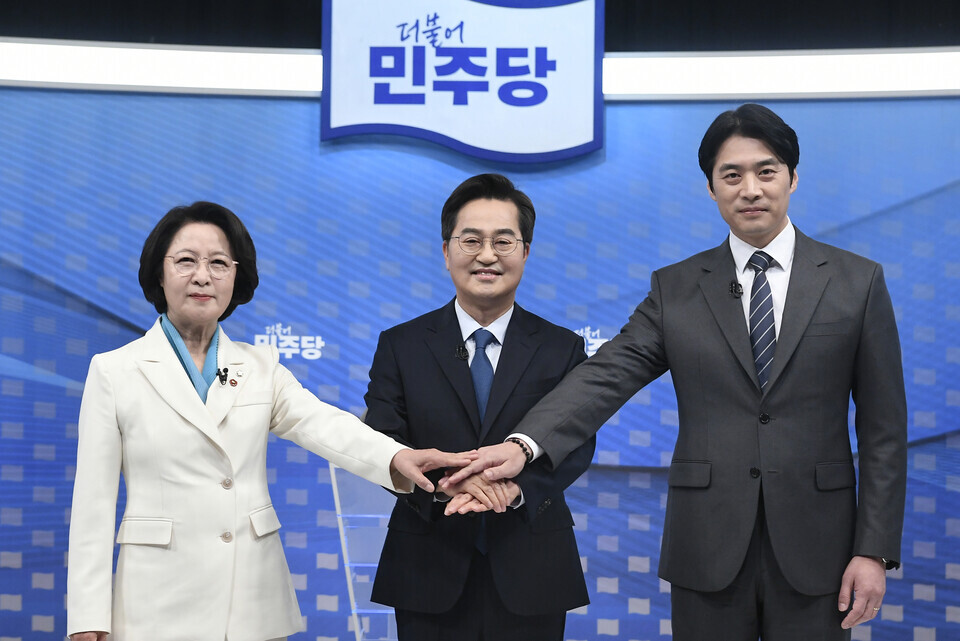
Within the Democratic primary, competition remains intense among three candidates with distinct electoral bases. Rep. Chu Mi-ae leads at 27.3%, Gov. Kim Dong-yeon follows at 23.7%—a difference within the poll’s margin of error—and Rep. Han Jun-ho trails at 15.2%.
Chu demonstrates strong party consolidation, registering 41.4% support among Democratic loyalists. Kim’s relative strength lies with centrists, where he commands 31.4%, signaling greater cross-cutting appeal beyond the core base.
Age breakdowns show Chu’s support concentrated in voters in their 40s and 50s; Kim performs best among voters aged 18–29 and those in their 60s and 70-plus; Han draws his main backing from voters in their 30s.
The Democratic Party’s final primary will be conducted as a public-participation poll on April 5–7; only party members, Democratic supporters, and unaffiliated voters may take part.
Among unaffiliated voters—whose preferences can be as consequential as those of the party base—Kim leads with 17.5%, while Chu and Han are tied at 9.3% each.
The party has said it will hold a runoff between the top two finishers on April 15–17 if no candidate secures a majority in the final primary. Securing second place is therefore not just a matter of ranking but a strategic gateway to becoming the eventual nominee.
Where the supporters of eliminated candidates shift their votes could materially change the outcome, so each campaign is likely to focus heavily on runoff-entry strategies. At the same time, frontrunners will pursue consolidation strategies aimed at winning outright majorities and avoiding a runoff.
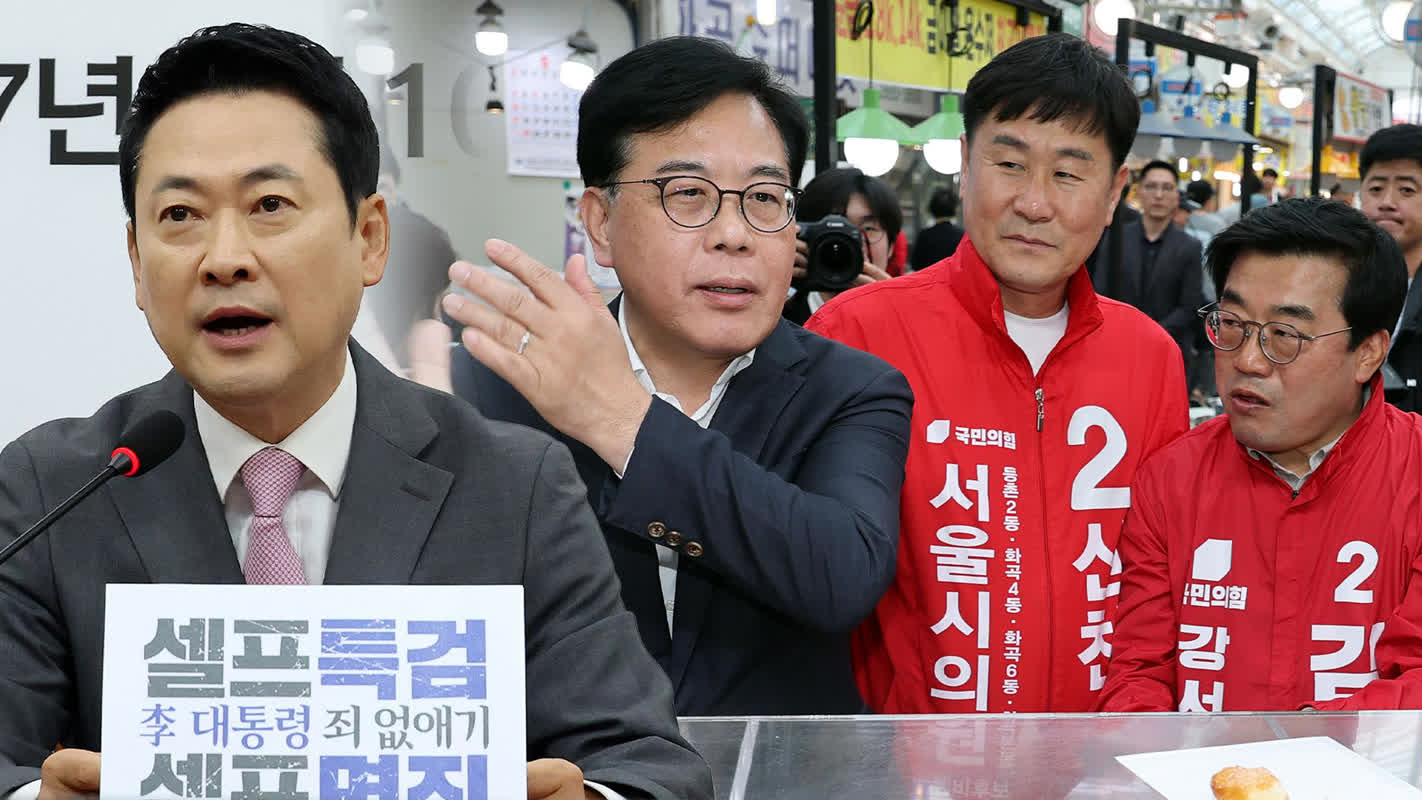
In the People Power Party primary, the more striking problem is the lack of established frontrunners rather than a close competitive field. Yang Hyang-ja registers 13.7% and Ham Jin-kyu 7.5%, but 47.7% of respondents said they have no preferred candidate and 23.9% said they don’t know—putting the undecided share above 70%.
Even among centrist voters—often the most fluid bloc—neither PP candidate reaches double-digit support.
Indeed, 52.0% of centrists reported having no preferred candidate. Among the so-called middle generation (ages 30–50), between 54.0% and 62.6% said they have no preferred candidate.
Analysts interpret these figures as evidence that the People Power Party’s candidate field has yet to coalesce into a clear voter choice.
/Kim Hyun-woo kimhw@incheonilbo.com
※Note: Incheon Ilbo commissioned Hangil Research to conduct this poll from March 30 to April 1 among 1,003 Gyeonggi residents aged 18 or older. Interviews used automated responses (ARS) to mobile virtual numbers (100.0%), and the response rate was 5.2%. Results were weighted by gender, age, and region based on the Ministry of the Interior and Safety’s registered population as of the end of February 2026. The margin of error is ±3.1 percentage points at the 95% confidence level. For details, see the National Election Survey Deliberation Commission website.