Wine is the best gift God has given to man.
- Plato (Ancient Greece, 427–428 B.C.)
SisaWeek reporter Park Seol-min Alcohol has been with humanity since the dawn of civilization. Among those drinks, wine—made by fermenting grapes—remains one of the most adored. Since wine first emerged around 6,000 B.C. in Tbilisi, Georgia, winemakers worldwide have been refining their craft to improve quality.
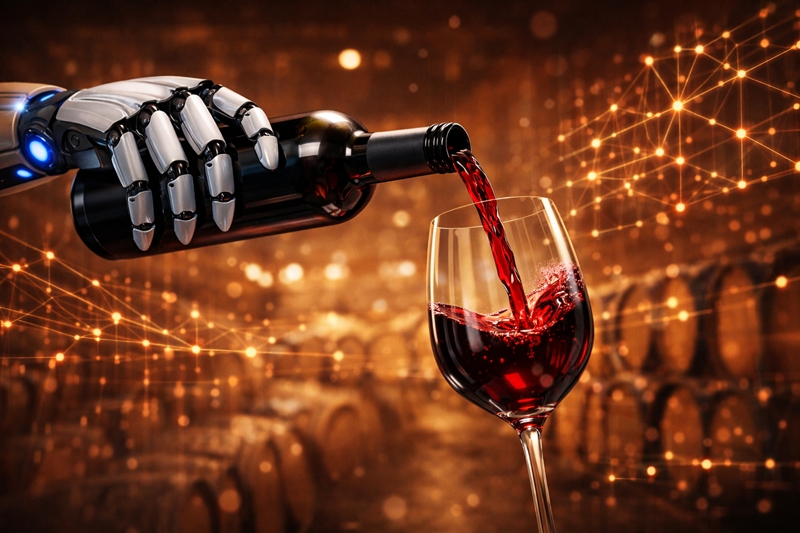
Now, after more than 8,000 years alongside human history, wine is stepping into a new era thanks to cutting-edge technology. At the center of that shift is artificial intelligence (AI). From the vineyard to the cellar—farming, production, recipe development, even storage—AI is creating a fresh paradigm for the wine industry.
◇ How AI is reinventing 'smart' winemaking
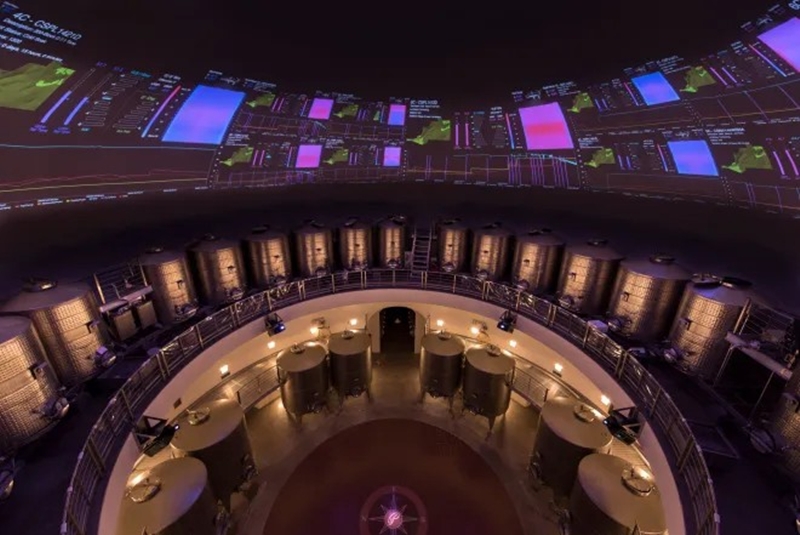
AI is changing winemaking from the ground up. A standout example is Palmaz Vineyards in Coombsville AVA, Napa Valley, California. Founded in 1997, the winery now uses advanced AI systems throughout fermentation and production.
Palmaz operates an extensive underground wine cave and runs an AI-based Fermentation and In-line Control System (FILCS). Fermentation tanks are fitted with CO₂ sensors and linked to AI platforms that analyze temperature, sugar levels, and acidity in real time. The system automatically adjusts when it detects anomalies during maceration and fermentation. Palmaz reports that this approach has significantly raised wine quality and cut losses from oxidation, saving the winery more than $10 million (approximately 13.3 billion KRW) annually.
Palmaz’s adoption of AI isn’t just a marketing talking point. Multiple studies across Europe—home to many of the world’s major wine-producing countries—show AI can materially improve wine quality. Greece, one of the oldest wine-producing nations, continues to publish notable research and tech advances each year.
One study worth noting came from researchers at the University of Ioannina and Aristotle University of Thessaloniki, published in June last year. They applied an AI-driven Internet of Things (IoT) system to an electronic nose (E-nose) and an electronic tongue (E-tongue) to monitor fermentation in real time.
The team’s E-nose measured CO₂ emissions during production, while the E-tongue tracked acidity, sugar content, and color changes. They trained a proprietary AI model called V-LSTM on time-series fermentation data—temperature, sugar, and more—to predict wine conditions. This method reduced prediction errors during fermentation by 45% and identified the key variables affecting quality with 87% accuracy.
With results like these, AI’s influence in the wine market is growing fast. According to HTF Market & Research, the AI-based wine production market was estimated at $2.7 billion (approximately 3.6 trillion KRW) last year and is projected to reach $6.3 billion (approximately 8.4 trillion KRW) by 2033, growing at an average annual rate of 11.2%.
◇ Flawless storage: no room for error
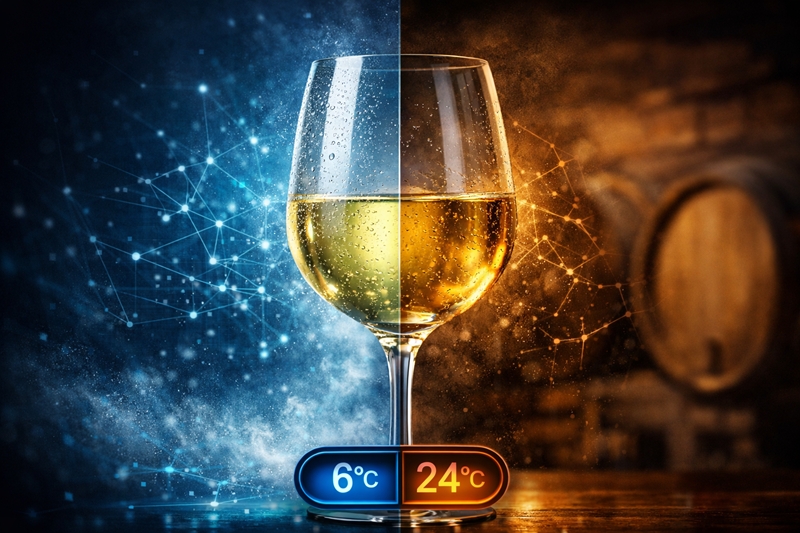
No matter how exceptional the grapes or meticulous the winemaking, storage is often the make-or-break factor for quality. Keeping wine at the right temperature is especially crucial for preserving taste and aroma.
Wine’s chemical makeup shifts with temperature. Researchers at the Australian Wine Research Institute compared wines stored at around 15°C (59°F) with those exposed to temperatures above 30°C (86°F). They found sulfur dioxide (SO₂) levels dropped much faster in the high-temperature group—about twice as fast.
Sulfur dioxide acts as an antioxidant in wine. It prevents oxidation that would turn wine into vinegar and also serves as an antimicrobial, limiting harmful bacteria and yeast to preserve flavor and aroma. So when SO₂ declines, wine quality and freshness suffer.
White wines were especially sensitive. Because white winemaking typically removes grape skins, these wines have fewer polyphenol antioxidants than reds. The researchers found color changes in white wine occurred 2.9 times faster at 20°C (68°F) than at 10°C (50°F), and the rate of sulfur dioxide loss was 1.2 times higher.
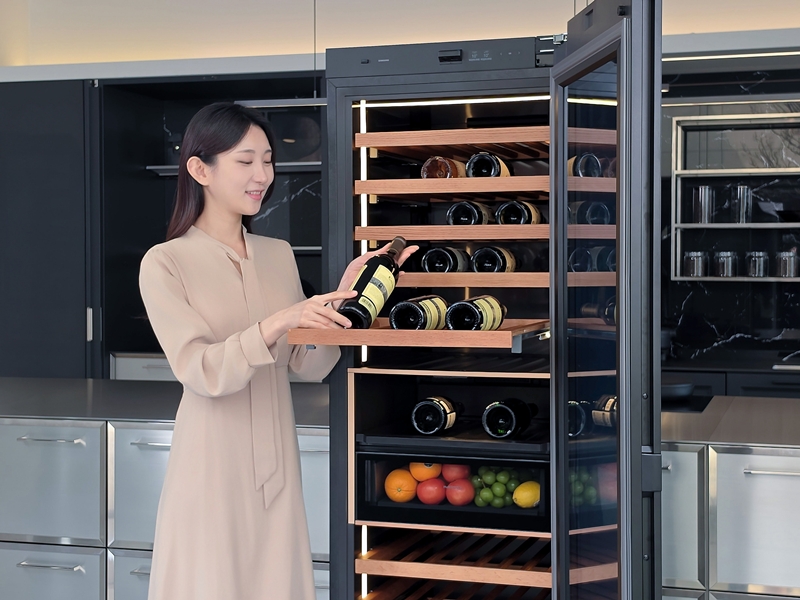
That’s why wine coolers—also called wine refrigerators—are enjoying strong growth in the appliance market. These units store and age wine at optimal temperatures. Grand View Research estimates the global wine-cooler market at about $2.8 billion (approximately 3.7 trillion KRW) today, and projects it will grow at a 6.8% annual rate to reach $4.4 billion (approximately 5.9 trillion KRW) by 2030.
To stand out, appliance makers are embedding AI. Samsung Electronics, for example, introduced the Infinite AI Wine Refrigerator on the 30th. It features a generative AI–based AI Vision camera that detects bottles moving in and out, automatically records details like wine name and grape variety, and helps manage inventory and records.
Grand View Research notes, “As global wine consumption rises, demand for wine coolers that provide optimal storage conditions has increased. In particular, smart wine coolers equipped with AI algorithms, real-time monitoring, and sensors are driving positive market growth.”