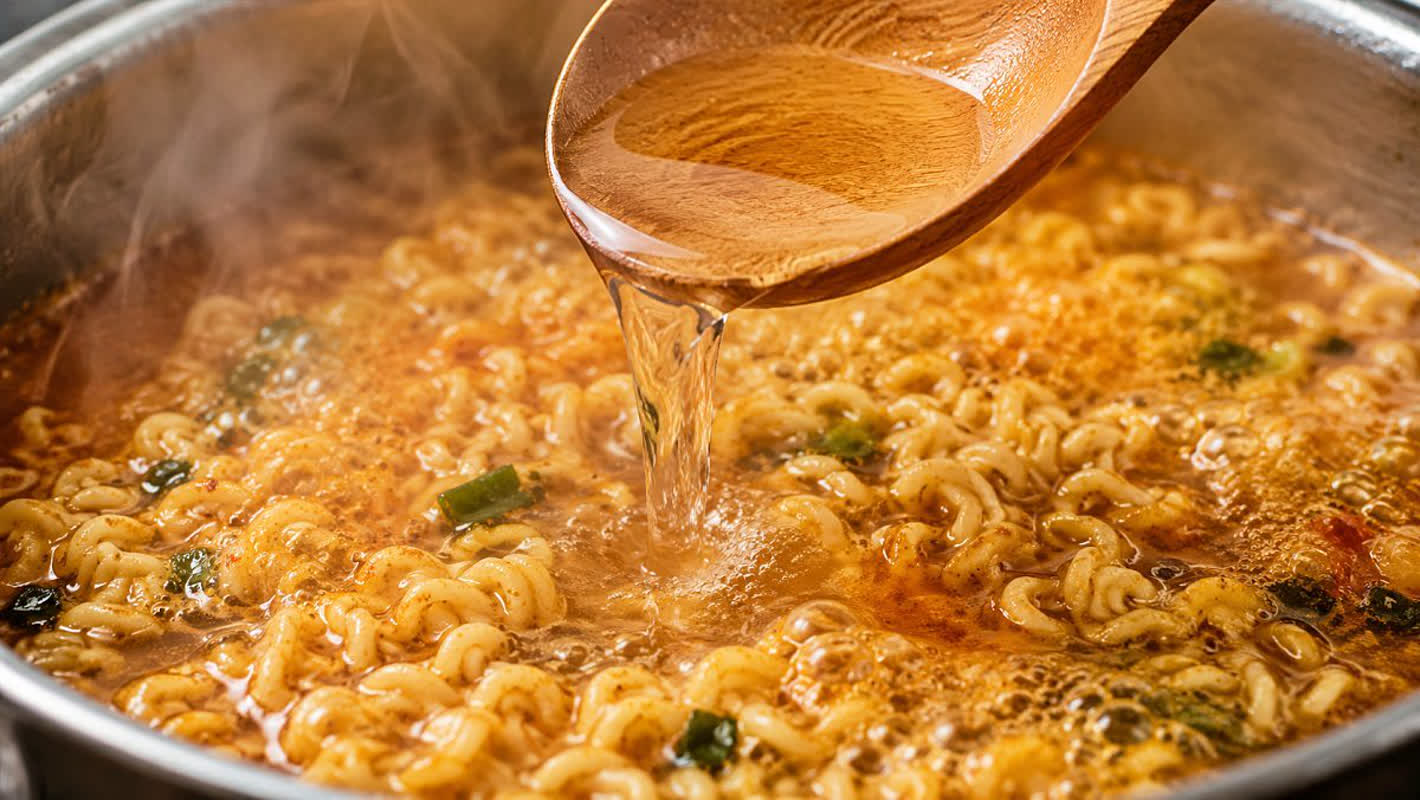
Ganjang-guksu — a soy-sauce noodle bowl made from nothing more than soy sauce and sesame oil — is a comfort-food classic that proves deep flavor doesn't require a laundry list of ingredients.
When sesame oil—the key to that toasty, nutty aroma—is added, this humble dish turns into a wholly satisfying one-bowl meal without any fancy extras. As the weather warms, people often reach for spicy bibim-guksu, but if heat isn’t your thing or you need a break from fiery flavors, ganjang-guksu is an easy, delicious alternative. Because it balances taste without complicated seasonings, it’s perfect for kitchen novices and anyone craving a quick, fuss-free meal.
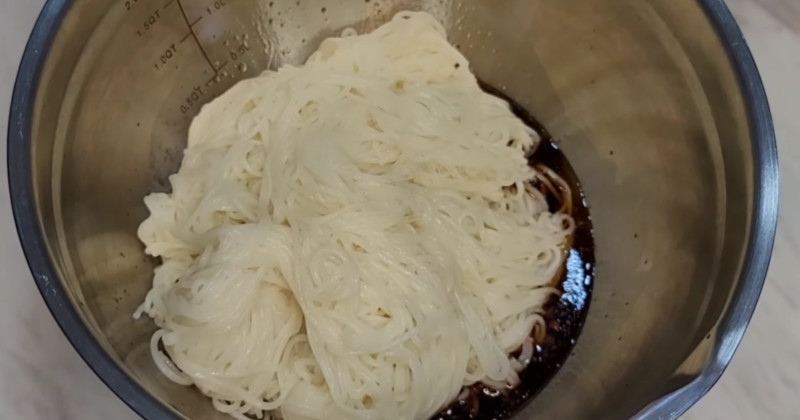
Sesame oil is absolutely the star of ganjang-guksu. Soy sauce supplies the saltiness and umami, but on its own it can taste flat or a bit sharp. Sesame oil fills in both aroma and mouthfeel: its nutty scent softens the soy’s edge and stretches the flavor across every bite. The oil also coats the noodles so the seasoning clings evenly, keeping each forkful consistently tasty.
Another reason sesame oil matters is its finishing aroma. Aroma makes up half the experience of taste, and sesame oil shows its best side when added at the end, without heavy heat. Finish the dish with sesame oil to maximize nuttiness—if you add it too early and cook it, the aroma fades and the depth you want disappears.
Ingredient prep matters. The basics are somyeon noodles, soy sauce, sesame oil, sugar or oligosaccharide syrup, minced garlic, and green onion. To boost texture and nutrition, add toppings like seaweed flakes, toasted sesame seeds, thin egg strips, or julienned cucumber to suit your taste.
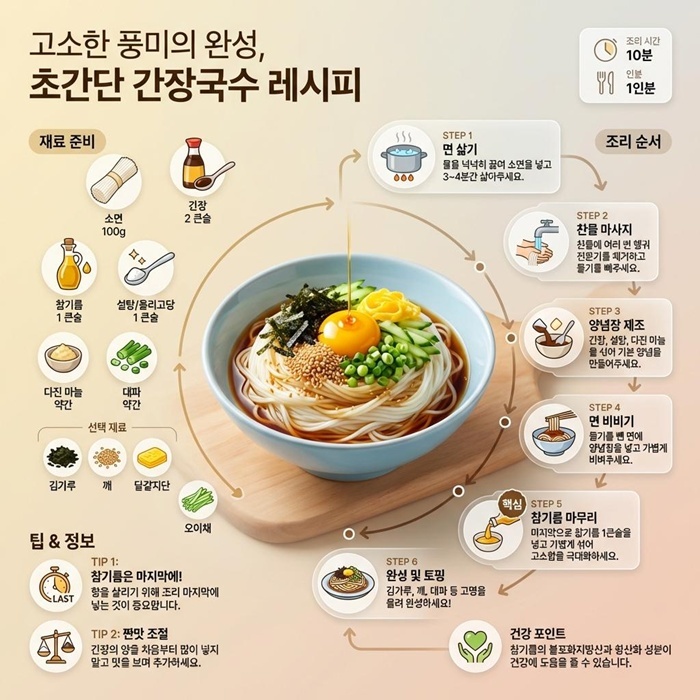
Now make the sauce: mix 2 tablespoons soy sauce, 1 tablespoon sugar or oligosaccharide syrup, and a little minced garlic for a simple base. If you like, add a splash of vinegar to cut richness and brighten the flavor. Drain the cooked noodles well, transfer them to a bowl, add the sauce, and toss gently.
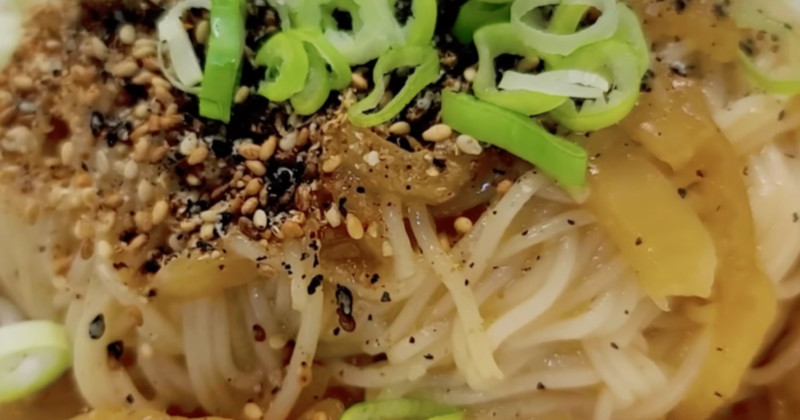
At the very end, add about 1 tablespoon of sesame oil and mix once more. Instead of stirring aggressively, toss lightly so the noodles don’t clump and keep their glossy sheen. Finish with seaweed flakes and sesame seeds, then top with green onion or your preferred garnishes.
Some quick cautions: always add sesame oil at the end to preserve its aroma. Start with a conservative amount of soy sauce and adjust as you go—too much from the start will make the dish overly salty. Also, be sure to drain the noodles thoroughly; excess water will dilute the sauce and weaken the flavor.
Ganjang-guksu has some health perks, too. It uses relatively little oil and avoids heavy seasonings, so it’s gentle on the stomach. Sesame oil contains unsaturated fats and antioxidants that, in moderation, can support vascular health and help slow aging. Still, it’s calorie-dense, so use it judiciously.
With such a simple ingredient list, every component matters, and sesame oil is the element that elevates the whole dish. It’s not just a minor finishing touch—the amount and timing of sesame oil can completely transform the flavor, so that single spoonful really can make or break the bowl.
To keep ganjang-guksu savory without oversalting, follow a few key tips. First, control the soy sauce: start with about half the amount you think you need, toss, taste, and then add more little by little. Noodle dishes don’t absorb seasoning all at once; flavors develop as you mix, so oversalting early is tough to fix.
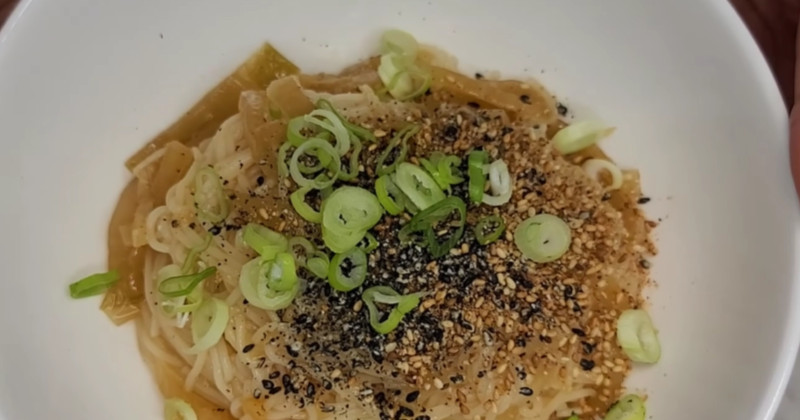
Second, think dilution and balance. Rather than using straight soy sauce, dilute it slightly with a splash of water or kelp-infused water to tone down saltiness while preserving umami. A touch of sugar or oligosaccharide syrup will round out the flavor—use sparingly, since too much sweetness can make the dish feel greasy.
Third, consider the interaction with sesame oil. Beyond adding aroma, sesame oil softens saltiness. When added at the end, it coats the noodles and tames soy sauce’s sharp edge, so even a slightly strong seasoning will taste milder. Always taste with the sesame oil included before making final seasoning adjustments.
Another trick is topping strategically. Seaweed flakes, julienned cucumber, or a boiled egg help disperse the soy’s saltiness and improve overall balance. Moist vegetables, in particular, can help dilute the salty sensation in your mouth.
Finally, manage noodle moisture. Too much water dilutes the sauce; too little leaves the noodles thirsty and prone to over-absorbing soy sauce, which can taste salty. The ideal approach is to shake off excess water so the noodles stay slightly damp before tossing with the sauce.
Your daily fortune report! What will your day be like?