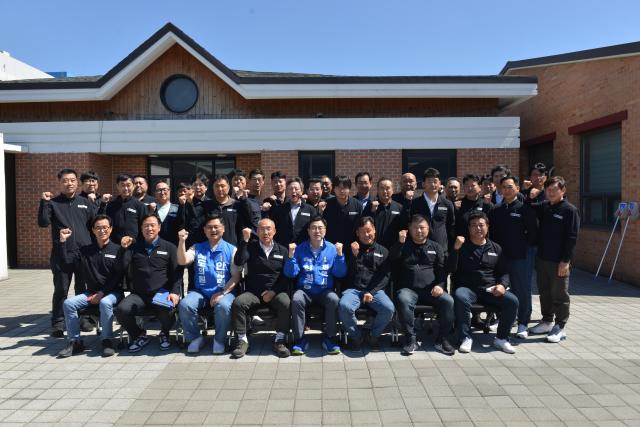
The meeting focused on expanding cargo throughput at Pyeongtaek Port, boosting overall port competitiveness, enhancing hinterland transportation links, revitalizing port-related industries, and addressing workplace safety and welfare for dockworkers.
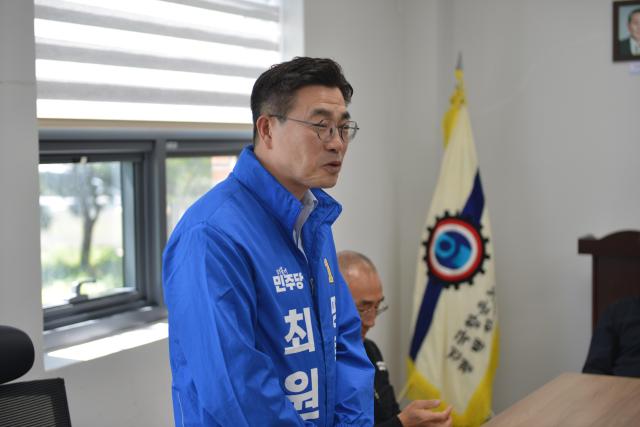
Union representatives argued that, as Pyeongtaek Port has developed into a logistics hub for automobiles and semiconductors, the pay and working conditions for dockworkers must be upgraded to reflect the port’s new status. Their on-site requests included expanding worker rest facilities, increasing investment in industrial accident prevention, improving the operation of the port’s promotional vessel, and raising the budget for cargo-attraction incentives.
Choi described Pyeongtaek Port as the southern Gyeonggi region’s only maritime gateway and a central growth driver for the city’s economy. He said port infrastructure and the supporting transport network must be expanded together to broaden the regional economy and create more jobs.
For the port’s future development, he proposed establishing a western growth corridor that combines hydrogen and other green-energy industries with global logistics functions. He also suggested strategies to link industrial complexes and surrounding satellite cities centered on Pyeongtaek Port.
Choi stressed that port competitiveness ultimately depends on workers at the site. He called for safer working conditions, improved rest infrastructure, and a regular communication framework with unions.
The meeting was part of Choi’s ongoing field schedule in the western part of the city. Late last month, he visited Paengseong-eup and Hyeondeok-myeon to discuss improving infrastructure around U.S. military bases, developing the Pyeongtaekho tourism complex and the Hyeondeok district, improving water quality, and resolving issues with waste-treatment facilities.
In earlier meetings with the Pyeongtaek Development Council and the leadership of Hankyong National University, local priorities identified included maximizing the use of Pyeongtaek Port and Pyeongtaekho, developing port-backland complexes, creating marine safety experience facilities, attracting a national medical graduate school, and fostering universities specialized in semiconductors and hydrogen.
Pyeongtaek Port is the only international trade port in Gyeonggi Province. According to the Gyeonggi Pyeongtaek Port Authority, container throughput in 2025 reached 956,031 TEU (20-foot equivalent units), a 3.4% increase from 924,758 TEU the previous year.
The Ministry of Oceans and Fisheries’ nationwide port cargo data for the first quarter of 2026 also classifies Pyeongtaek-Dangjin as a port with rising non-container cargo volumes. That underscores the need for policy discussions that address both port competitiveness and labor conditions.
The Gyeonggi Pyeongtaek Port Authority is promoting new cargo and route expansion through a cargo-attraction incentive program. The union’s request to increase the incentive budget aligns with the port’s broader logistics-attraction strategy.
Lee Won-gu, the official in charge, said strengthening Pyeongtaek Port’s competitiveness requires not only growing cargo volumes but also improving worker safety and working conditions. He added that the authority will work to develop concrete measures that pair port infrastructure improvements with welfare policies.
Choi said he will continue holding field meetings on issues that directly affect citizens’ lives—industry, labor, transportation, and local infrastructure—and plans to turn the proposals raised at Pyeongtaek Port into campaign pledges and municipal policy initiatives.