“Libraries should serve as the frontline of universal cultural welfare—places where everyone, from the unborn to centenarians, can access knowledge equally, regardless of age or income.”
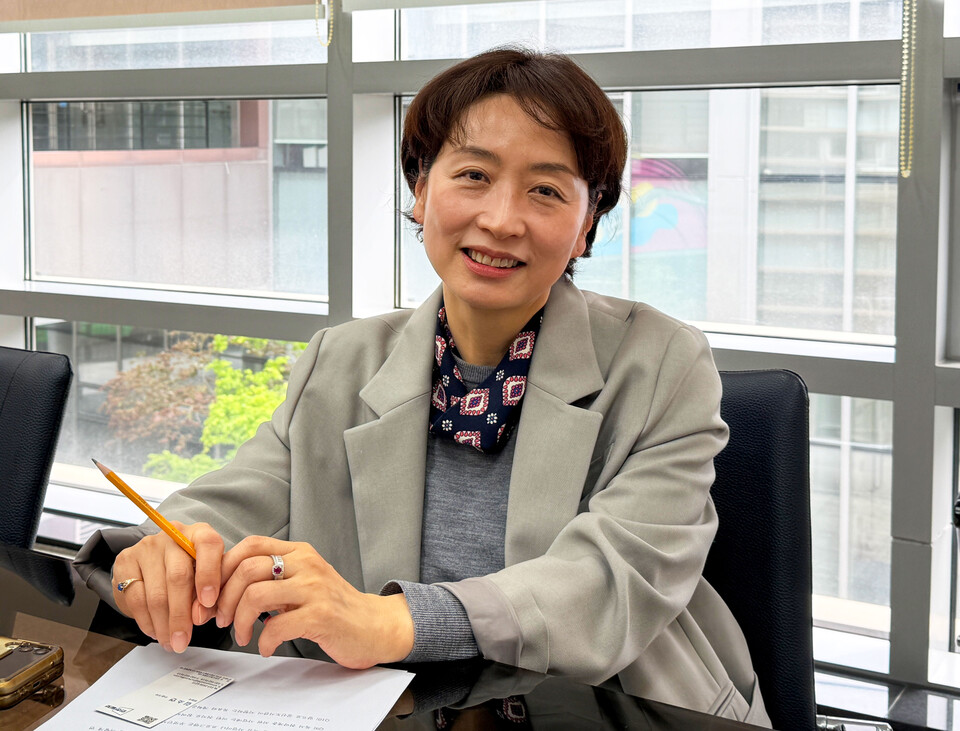
Lee Hee-soo (63) is the director of libraries at the Bupyeong Cultural Foundation. She oversees the district’s public libraries and sets the strategic direction for the local reading culture. She frames libraries not merely as book-lending venues but as cultural infrastructure that supports everyday life in the community.
A former science student and a mother of 2, she first joined a children's book study group out of a simple wish: to give her children access to quality books.
That concern grew into a community movement to “raise our children well together.” In the late 1990s, when many schools lacked libraries, she and other parents placed books in classroom corners and helped lay the foundations for neighborhood-driven education.
She argues that libraries should offer more than good books and cultural access; they should provide varied experiences. To that end, she broadened library services with cultural programs such as field trips, puppet theater, and book-art workshops.
Drawing on that experience and philosophy, she served as the 2nd director of the Bupyeong Miracle Library for roughly 10 years. She also planned and coordinated the openings of 5 municipal libraries—Bugae Children’s, Bugae, Samsan, Cheongcheon, and Galsan—to meet rising demand for public library services across Bupyeong.
After expanding physical facilities, she turned her attention to making libraries more user-friendly and accessible for residents.
One flagship achievement was implementing Incheon’s 1st interlibrary loan system. She navigated administrative obstacles to link education-office libraries with municipal and small neighborhood libraries into a single network.
As a result, residents can now reserve titles from any local branch and pick them up at a nearby location. Increased resource sharing among libraries has markedly improved public access to materials.
Today, Bupyeong’s 6 municipal libraries have sharpened their specializations by tailoring services to local demand—offering focused programming in areas such as music, English, history, and multicultural engagement.
Galsan Library’s emphasis on hobby-oriented programming recently earned it selection for the National Library for Children and Young Adults’ “2026 Read with Libraries” grant program—an outcome that reflects this targeted strategy.
Through the program, Galsan will combine books with hands-on hobby experiences and immersive post-reading projects to help children discover and develop their latent talents.
“Libraries must be accessible to everyone—regardless of age, race, or income,” she said. “They are not selective welfare for particular groups; they safeguard the rights of all citizens.”
/Kim Soyeon, staff reporter kimsoyeon330@incheonilbo.com