![A presiding judge surnamed Kim, who faces bribery charges under the Act on the Aggravated Punishment of Specific Crimes, appeared for a pretrial detention hearing at the Seoul Central District Court on March 23. The Corruption Investigation Office for High-ranking Officials (CIO) had sought arrest warrants after a regional law firm lawyer allegedly gave the judge several tens of millions of KRW (approximately 15,000–67,500 USD) worth of money and gifts in return for trial favors, but the court dismissed the CIO’s requests for both the judge and the lawyer, saying the prosecution had not sufficiently proven the key elements of the alleged payments. 2026.3.23 [Photo=Yonhap News]](https://contents-cdn.viewus.co.kr/image/2026/03/CP-2023-0087/image-90e3ab15-b336-4d13-a145-347c9e26728a.jpeg)
[iNews24 reporter Choi Ki-chul] The court’s decision to deny arrest-warrant requests for both the presiding judge and the lawyer accused of taking bribes from a former high-school senior has drawn criticism that the Corruption Investigation Office for High-ranking Officials (CIO) suffered a political setback. The CIO said it respects the court’s ruling but reiterated that it has confirmed significant portions of the allegations.
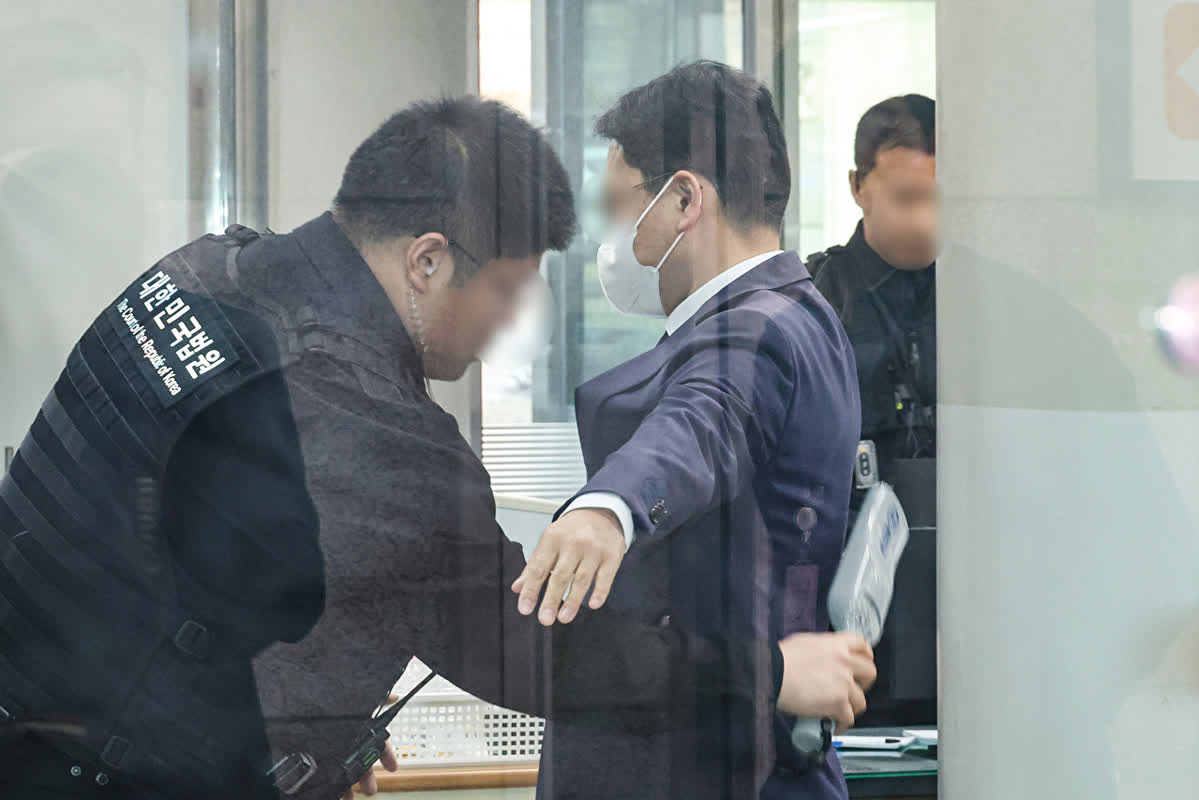
Kim Jin-man, the judge responsible for warrant matters at the Seoul Central District Court, conducted a pretrial detention hearing on March 23 for the judge surnamed Kim, who is accused of bribery under the Act on the Aggravated Punishment of Specific Crimes. After the hearing, Judge Kim dismissed the CIO’s warrant request, concluding that the prosecution had not adequately established the core elements of the alleged bribery. The court gave the same reasoning in denying the warrant for attorney Jeong, who was also subject to the hearing on charges of offering bribes.
Legal observers note that the court relied on an insufficient showing of criminal elements as the basis for dismissal. Courts commonly deny warrants when there are no credible risks of evidence tampering or flight, but such procedural concerns typically presuppose that the underlying crime has been adequately demonstrated. The decision has prompted commentary that the CIO’s investigation may have been lacking in rigor.
The CIO rejected that interpretation. On March 24, a CIO official said, “We have secured substantial evidence. We do not believe this dismissal will have a major impact.” The official added that because warrant hearings and trials involve different procedures and standards of review, it is premature to assess whether the ruling confers an advantage or disadvantage at this stage. “We will continue the investigation as we have been,” the official said.
While serving at a court in the Seoul metropolitan area, the judge is alleged to have received 3 million KRW (approximately 2,250 USD) in cash and gifts valued at approximately 3.7 million KRW (approximately 2,775 USD) — including a ring marking his son’s first birthday and a bottle of perfume for his spouse — from attorney Jeong, who was four years his senior in high school when the judge worked at the Jeonju District Court. On March 18, the CIO’s Investigation Division 2 (led by Kim Su-hwan) applied for arrest warrants on charges including bribery in violation of the Act on the Aggravated Punishment of Specific Crimes. This was the CIO’s first application for an arrest warrant against a sitting judge.
Judge Kim and the CIO exchanged public claims ahead of the warrant hearing. Through counsel, Judge Kim argued that the CIO had pursued an overly aggressive and potentially unlawful investigation, distorted evidence and fabricated the charges when applying for the warrant.
The CIO countered that the evidence and related materials were obtained through objective, lawful methods based on court-authorized warrants issued on multiple occasions. The office emphasized that the decision to seek arrest warrants was not a mere allegation but was grounded in sufficient evidence and a comprehensive assessment of the alleged crimes’ seriousness.
Since its launch in January 2021, the CIO has detained and indicted only two suspects: former President Yoon Suk Yeol, charged with leading an insurrection, and former Army Intelligence Commander Moon Sang-ho, charged with major insurrection-related duties. All other requests for detention the CIO has made have been denied.
The CIO said it will carefully review the court’s reasons for denying the warrants before deciding whether to refile. A CIO official said, “At this stage, we have not decided whether to alter the charges.” He added, “We need to examine multiple aspects. We cannot yet say whether we will reapply.”