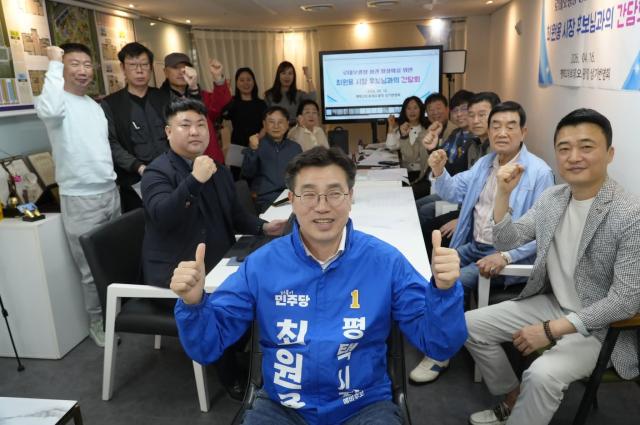
On the 16th and 17th, Choi held back-to-back roundtable meetings with neighborhood merchants, labor unions, and youth organizations, pledging to swiftly incorporate their concerns into city policy.
On the 16th, Choi met with merchants at the Godeok Rodeo Square Merchants Association and stressed that strengthening the competitiveness of neighborhood businesses and small merchants is central to Pyeongtaek’s economy.
At that meeting, merchants proposed measures including △ designating recipients for neighborhood business revitalization support △ backing a large-scale "Big Sale" tied to local currency △ prioritizing business-environment improvement projects △ expanding parking infrastructure. Choi said he would actively consider these proposals. He won strong support by offering practical administrative solutions—such as simplifying application procedures for public programs and assigning dedicated staff—to help small business owners who struggle with bureaucratic hurdles.
That same afternoon, Choi visited the Gyeonggi Southern branch of the Ready-Mix Concrete Transport Union under the Federation of Korean Trade Unions to hear workers’ concerns firsthand. He said that improving welfare for workers in special employment categories is directly tied to strengthening the local social safety net, and he signaled a labor-friendly approach to city governance.
Choi pledged to carefully review the Southern branch’s main proposals—△ making a Pyeongtaek-level tripartite labor-management-government council substantive △ conducting safety audits, including ensuring ready-mix pour times are observed △ improving road conditions for large vehicles △ institutionalizing biannual regular meetings among unions—and to reflect those concerns in city policy. He also promised to maintain open lines of communication between the city and the unions after taking office.
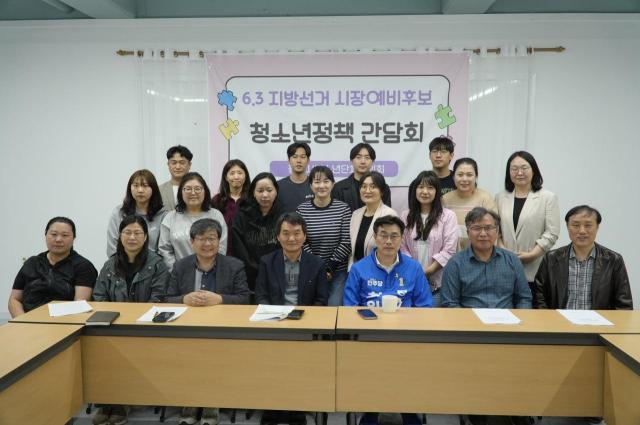
The council proposed measures including △ securing a dedicated youth budget equal to 1% of the general account △ providing additional city-funded youth transportation support and introducing the TtokBus △ establishing a child and adolescent mental health welfare center and a support center for migrant-background youth. Choi said he would actively review these proposals. He outlined a plan to fast-track the creation of a mixed-use youth cultural space tied to development in the Godeok–Jije central area and to significantly strengthen the youth foundation by expanding and reorganizing its structure to enhance policy delivery.
Observers say Choi’s consecutive roundtables demonstrate a clear grasp of Pyeongtaek’s core issues—livelihoods, labor, and education. Drawing on decades of public service and a tested administrative mindset, he did more than listen; he committed to examining concrete budget options and proposed organizational reforms, signaling a distinct, results-oriented approach.
Choi said, “My mission is to build a Pyeongtaek where neighborhood businesses thrive, workers have safety and livelihood security, and young people can pursue their dreams.” He added, “As the Democratic Party’s candidate, I will prove through action that I am the person who can deliver the tangible changes citizens will feel after I win.”