[Inews24 Reporter Han Bong-su] The Korea Agro-Fisheries & Food Trade Corporation (aT) said it hosted the 2026 Hangzhou K‑Food Fair in Hangzhou, China’s e‑commerce hub, from March 19–22.
Set in Hangzhou—the home of Alibaba Group’s headquarters and Asia’s biggest e‑commerce company—the fair opened with B2B export consultations and an Alibaba Group familiarization tour on March 19–20. Public-facing B2C consumer experience events followed on March 21–22.
![Promotional activities for the consumer experience at the Hangzhou K-Food Fair. [Photo=Korea Agro-Fisheries & Food Trade Corporation]](https://contents-cdn.viewus.co.kr/image/2026/03/CP-2023-0087/image-dc381f8d-50e2-4dac-b425-7e7f4e61f489.jpeg)
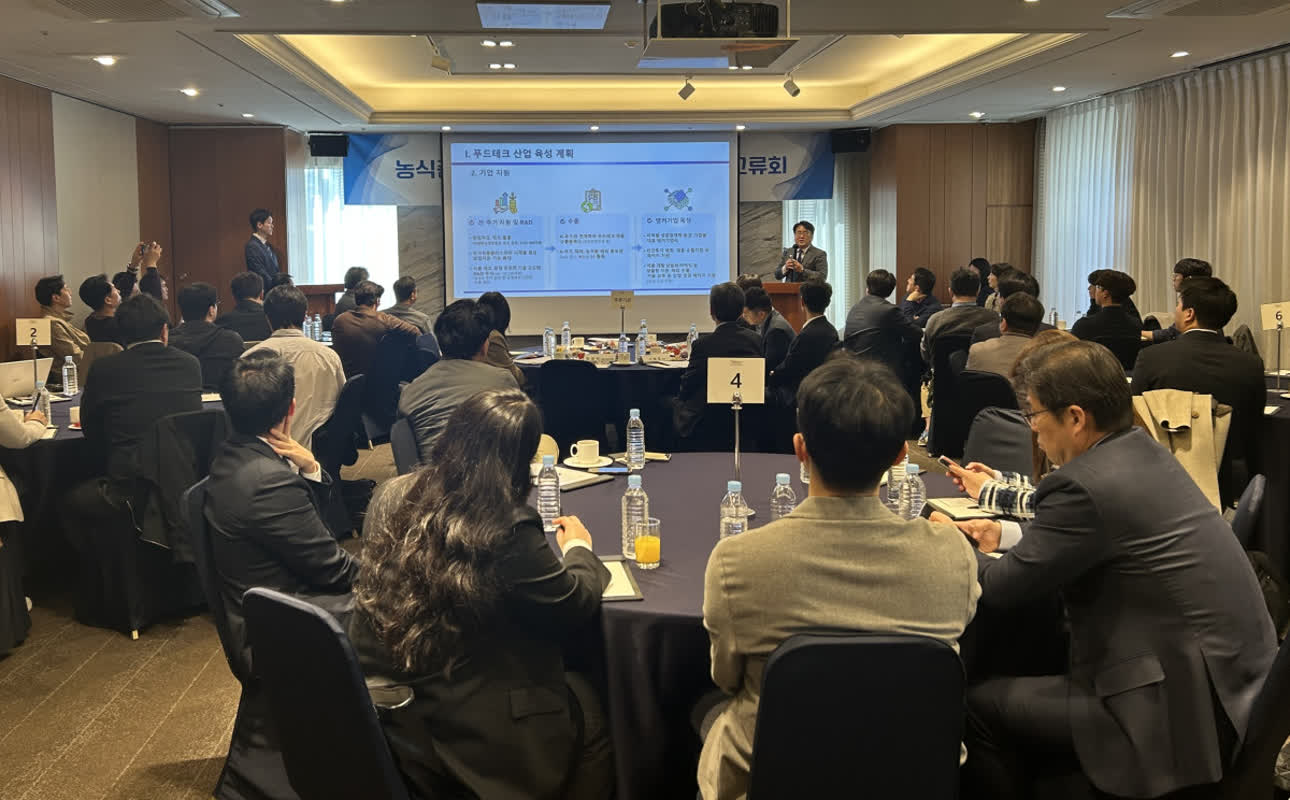
At the B2B export sessions on March 19, 40 leading Korean K‑food companies met with 60 buyers from across China in a total of 553 one‑on‑one meetings.
To strengthen outcomes, organizers ran online pre‑consultations in early March. Focused on promising Next K‑Food categories—inner‑beauty foods, ready meals, and desserts—those efforts produced $27.5 million in consultation value and resulted in 19 on‑site contracts and MOUs worth $9.49 million.
The consultation hall also featured an interagency “external cooperation” desk. Alongside the Korea Intellectual Property Protection Agency, the Korea Testing & Research Institute of Chemical Convergence, Incheon Port Authority, and Korea Trade Insurance Corporation, the desk offered advice on intellectual property and trademark issues, product quarantine, customs clearance, logistics, trade insurance, and other support programs.
On March 20, participating exporters visited Alibaba Group’s Hangzhou headquarters to meet company officials and discuss ways to expand their online presence. Conversations focused on effective K‑food promotion using Alibaba’s platforms and strategies to energize the Korean food pavilion on Tmall, China’s top shopping site.
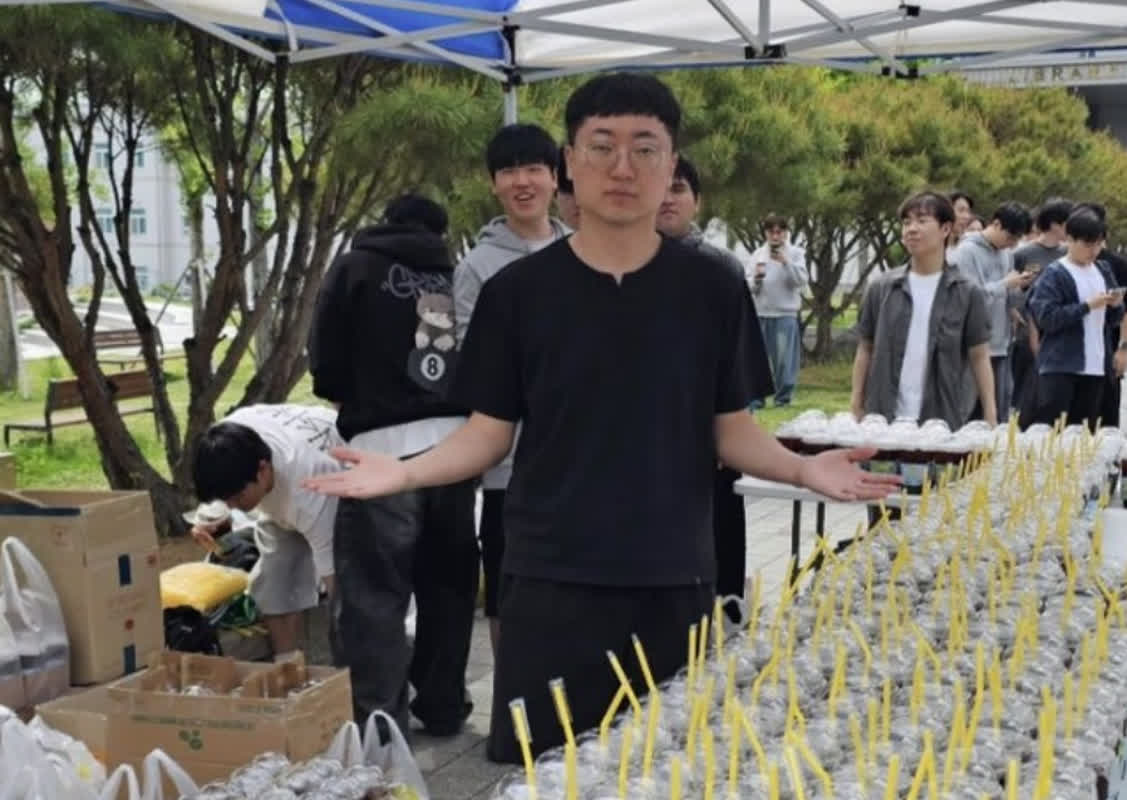
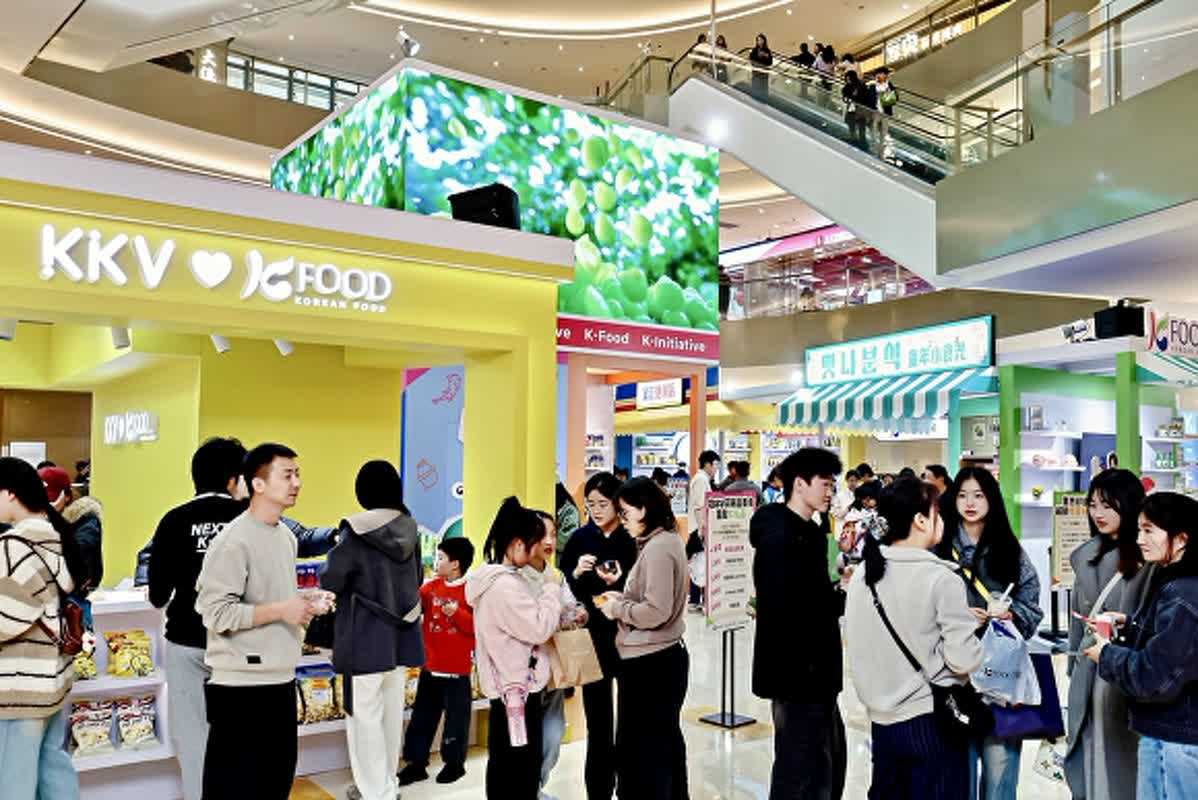
The weekend consumer events were held at Baolongcheng mall, a family‑friendly shopping destination. The event space was curated around popular Korean visitor experiences—Han River convenience stores, K‑detox jjimjilbangs, and Korean snack shops—and showcased K‑street foods like ramen and tteokbokki, functional beverages, and inner‑beauty products.
To turn sampling into sales, organizers partnered with KKV, a major Chinese lifestyle retailer for food, cosmetics, and household goods, to run a KKV pop‑up store and an online Korean pavilion live zone featuring invited wanghong (influencers). Those on‑ and offline channels generated more than 17 million KRW (about $12,750) in sales over two days.
Jeon Gi‑chan, aT’s director of export foods, said holding the first K‑Food Fair of 2026 in Hangzhou—a hub for e‑commerce, robotics, AI, and big tech—was especially meaningful. He added that aT will support K‑food companies by identifying promising products and backing trend‑forward marketing so they can respond to rapidly changing conditions like the global shift to online food markets, AI‑driven marketing, and unmanned delivery.