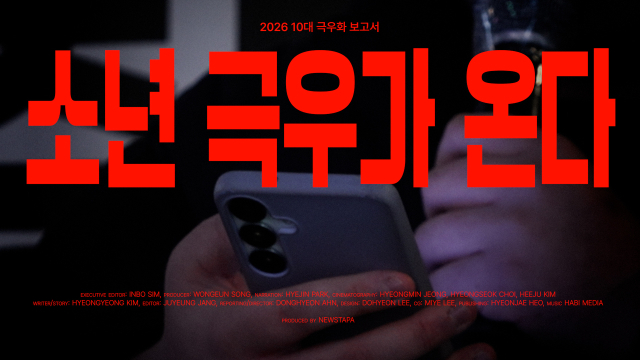
I couldn't take my eyes off the screen after watching Newstapa's disturbing documentary, The Teenage Far Right Is Coming.
The film's language of extreme hatred and exclusion and its nostalgic longing for authoritarian order haven't remained confined to a subset of young people — they have seeped into middle and high school students. That realization raises weighty questions beyond mere surprise.
What kind of society are we leaving to the next generation?
The label \"young far right\" is relatively new, and public debate has now shifted to an even younger phenomenon: the \"teenage far right.\" Reducing this to simply \"kids becoming conservative\" flattens the issue. This movement did not emerge from sudden ideological whims; it is the product of a complex interaction between social structures and the media environment.
Above all, anger is forming much earlier. Teens feel the walls of the future closing in amid high-stakes college entrance pressure, their parents' anxieties about social mobility, and the persistent rhetoric of a tight job market. Rather than turning that anxiety into an understanding of structural causes, it is often consumed as a simple, moralized grievance — \"someone received special treatment.\" Extremist rhetoric exploits this opening. Far-right actors offer clear enemies instead of complex explanations and then channel that anger in a specific direction.
Digital platforms play a central role. Today, young people's political formation happens more on platforms than in textbooks. Short videos, sensational editing, and mocking tones simplify reality into black-and-white frames. Algorithms amplify content that provokes anger and hatred, and politics becomes entertainment rather than something deserving of reflection. In an entertainment-driven political space, extreme messages reliably command more attention.
Weakened community experiences are another factor. Community activities, school self-governance, and civic education have contracted, and adolescents increasingly interpret the world from within homogeneous online circles. As opportunities to understand other people's lives decline, exclusionary worldviews harden. When uncertainty rises, so does the psychological impulse to cling to \"strong order.\" The language of force and certainty persuades more easily than the language of diversity and compromise.
So what is the remedy?
Strict censorship and control alone will fail. What we need is a reconstruction of the environment, not the suppression of ideas. Teach democracy through lived experience, not only through facts. Use debate classes, mock parliaments, and community-based projects so students practice coexistence with differing opinions. Digital literacy is essential: when young people learn to verify information and understand how algorithms work, their uncritical acceptance of hateful content declines.
We also need to rethink the discourse on fairness. Discuss not only the rules of competition but the conditions of the starting line. The less we engage in public debate about structural inequality, the more space there is for simple, angry politics. At the same time, expand institutional channels for youth political participation. Excluded generations are prone to radicalization, but providing avenues for expression moderates extremes.
The teenage far right is not an isolated generational lapse but a warning light our society has set off. When a frightening future, fragmented communities, entertainment-driven politics, and unchecked hatred converge, extremism becomes the language of the youngest generation. Young people are a mirror of society. If the reflection is unfamiliar, change the environment — not the face.
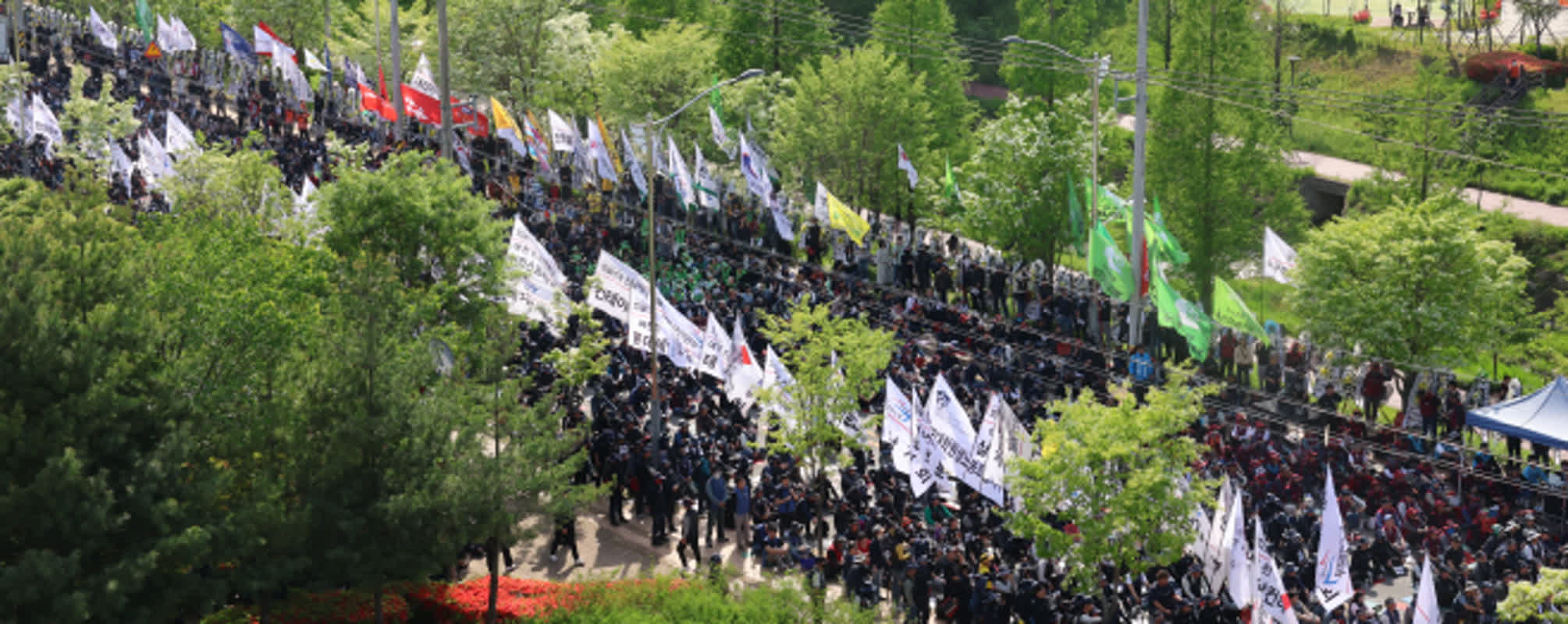
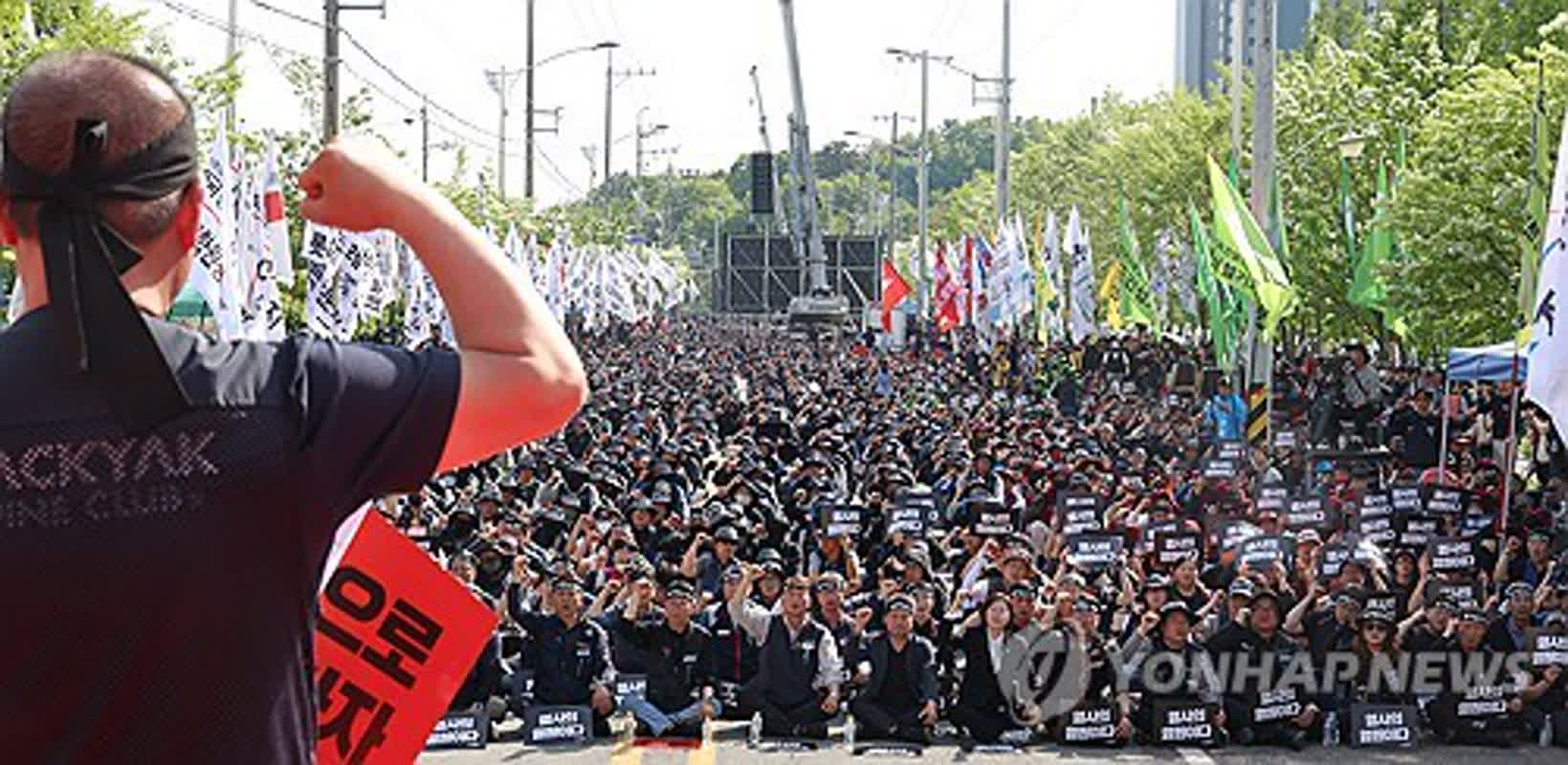
We must confront the despair reflected in children who follow far-right rallies shouting \"Yoon Again\" and begin changing the conditions that produced it. I hope candidates in the upcoming superintendent election resist getting lost in heated rivalries and instead offer concrete solutions to this problem.