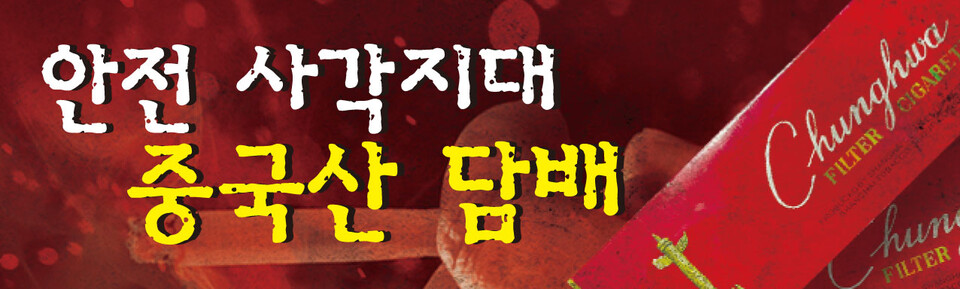
The government launched a fact-finding probe after investigators found imported Chinese cigarettes openly circulating in domestic duty-free markets without certification for fire-prevention performance — the feature that causes a cigarette ember to self-extinguish after a period of inactivity.
The finance authorities that oversee and regulate the tobacco industry said they will formally request a police investigation if they uncover violations of the Tobacco Business Act or evidence of smuggling.
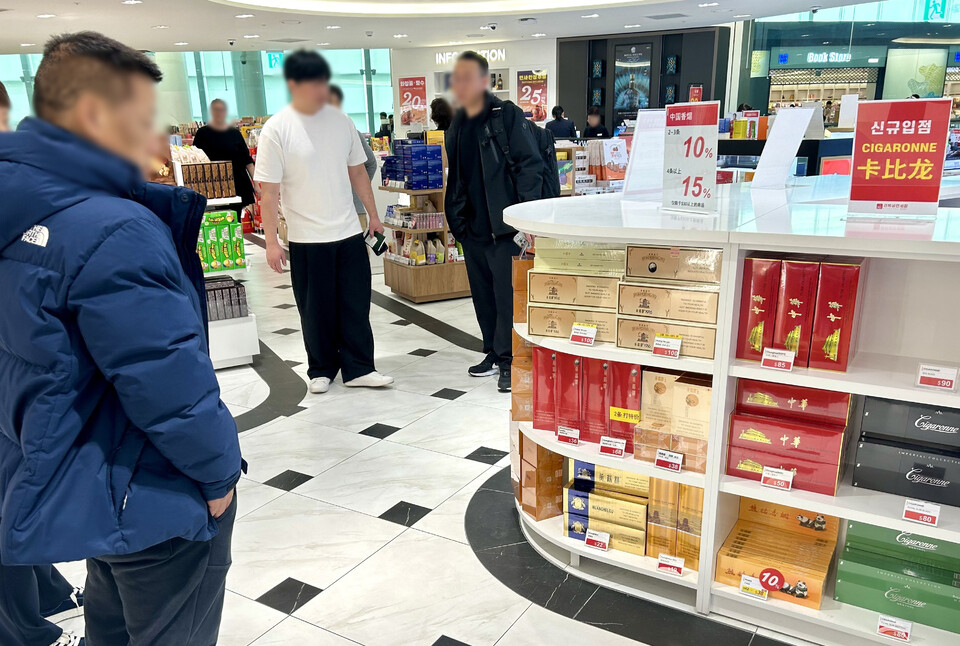
An Incheon Ilbo investigation on the 15th found that multiple Chinese cigarette brands — including Zhonghua and Huanghelu (Hwanghakru) — were being imported and sold in South Korea without certification from the Korea Fire Industry Technology Institute for reduced-flammability (fire-prevention) performance.
The institute, which carries authority delegated by the National Fire Agency, tests every cigarette manufactured, imported, or sold in Korea every six months. It verifies whether reduced-flammability devices are attached and evaluates the adequacy of complete-combustion ratios, then posts the results on the Public Data Portal.
A cigarette ember can ignite nearby combustibles almost instantly. To prevent that, manufacturers attach reduced-flammability devices to the cigarette paper so the ember will self-extinguish over a specific section (the cigarette’s coated zone) if a smoker stops puffing.
However, the Public Data Portal’s “2025 Second Half Status of Reduced-Flammability (Fire Safety) Cigarettes” does not list several major brands sold in airport and port duty-free shops — including Zhonghua, Huanghelu, Taishan, Nanjing, Hehua, Panda, and Guiyen. Experts say this omission suggests uncertified Chinese cigarettes lacking guaranteed fire safety are being distributed indiscriminately.
Zhonghua and Panda were certified for fire-prevention performance in the first half of 2024 but were removed from the public list in the second half of that year. The importer-distributor for Huanghelu failed to perform required performance tests for six years, beginning in the first half of 2020. The other four brands have also not undergone testing even once in the past five years.
To trace distribution routes, reporters visited Incheon International Airport duty-free shops twice last month and confirmed that those uncertified products were on sale.
According to the Korea Customs Service, imports of Chinese cigarettes into Korea totaled 8,368 kg (about 18,448 lb) from 2021 through 2025. Most purchasers of these Chinese brands are Chinese tourists visiting Korea.
Fire-safety experts warn that the sale of uncertified cigarettes could raise the risk of fires caused by cigarette embers.
Gong Ha-seong, a professor of fire and disaster prevention at Woosuk University, said, “The temperature at the tip of a cigarette can rise to roughly 600°C–800°C (about 1,112°F–1,472°F). If nearby materials such as fallen leaves or paper are present, ignition is possible. If cigarettes without self-extinguishing features circulate, the overall fire risk could increase.”
The Ministry of Economy and Finance, which has launched the fact-finding probe, said it will impose administrative sanctions and ask police to investigate if it confirms violations of the Tobacco Business Act.
A ministry official said, “Distribution of cigarettes without proper import-sales registration may violate the Tobacco Business Act. We will also investigate possible smuggling and unreported imports.”
He added, “Customs should guide compliance with fire-prevention performance testing at the import stage, and the ministry should verify documents submitted by importers and sellers. That process appears not to have functioned properly. It seemed to work for a time, but recent shortcomings have emerged, which is regrettable.”
/Reporters Park Beom-jun, Byun Seong-won and Park Ye-jin parkbj2@incheonilbo.com