From broad support for childcare, education and housing to establishing grounds for discounts on public facility fees, officials expect these measures to ease financial burdens and create a more child‑friendly city
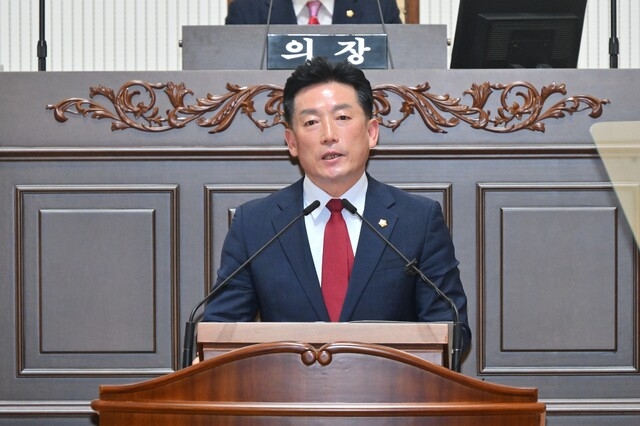
Jinju City Councilor Jung Yong-hak introduced the Jinju City Preferential Treatment and Support Ordinance for Large Families as the lead sponsor at the 272nd extraordinary session. The ordinance is intended to establish a statutory basis for preferential policies and support for large families as a response to the ultra‑low birthrate.
With housing and education costs rising, the financial strain on families with multiple children has grown. Critics contend that because most public programs are income‑tested, middle‑class large families often receive little meaningful support.
The ordinance aims to address those gaps by institutionalizing support that adjusts to household expenses according to the number of children.
Key provisions create the legal grounds to extend benefits and support to large families across areas covered by the Jinju City Population Policy Basic Ordinance — including childcare and education support, housing improvement and stabilization, expanded cultural, tourism, sports and welfare benefits, health and medical support, and reduced public facility fees.
Notably, the ordinance allows for tiered support based on the number of children and includes provisions for conducting needs assessments and promoting the policy measures.
Councilor Jung said, "Large families are an important social asset that sustain the region's future population. I hope these measures will reduce childcare burdens and provide meaningful support."
Meanwhile, the National Data Office's 2025 Social Survey Report found that economic concerns strongly influence decisions about having children: 31.4% cited education costs and 27.8% cited housing costs as the main reasons for not having or delaying additional children.
Gyeongnam=Reporter Jeong Do‑jeong sos6831@viva100.com