With the crisis in the Middle East having effectively closed the Strait of Hormuz, a new report warns that even after transit resumes, freight rates and broader market conditions could take more than two years to normalize.
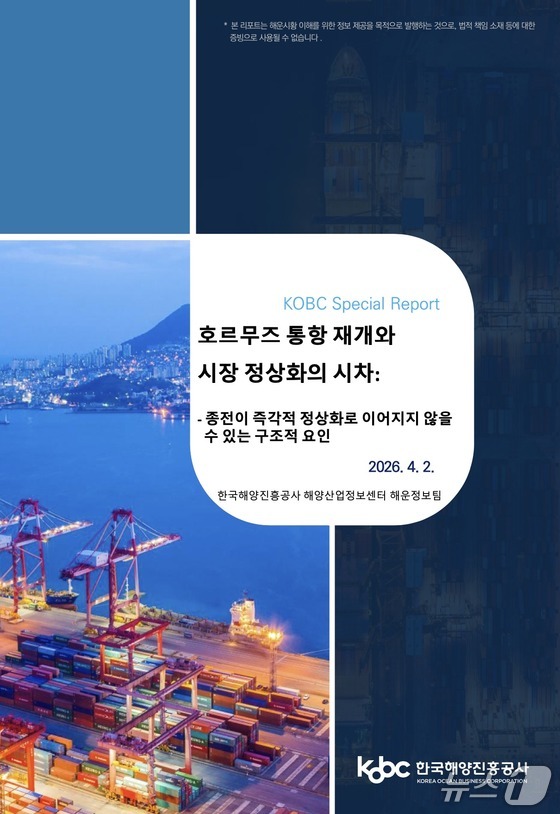
In a report titled Lag Between the Resumption of Hormuz Transit and Market Normalization, published April 2, the Korea Ocean Business Corporation (KOBC) found that the loaded ratio of very large crude carriers (VLCCs) in the Persian Gulf rose from 49% before the conflict to about 95% — roughly double. The share of VLCCs waiting in Oman Bay, east of the Strait of Hormuz, to secure routes also rose from 68% to 86% over the same period.
KOBC said the backlog of departure demand means the market will likely need time to rebalance even if the strait reopens.
The report notes that VLCCs operating between Northeast Asia and the Persian Gulf have average voyage cycles of 38–45 days. KOBC warned that if the closure exceeds 40 days, the timeline for normalization could be pushed back further.
It also cautioned that if lead vessels idle for extended periods and then sail or load and discharge after the strait reopens while follow-on ships depart the Persian Gulf, the two streams could converge and repeatedly create bottlenecks.
KOBC identified the insurance market as another critical variable. With risk and premiums rising, some shipowners may resume operations while others remain sidelined by financial constraints or contractual limits.
Factoring in these variables, the report outlines three stages: a 1–8 week departure rush immediately after hostilities end; a 2–6 month rebalancing phase as accumulated ship queues are absorbed; and a structural normalization phase lasting 6–24 months or longer.
The report is available via KOBC's KakaoTalk channel and other official outlets.