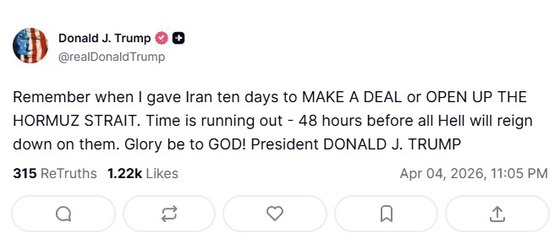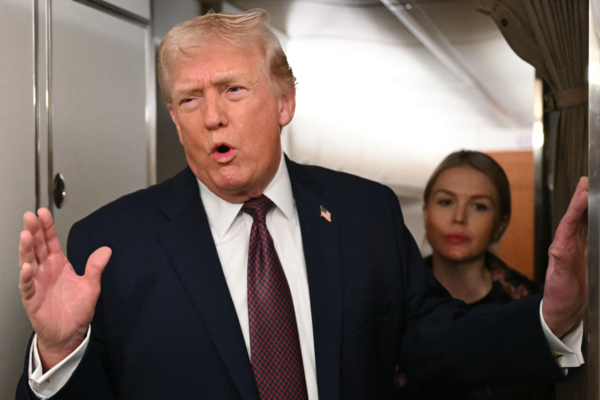
On April 4 (local time), U.S. President Donald Trump warned Iran: "You don't have much time. You have 48 hours left until the gates of hell open for you." Analysts say the message appeared intended to pressure Tehran to reach an agreement before the deadline he set for April 6.
In a post that day on his social media platform Truth Social, Trump wrote, "Remember when I gave Iran ten days to agree to the U.S. terms to end hostilities or to reopen the Strait of Hormuz."
Trump initially set March 27 as the negotiating deadline and threatened to bomb Iran's power plants. He later extended the deadline by ten days, setting it at 8:00 p.m. Eastern on April 6.
He has repeatedly warned of stronger attacks. On March 30, speaking on the assumption that talks would fail, he said he would "blow up all their power plants, oil wells and Kharg Island"—likely including desalination facilities—and "utterly obliterate them," ending what he called our "lovely 'stay' in Iran."
In a national address on April 1, he said, "Over the next two to three weeks we will deliver extremely powerful strikes against Iran," adding, "We will return them to the Stone Age."
Iran has vowed retaliation. Foreign Ministry spokesman Esmail Baghaei responded, "As long as U.S. and Israeli attacks continue, Iran will not stop retaliating," and warned that Tehran will no longer tolerate "the vicious cycle of war, negotiations and ceasefire."
International observers warn that if the U.S. were to bomb Iran's power plants, Tehran could carry out indiscriminate retaliatory strikes across Gulf states.
Earlier, on March 22—before Trump's public negotiation threat—Iran outlined specific retaliatory measures it would take if its power plants were attacked: the full closure of the Strait of Hormuz; attacks on companies with American shareholders; and strikes on power plants in Gulf countries, underscoring Tehran's willingness to fight.