By Sanghyun Park
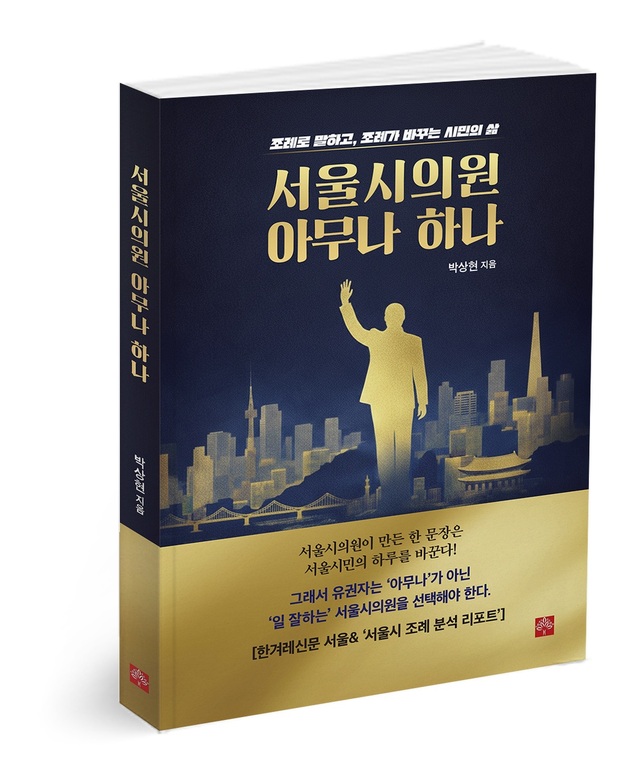
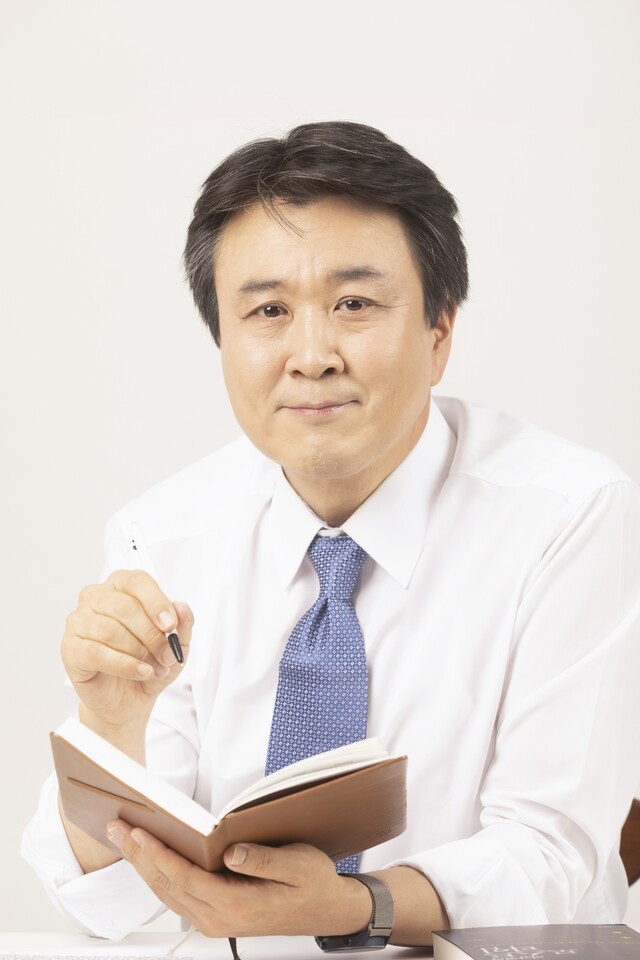
A new book examines how Seoul ordinances shape residents’ daily lives.
In Anyone Can Be a Seoul City Councilor, Sanghyun Park dissects local politics in South Korea through the ordinances that govern everyday life and examines the roles and qualifications expected of Seoul city council members.
The author, a former reporter and a former aide to a National Assembly member, completed the book after a year of ordinance analysis and on-the-record reporting at council meetings. He traces the flow of power and the realities of council work in the Seoul Metropolitan Council, and criticizes the 11th council—where the People Power Party held a majority—for repealing what he calls “bad ordinances”: △the Seoul Student Human Rights Ordinance, △the Seoul Social Service Agency ordinance, △the Seoul Ordinance on Support for Deinstitutionalization of People with Disabilities, △and the Seoul Media Foundation TBS Establishment and Operation Ordinance. He argues those decisions ran counter to the era’s commitments to human rights and democratic development.
The book also depicts the move to abolish TBS as a rushed effort, contending that claims of political bias served as a pretext to conceal a power play framed as a defense of media independence.
Park also examines Seoul’s cash-for-nomination scandal and analyzes how a party-centered candidate selection system structurally produces underqualified councilors and corrodes public trust in local assemblies. He categorizes deficiencies in councilors’ qualifications into six types and lays out the ethical standards and competencies councilors should meet.
Park warns that shortcomings in councilors’ qualifications and abilities translate directly into harm for citizens, and he emphasizes that voters’ rigorous vetting matters more than party nominations. He urges participatory democracy, calling on citizens to engage actively and monitor their representatives, and argues that electing capable candidates serves the public interest.
Kim Kyung-jip, a humanities scholar and former professor at Catholic University’s Institute for Human Education and winner of the Korean Publishing Critics Award, wrote in a recommendation, “Has any political newcomer ever probed so deeply into the ordinances that define everyday politics?” He added that Park—who learned the ropes as a journalist and as a parliamentary aide—presents practical local politics and civic political sovereignty in a clear, accessible way.
Starting from the premise that ordinances are not mere shadows of law but shape citizens’ lives, the book offers a clear-eyed critique of local councils and serves as a practical civics guide for the public.
Author Sanghyun Park has worked as a reporter covering politics, the economy, industry, and finance for Segye Ilbo, Digital Times, and a New Zealand Korean-language newspaper. He has served as a parliamentary aide, as a secretary in the Gyeonggi Provincial Governor’s office, and as a vice president at a public relations firm, gaining experience across journalism, politics, and communications. He also ran for Seoul city council in the 2022 local elections, giving him firsthand experience of grassroots politics.
Reporter Hwa-sook Shin, hsshin087@viva100.com