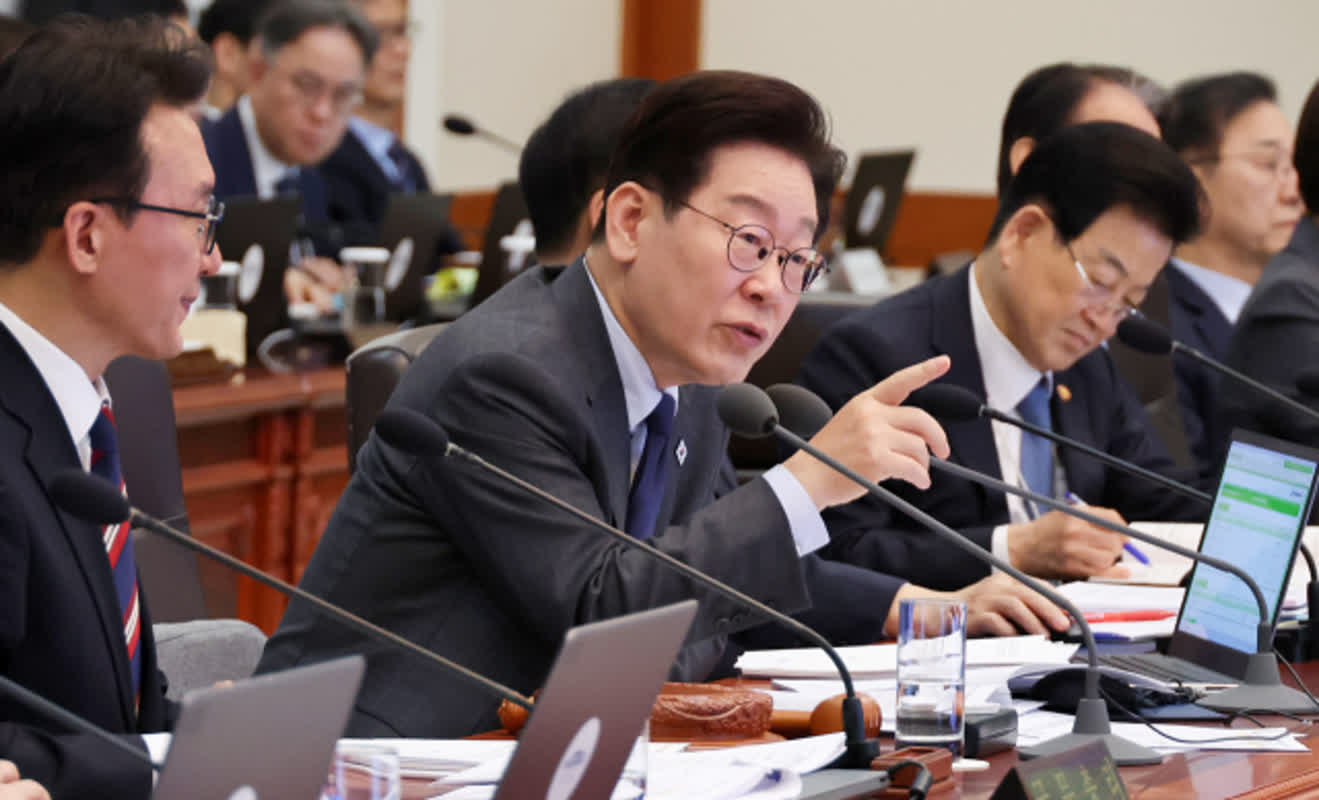
Many domestic firms have come to treat 1-year, 11-month contracts as standard because of the fixed-term law. The labor market’s rigidity — with layoffs tightly restricted — has made that practice almost inevitable. Employers often hesitate to hire because, after two years, converting a worker to permanent status makes dismissal virtually impossible. When President Lee warned, “The next generation will not be able to secure permanent jobs,” and questioned whether union campaigns to preserve a set number of positions would succeed, he was speaking to that reality. In last year’s labor market flexibility index from the IMD, South Korea ranked 44th out of 60 countries, well behind Denmark (1st), the United States (10th) and Japan (17th). Analysts pointed to the difficulty of hiring and firing and the strength of unions at large firms.
With the economy already unsettled by risks from the war in the Middle East, cooperation between labor and management is more urgent than ever. Yet the Yellow Envelope Law (an amendment to Articles 2 and 3 of the Trade Union Act), just one month after taking effect, appears to have tilted the balance: in all 10 rulings on whether prime contractors qualify as employers, authorities sided with subcontractor unions. To correct this imbalance, the ruling Democratic Party should constructively accept the opposition People Power Party’s proposal to form a negotiation panel to amend the Yellow Envelope Law. Unless the playing field between labor and management is leveled, recovering from the economic crisis will become more difficult.
Real protection for workers requires that companies remain competitive. Labor should agree to measures that preserve employment flexibility, while companies should bolster the social safety net. Both sides must actively pursue a pragmatic, results-oriented labor compromise. Reforming labor regulations, including the fixed-term law, in a more market-friendly direction will help create more high-quality jobs for young people.