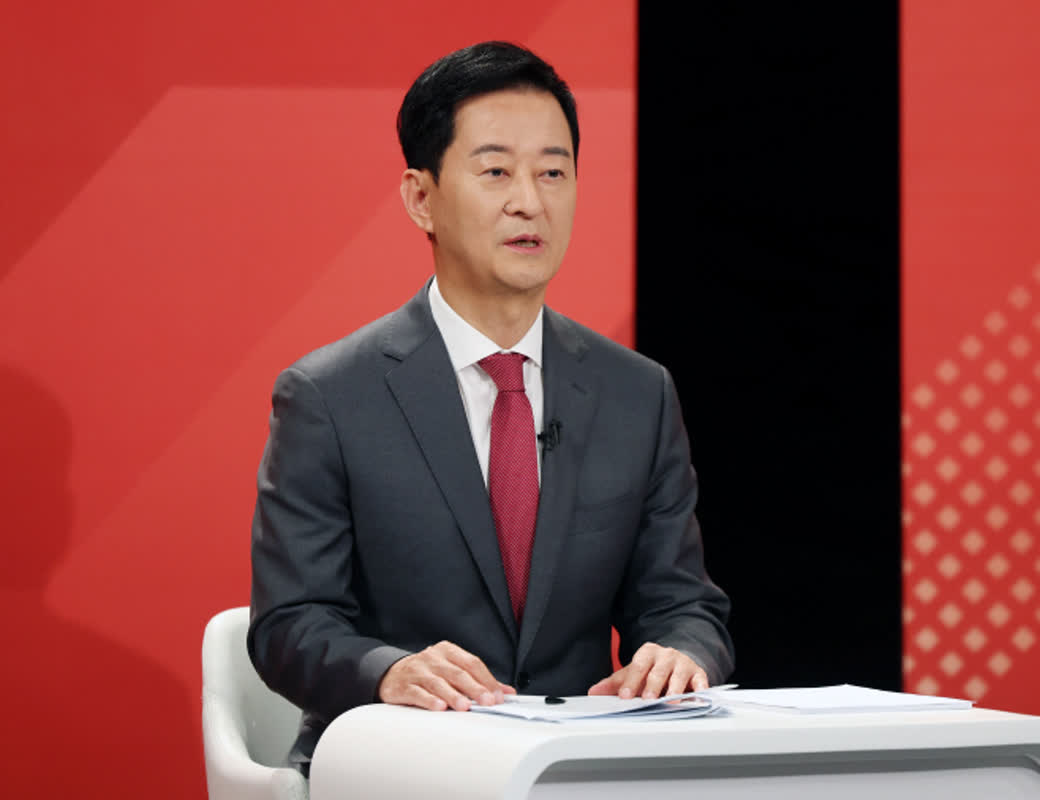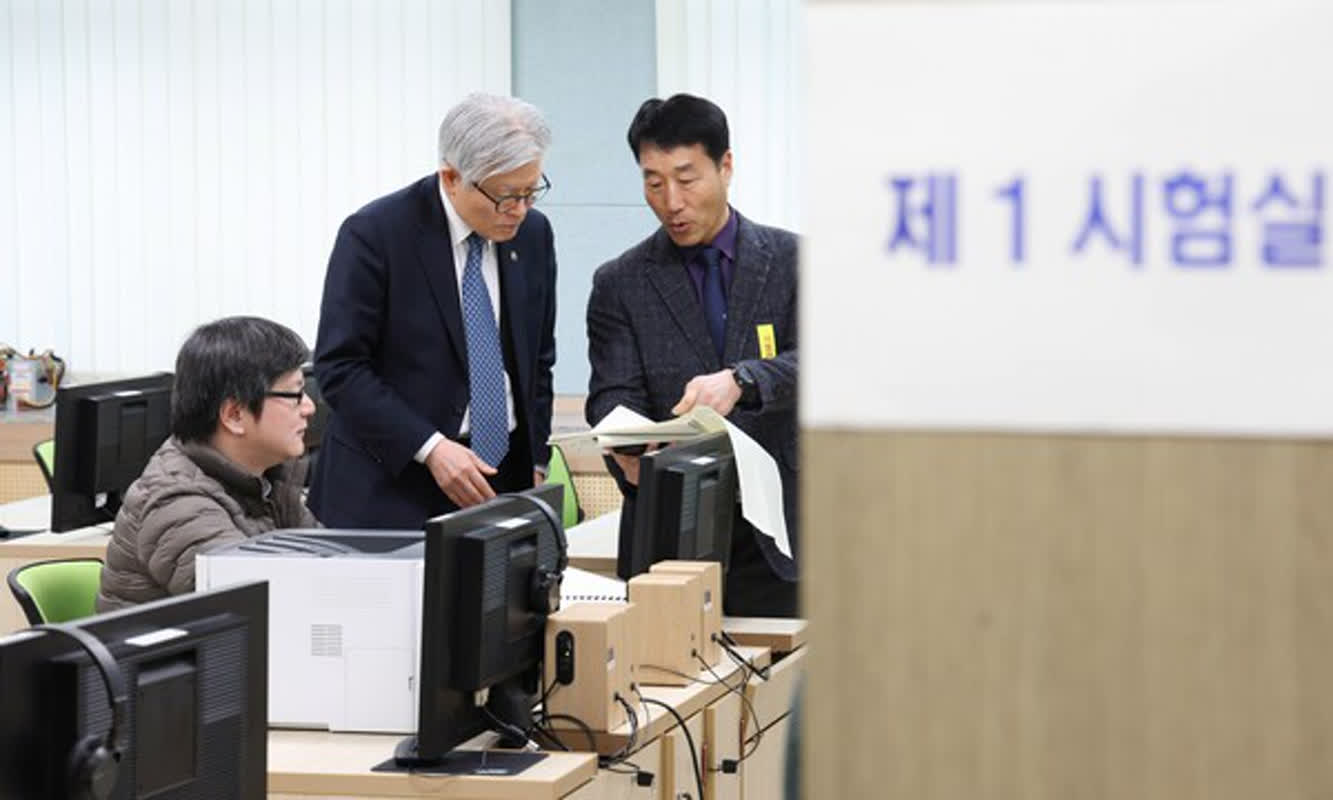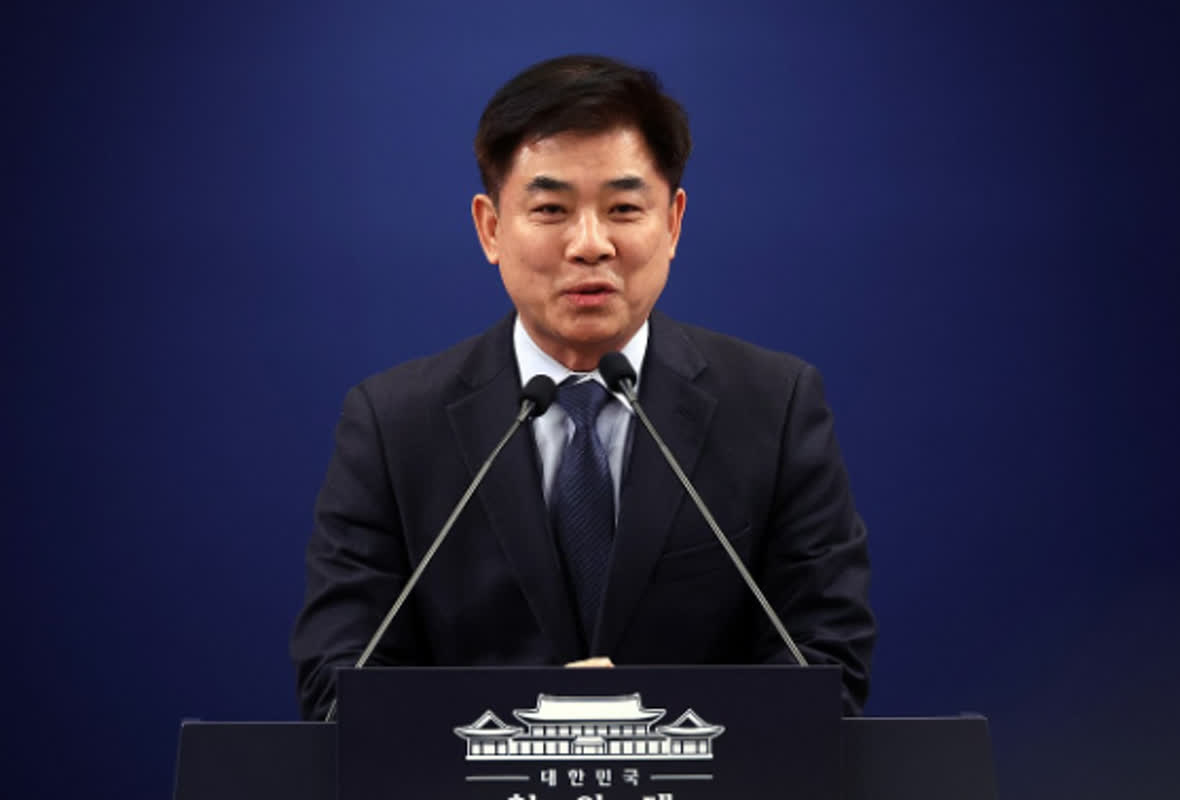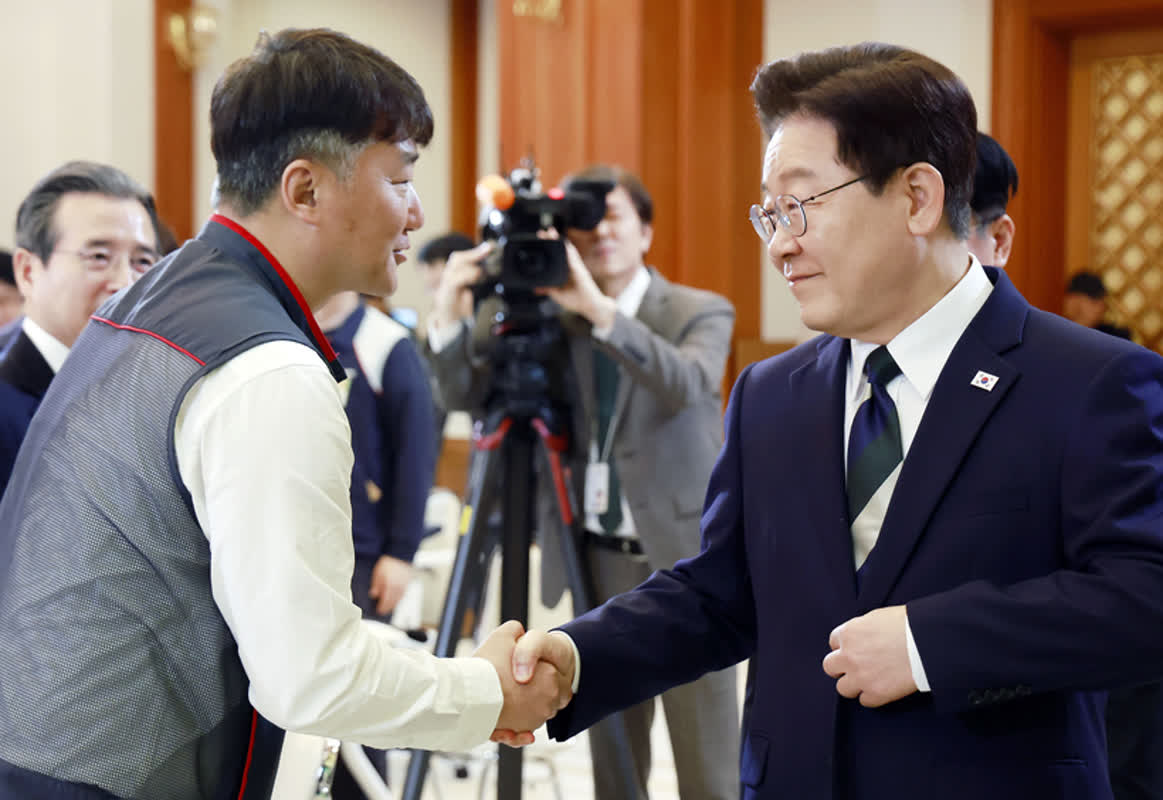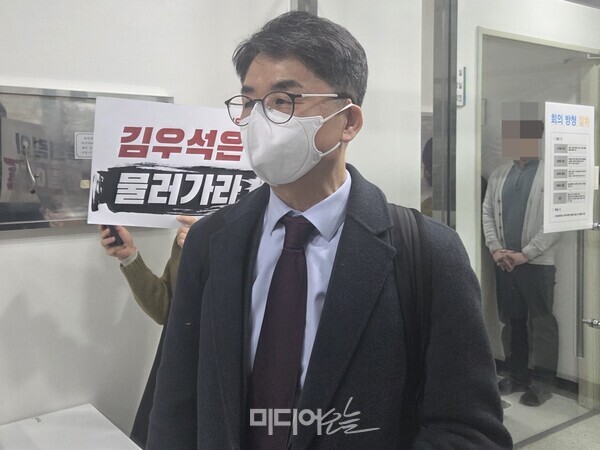
The Yoon Suk Yeol administration has appointed Kim Wooseok, a former review commissioner, as a standing commissioner of the Broadcasting, Media and Communications Review Board (BMCRB). The board failed to select a standing commissioner during its first two meetings because some members objected, but a vote at the third meeting approved the appointment. Once nominee Ko Gwang-heon’s parliamentary confirmation hearing concludes, the first-term standing-commissioner lineup will be complete.
The BMCRB held its third meeting to select a standing commissioner on the 23rd at the Broadcasting Hall in Mok-dong, Seoul. Disagreement over the appointment persisted. Members nominated by the ruling party, including Cho Seung-ho and Choi Seon-young, argued that selecting Kim without a formal apology or concrete procedures to address alleged politically driven reviews would not constitute a true normalization of the board.
A majority of members, however, said a standing commissioner was needed promptly to ensure the board could function. A secret ballot resulted in Kim Wooseok’s selection by a 6–3 vote. Hong Mi-ae, another ruling-party nominee, said that regardless of the outcome, Kim must heed the concerns of BMCRB staff. On the 16th, 181 BMCRB employees issued a joint statement opposing his appointment.
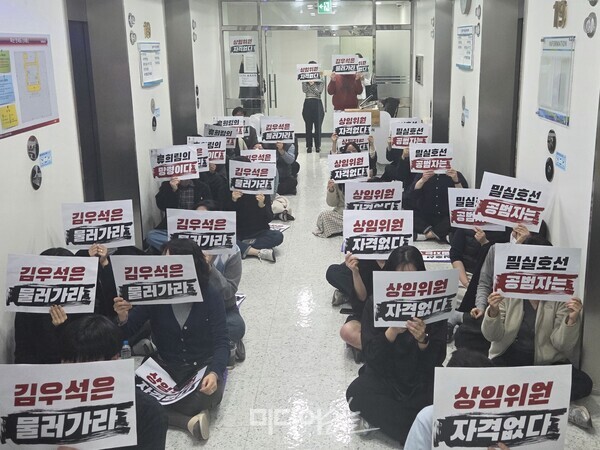
Kim Wooseok, reportedly the People Power Party’s nominee for the standing-commissioner slot, was appointed as a BMCRB commissioner on the 10th. The board attempted to promote him to standing commissioner in closed meetings on the 12th and 16th, but objections from some members blocked those efforts. Critics note that Kim, who served on the 5th Review Board from 2021 to 2024, led what they describe as politically motivated reviews under Ryu Hee-rim’s leadership, approving a wave of disciplinary measures against MBC and other outlets that had criticized the government.
The BMCRB branch of the National Union of Mediaworkers issued a statement on the 23rd titled “Condemning Kim Wooseok’s Appointment: We Remember the ‘Biased Reviews and Mockery of the Secretariat.’” The union said Kim offered no sincere apology for the dysfunction his previous term caused and warned that seating an unfit official who damaged the review body out of deference to the nominator will leave a painful stain on the committee’s history.
The union added that presenting a hollow nine-member panel as a return to normalcy deceives a public that hoped to see media-control practices ended. It urged Kim to remember that his appointment does not close the matter and that the standing-commissioner role cannot serve as a pardon for past reviews that effectively silenced dissent.
Roster for June local-election review panel approved… Will it end 'political reviews'?
On the same day, the BMCRB approved the roster for the Election Broadcasting Review Committee (EBRC), which will oversee broadcasts for the June 3 nationwide local elections; the panel will serve through July 3. The EBRC was originally scheduled to launch on Feb. 2, but delayed nominations pushed back its start. Groups with strong political leanings—such as the Citizens’ Alliance for Fair Media, which drew criticism over politically driven reviews during the Yoon administration—were excluded from nominations.
The approved EBRC roster includes △ Lee Jong-soo, professor at Yonsei University Law School (nominated by the BMCRB) △ Cho Young-gwan, partner at Deoksu Law Firm (nominated by the Democratic Party) △ Park Ki-wan, member of TV Chosun’s Special Committee on Fair Reporting (nominated by the People Power Party) △ Won Jun-hee, standing commissioner of the Gyeongsangnam-do Election Commission (nominated by the National Election Commission) △ Shin Ho-chul, policy director at the Korea Cable TV Association (nominated by the Korea Cable TV Association) △ Chae Young-gil, professor in the Department of Media and Communication at Hankuk University of Foreign Studies (nominated by the Korean Broadcast Association) △ Lim Jang-won, professor at Semyung University’s Graduate School of Journalism (nominated by the Broadcast Reporters Association) △ Kwon Soon-taek, secretary-general of the Citizens’ Coalition for Media Reform (nominated by the Citizens’ Coalition for Media Reform).
Under the Public Official Election Act, the EBRC is an entity the BMCRB establishes and operates; it serves from 60 days before an election through 30 days after. The nine-member panel includes one nominee each from the parliamentary negotiating parties (People Power Party and Democratic Party), the National Election Commission, the Korean Bar Association, and representatives from broadcasting, academia, press organizations and civic groups. The BMCRB can nominate one member itself and can designate which organizations nominate the representatives for broadcasting, academia, press and civic groups, meaning the board can effectively influence recommendations for five members.