“A knife in the families' hearts” vs. “cheap security peddling”… Partisan clash over the Cheonan attack intensifies
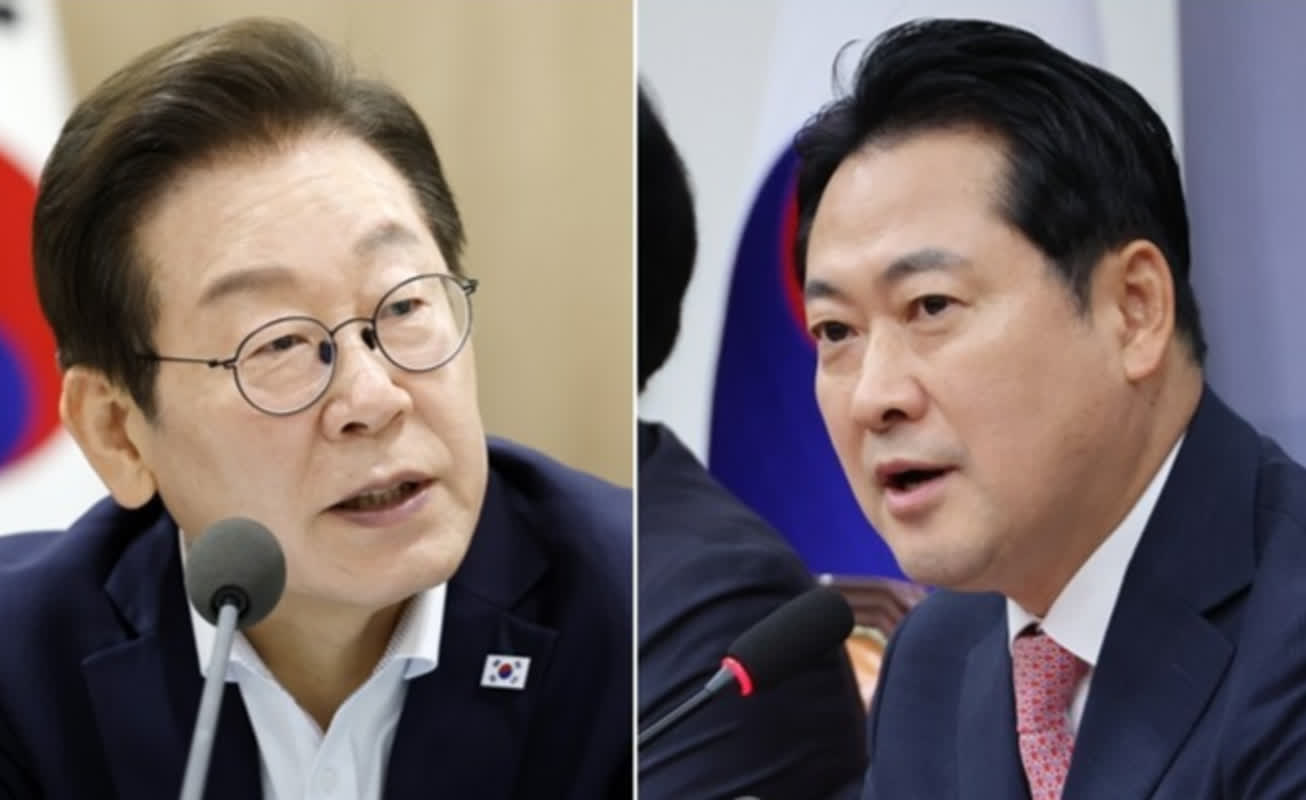
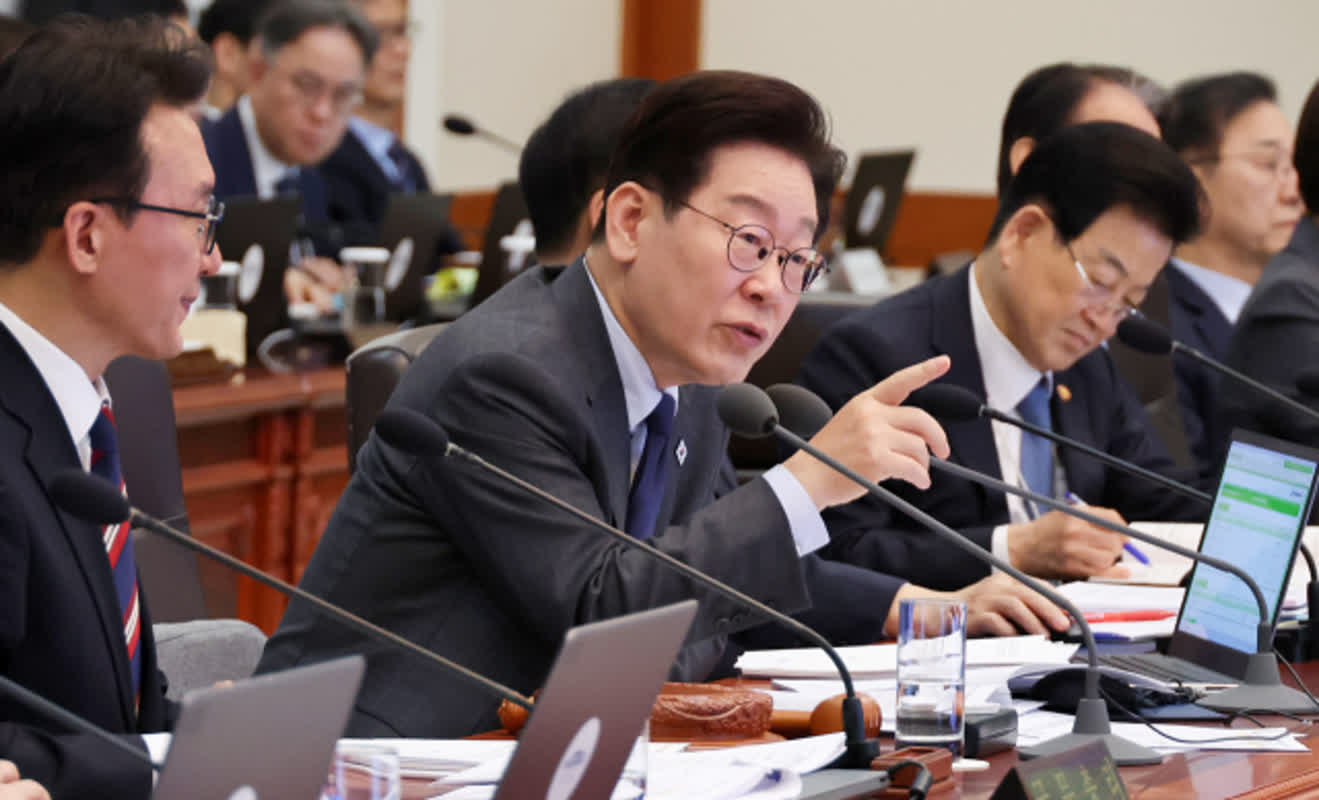
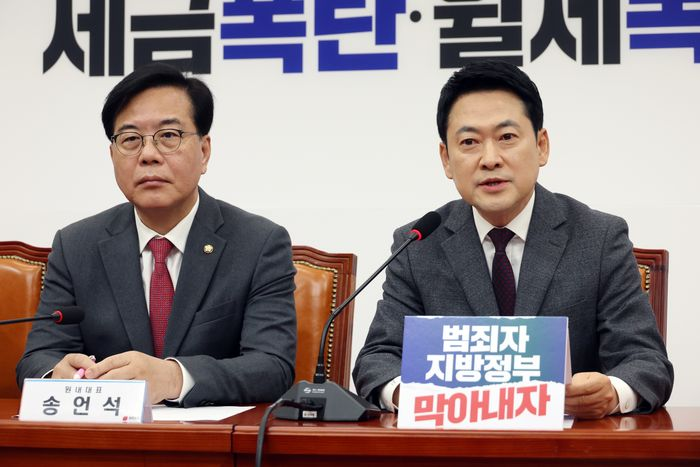
On March 28, Baek Seung-ah, the Democratic Party's floor spokesperson, accused the People Power Party of exploiting the sacred sacrifice of national defense heroes for crude \"security peddling\" ahead of local elections, after that party urged President Lee Jae-myung to demand an apology from North Korea over the attack on the Cheonan.
Baek spoke out after critics in the People Power Party attacked President Lee for comments he made the previous day — when families of Cheonan victims asked him to demand an apology from North Korea, he reportedly said, \"If you tell them to apologize, will they apologize?\" — calling the party's criticism an excessive political assault.
Earlier, the People Power Party cited a media report that the president replied to victims' requests at the West Sea Defense Day ceremony by asking, \"If you tell them to apologize, will North Korea do it?\" and charged that the president had driven \"another dagger into the hearts of the Cheonan victims' families.\"
Baek countered that the president's remark did not dismiss the request for an apology itself. She said he outlined a pragmatic approach focused on holding North Korea accountable, managing tensions on the Korean Peninsula, and pursuing measures that would produce concrete change. \"The president remains unwavering in his commitment to the security of the Republic of Korea,\" she said, \"but he emphasized effective, rather than emotional, responses.\"
Baek accused the People Power Party of distorting the intent of the president's remarks and mounting an excessive political offensive, saying, \"That kind of assault only deepens the families' wounds.\" She noted that the president honored the fallen, pledged to improve the joint-burial system for unmarried service members killed in the line of duty, and treated ceremonial matters with care. \"To denigrate these sincere efforts as an 'attendance show' is an insult to and a desecration of our national martyrs,\" she added.
Lee Hyuk-jae: “Youth who protest on the streets are valuable assets…Rally behind Jang Dong-hyuk for victory”
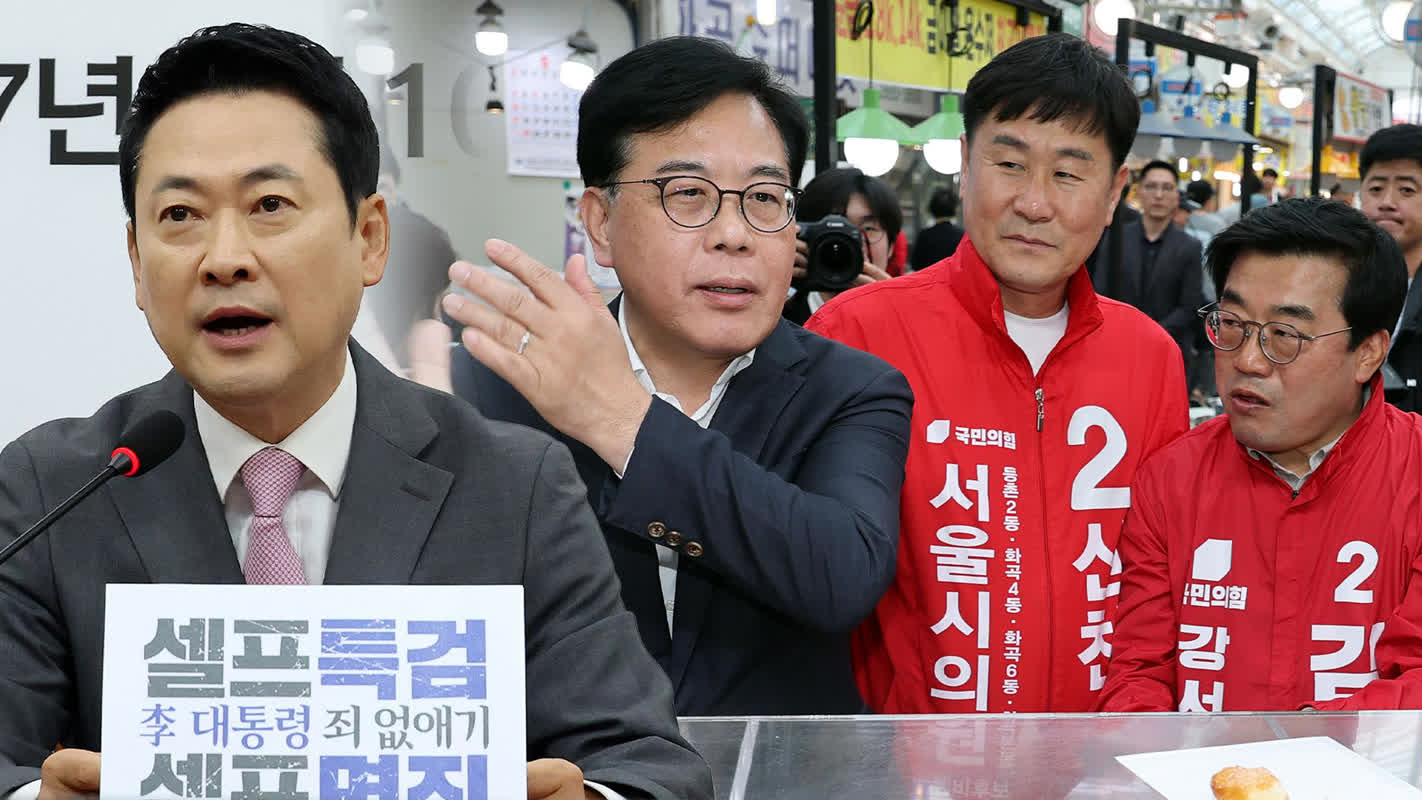
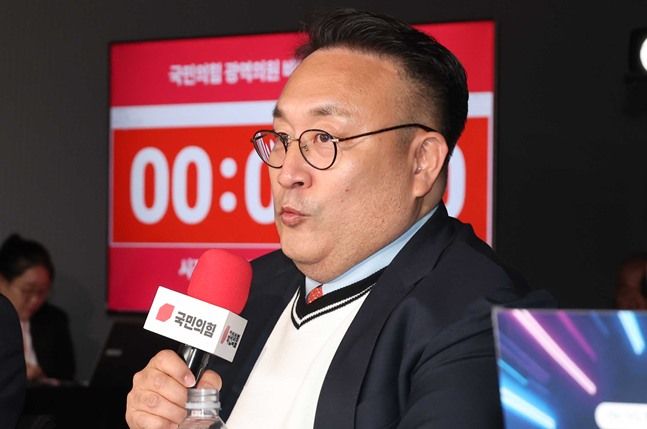
On March 28, the People Power Party held a public audition to select proportional-representation youth candidates for provincial assemblies. Comedian Lee Hyuk-jae — who has faced controversies including a reported barroom assault and calls within the party for his removal — served as a judge.
After the first-round judging, Lee pointed to young demonstrators in central Seoul districts such as Gwanghwamun and Gangnam and said, \"Young people protesting on the pavement are our asset, and young people fighting for change in front of these judges are also valuable assets.\" He added, \"All the media say the People Power Party is disadvantaged in this local election, but I don't think so. Stop dividing and feuding; let's unite behind Leader Jang Dong-hyuk and focus exclusively on winning the local elections.\"
Lee has been embroiled in controversies, including a 2010 barroom assault, unpaid employee wages in 2014, and being listed as a high-amount tax defaulter by the National Tax Service in 2024. His role as a judge in the party's youth audition drew internal criticism as inappropriate. He did not offer a substantive comment about his position at the event.
Party leader Jang Dong-hyuk also attended the audition. In his remarks he said, \"The reason young people should lead politics is clear; we have simply turned a blind eye. We will give young people the center of politics.\"
Prosecutor's Office closure nears, departures accelerate…58 prosecutors have left already this year
With the planned abolition of the Prosecutor's Office six months away, the exodus of prosecutors is accelerating. Inside the prosecution, some officials say the workload has become unmanageable.
According to the Ministry of Justice, 58 prosecutors resigned this year as of yesterday. Last year, 175 prosecutors resigned (including 66 rank-and-file prosecutors), the highest number in a decade; this year, a third of that total left in less than three months. Several junior prosecutors have announced their intention to resign but have not completed the formal process; including them would push the total above 60.
Observers also note that the steady secondment of prosecutors to special investigation teams is increasing the workload. As of March 25, the ministry reported that 67 prosecutors had been dispatched to five special prosecutor offices.
The number of prosecutors on leave has risen as well. The office of People Power lawmaker Joo Jin-woo reported 132 prosecutors took leave last year — 109 for childcare and 19 for medical reasons — the highest level since 2016. That figure represents roughly a 25% increase from 2024, when 99 prosecutors were on leave.
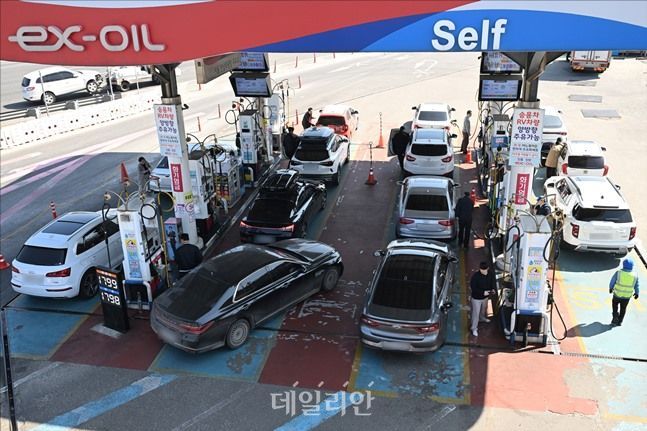
Fear of a '2,000 KRW' fuel era: After the second price-cap measure, gasoline prices surge nationwide
According to the oil price information system OPINET, as of 9 a.m. on March 28 the nationwide average retail gasoline price stood at 1,849.7 KRW per liter (about $1.39 per liter; about $5.25 per gallon), up 10.9 KRW (about $0.01) from the previous day. Diesel rose to 1,844.1 KRW per liter (about $1.38 per liter; about $5.24 per gallon), an increase of 9.6 KRW (about $0.01).
Seoul saw especially sharp gains. The city's average gasoline price jumped to 1,890.5 KRW per liter (about $1.42 per liter; about $5.37 per gallon), a one-day rise of 24.9 KRW (about $0.02), while diesel climbed 18.6 KRW to 1,872.1 KRW per liter (about $1.40 per liter; about $5.32 per gallon).
On the first day the second nationwide price-cap policy took effect on March 27, prices had already risen sharply: the national average gasoline price reached 1,838.8 KRW per liter (about $1.38 per liter; about $5.22 per gallon), up 19.4 KRW (about $0.01) from the day before, and diesel hit 1,834.6 KRW per liter (about $1.38 per liter; about $5.22 per gallon), up 18.8 KRW (about $0.01).
The government set the second price-cap levels on March 27 at: regular gasoline 1,934 KRW per liter (about $1.45 per liter; about $5.49 per gallon), automotive and marine diesel 1,923 KRW per liter (about $1.44 per liter; about $5.46 per gallon), and indoor kerosene 1,530 KRW per liter (about $1.15 per liter; about $4.35 per gallon). Each cap represents a 210 KRW increase over the first cap (about $0.16 per liter; roughly $0.60 per gallon).
Industry sources warn that if the current upward trend continues, the nationwide average retail gasoline price could exceed 2,000 KRW per liter next week (about $1.50 per liter; about $5.68 per gallon). During the first price-cap phase, retail pump prices were typically about 100 KRW (about $0.08) higher than refiners' supply prices.
©(Dailian Co.) Unauthorized reproduction and redistribution prohibited