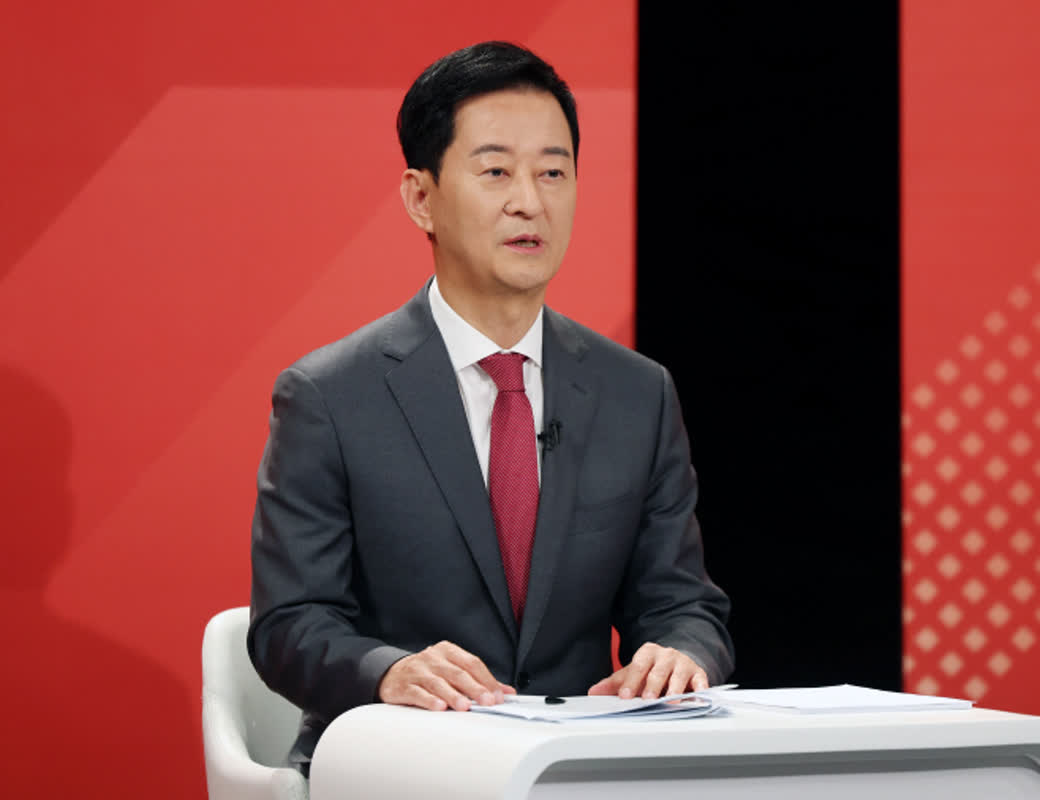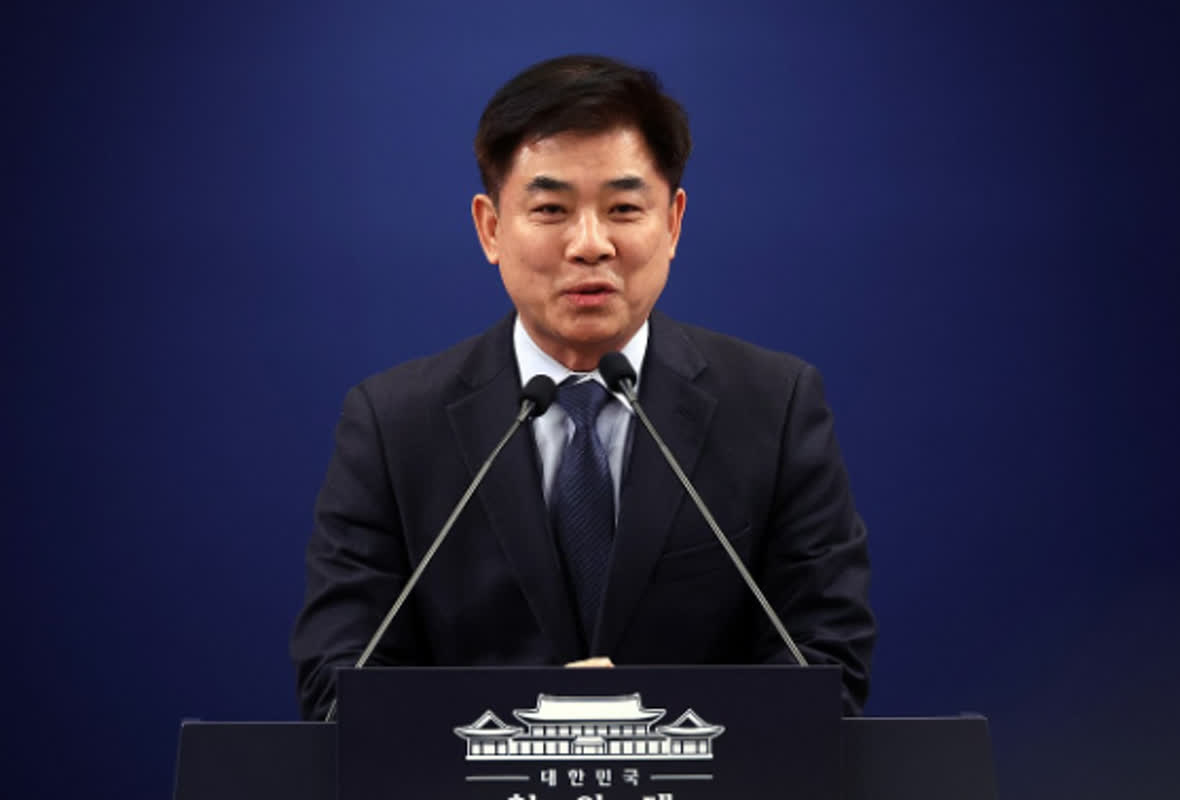
Ahead of the special investigative committee’s first public hearing on the Oct. 29 Itaewon disaster, Yoon Suk Yeol, the former president, again notified the committee he will not attend, citing preparations for multiple court cases. Committee officials said he faces trials both as a defendant and as a witness.
The committee warned it may pursue legal action if Yoon Suk Yeol ultimately fails to appear without a valid excuse.
On the afternoon of the 10th at the committee auditorium in Jung‑gu, Seoul, Chair Song Gi‑chun held a news conference and said the former president told the committee he is too occupied preparing for trials—as both defendant and witness—to come to the hearing.
The committee said it will consider legal measures, including filing charges, if Yoon Suk Yeol does not attend. That morning, he refused the committee’s request for a meeting at Seoul Detention Center and reiterated his intention to skip the hearing.
Under the law that established the Itaewon Disaster Truth Commission, anyone who fails to appear at a hearing without a valid reason, or who refuses to take an oath or to testify, may face up to three years in prison or a fine of up to 30 million KRW (22,500 USD).
When asked whether the committee had discussed filing charges against the former president, Song said they had not yet done so. He added that if the committee decides to proceed, it will convene immediately to make a determination, and that the panel must assess whether Yoon’s stated reasons hold up.
Standing Commissioner Wi Eun‑jin said that referring the matter to prosecutors or filing charges would require a committee vote, so further discussion is needed — but those options remain possible.
The court accepted the committee’s request to reschedule trial dates to allow Yoon to attend and postponed the trial date originally set for the 13th. On Feb. 27, Yoon submitted a notice stating he would not attend the hearings scheduled for the 12th–13th because of trial preparations.
The committee had planned to question Yoon Suk Yeol about the absence of a disaster control tower and gaps in accountability. Song said that if the former president appears as a witness, the panel will add a separate session on the morning of the 13th to question him about the control tower and accountability lapses for about 30–40 minutes.
Song emphasized the need to determine what role the presidential office played at the time. He said the committee must review meetings that included the prime minister to identify what orders were issued and whether expected roles in the disaster response were fulfilled.
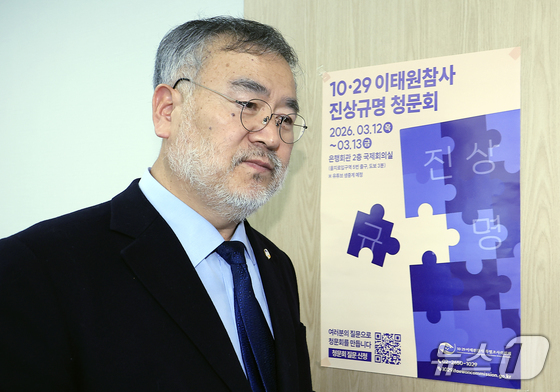
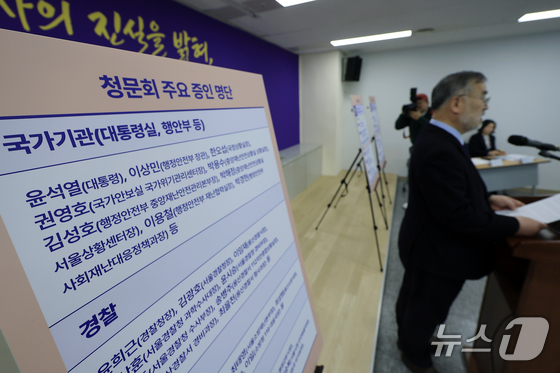
The committee has summoned 54 witnesses and 23 reference witnesses — 77 people in total. It originally posted notices for 72 witnesses and 22 reference witnesses but later excluded some. Major figures include Yoon Suk Yeol, former Minister of the Interior and Safety Lee Sang‑min, former National Police Agency chief Yoon Hee‑geun, former Seoul Police Commissioner Kim Kwang‑ho, former acting Fire Agency chief Nam Hwa‑young, and Yongsan District Mayor Park Hee‑young.
So far, only one witness — the former president — and two reference witnesses have submitted notices of nonattendance. Lee Sang‑min’s team has informed the committee, via Seoul Detention Center, that he will appear as a witness.
The committee said it will hold additional hearings if needed.
Song stressed that the hearings are meant to establish the facts and clarify responsibility, not to single out or punish specific individuals or institutions. He said the inquiry should sharpen the factual record, prompt a review of South Korea’s disaster response system, and lead to reforms that prevent a recurrence.
The hearings will run over two days, the 12th and 13th, across nine sessions focused on prevention and preparedness before the disaster and on response and recovery after it.
Day one will open with testimony from bereaved families and victims and will focus on shortcomings in prevention and preparedness.
Sessions will examine, among other issues: why repeated 112 emergency calls did not prompt dispatch or information sharing; police deployment and operations that failed to provide crowd control despite clear risk indicators; whether reporting and response systems for crowd danger functioned; command structures and gaps in responsibility during the crisis; delays in recognizing the disaster and transitioning response phases; and systemic failures in rescue and emergency medical operations.
Day two will center on response and recovery, covering topics such as the adequacy of preemptive measures (including whether trains should have been stopped at Itaewon Station); the functioning of local disaster response systems and any false official documentation; victim support and rights protections; the handling and recovery of victims at the scene; and reforms needed to strengthen disaster response.
Members of the public may submit written questions and speak during the hearings. The full proceedings will be broadcast live on two channels, in Korean and English.