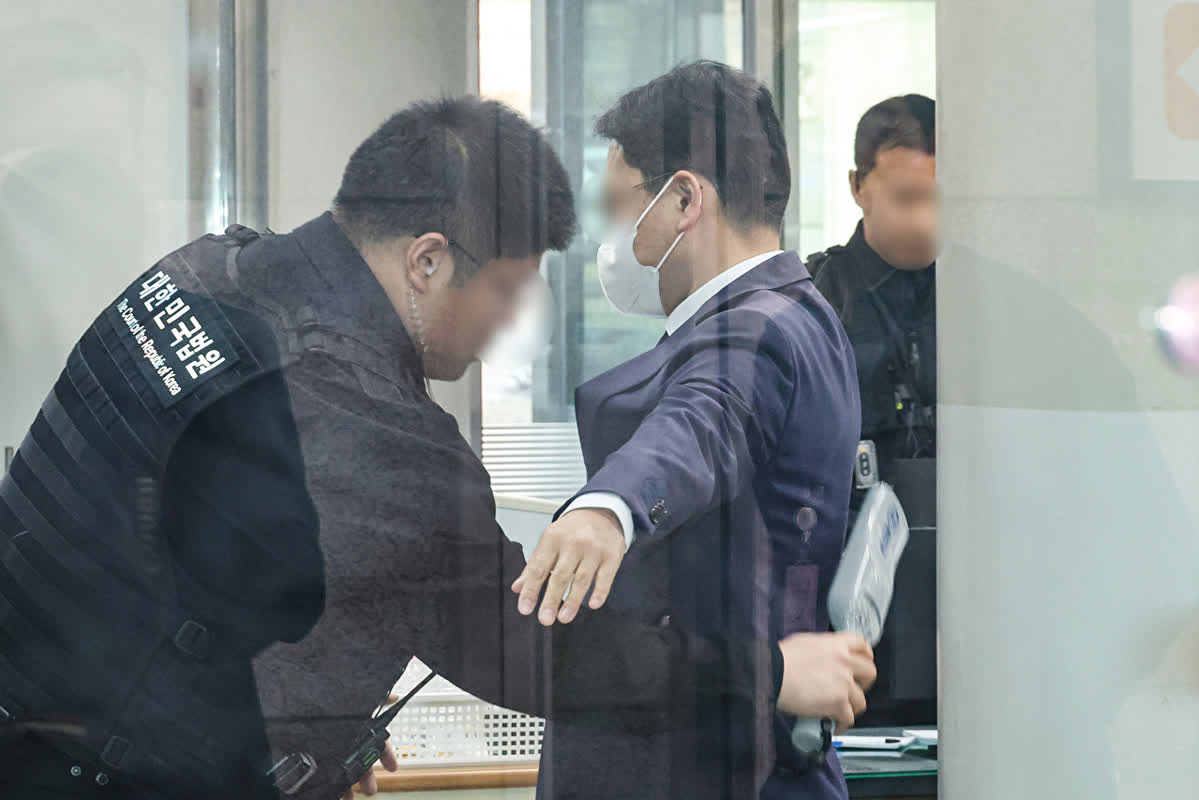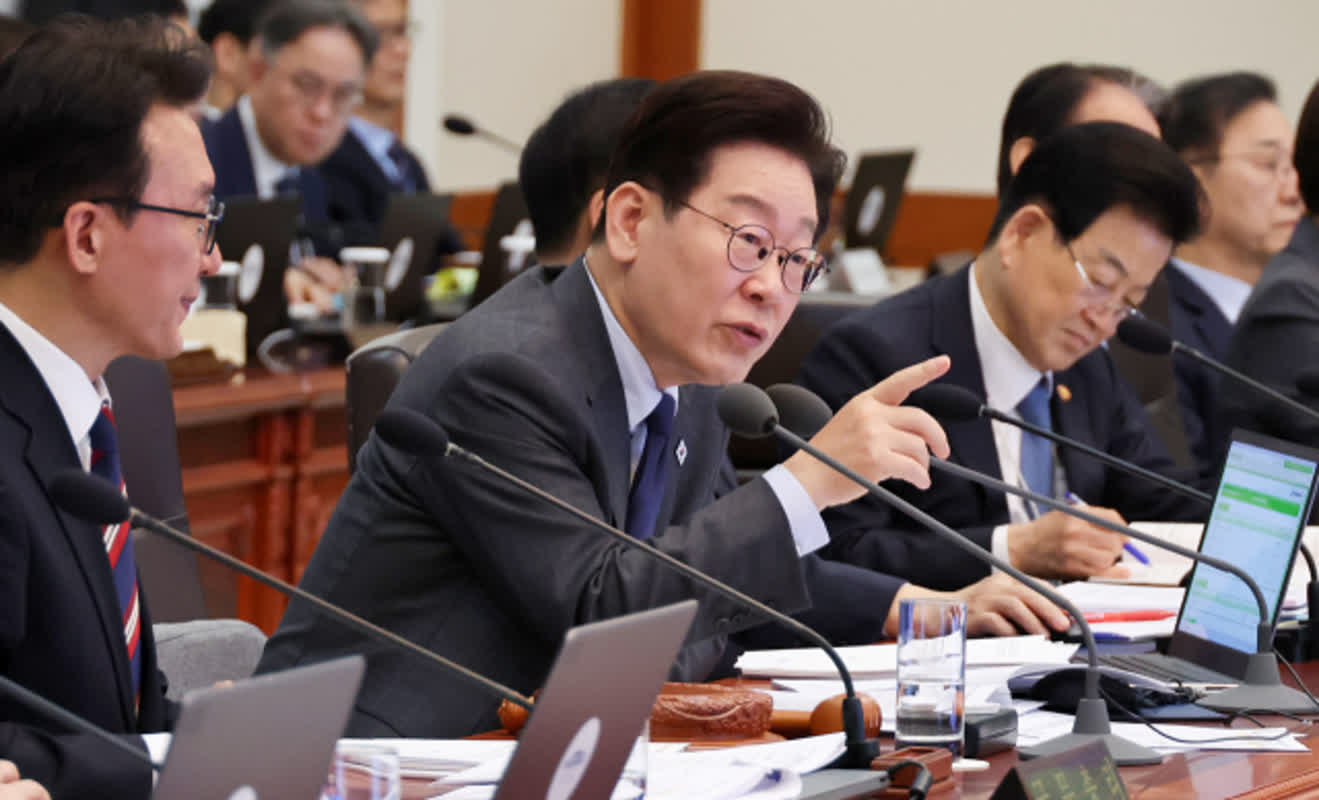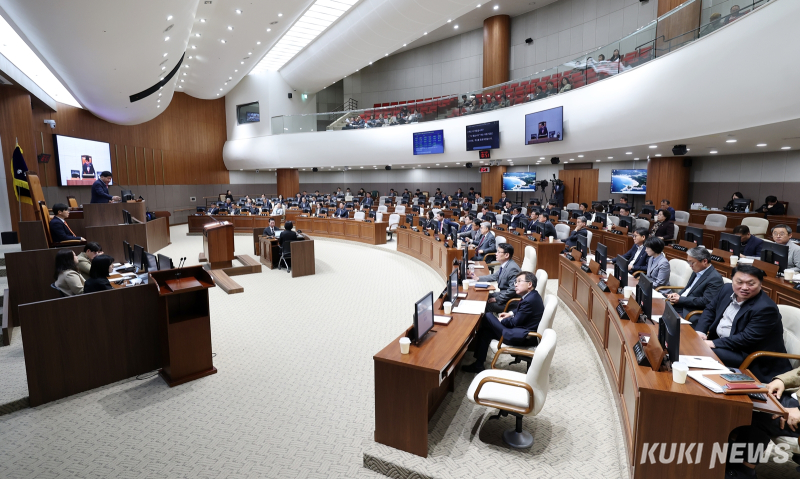
On April 9, the Chungcheongnam-do Council concluded the 365th extraordinary session at its third plenary meeting, approving 47 agenda items, including the “Ordinance on Fostering the Renewable Energy Industry in Chungcheongnam-do.”
During the session, six council members questioned provincial and education administrators to review overall governance, and 14 members delivered five-minute statements urging concrete solutions to local issues.
The plenary also adopted six petitions, including one calling for improvements to the number of local assembly seats and to electoral districting.
Meanwhile, Councilor Koo Hyung-seo (Cheonan 4, Democratic Party) was elected chair of the Budget and Accounts Special Committee, filling a vacancy. The Nonsan World Strawberry Sports & Industry Expo Special Committee also visited the Nonsan Strawberry Festival to inspect the event site, underscoring active special committee engagement.
Council Chairman Hong Seong-hyun (Cheonan 1, People Power Party) said, “In this extraordinary session, we reviewed major issues through questioning of provincial and education administration and processed a range of agenda items. I thank my fellow council members for their dedicated work and the public officials who supported these efforts.”
Rep. Park Jeong-su: “Dome stadium candidate sites require comprehensive, objective review”
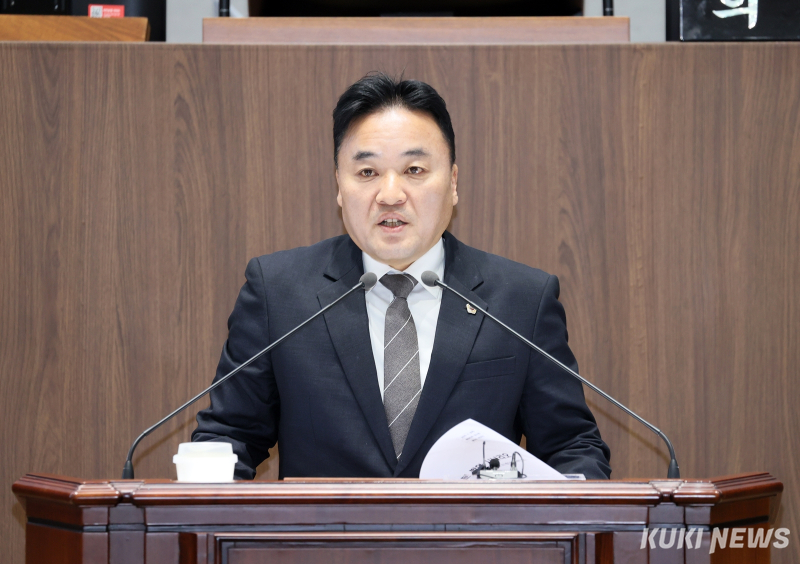
Rep. Park Jeong-su (Cheonan 9, People Power Party) said during his five-minute statement at the third plenary that plans to build a dome stadium near Cheonan-Asan KTX Station must move beyond proposals and declarations and be turned into a concrete, actionable roadmap.
Last November, Chungnam province officially announced plans to build a roughly 50,000-seat dome near KTX Cheonan-Asan Station. Authorities are pursuing private investment, forming a task force, and launching feasibility studies.
Park described the dome project — intended as a year-round cultural and sports complex hosting professional baseball and large-scale cultural performances — as a meaningful effort to rebalance cultural and sports infrastructure concentrated in the Seoul metropolitan area. He said it could help position Chungnam as a new cultural and content hub.
He welcomed follow-up steps such as plans to pursue private investment with participation from major entertainment companies like HYBE, SM, and JYP, the task force launch, and the start of feasibility studies, noting these developments signal movement from declaration to implementation.
At the same time, Park cautioned that the dome will be a massive, complex facility requiring more than 1 trillion KRW (approximately 750 million USD) in investment and occupying about 75,000 pyeong of land. He said a more detailed implementation roadmap is needed to ensure it becomes a long-term regional asset, and he offered five priorities to ensure successful delivery.
First, Park called for a clear division of responsibilities among Chungnam province, Cheonan City, and Asan City. Establishing cooperation on land acquisition, permits, infrastructure, financing, and operating responsibilities in advance will secure project stability and speed.
Second, he urged transparent disclosure of the financial structure for private investment, including the scope of public funding and risk-sharing arrangements, so residents clearly understand fiscal exposure and the project can earn public trust.
Third, he recommended preparing an operational strategy in advance. A professional management organization and efficient operations are necessary so the dome can host baseball, large-scale performances, exhibitions, and corporate events year-round.
Fourth, Park advised a careful, objective review of candidate sites. While the area near KTX Cheonan-Asan Station is a leading option, officials should compare alternatives — such as Sinbang-dong or Buldang-dong in Cheonan and Jangjae-ri or Hyudae-ri in Asan — based on regional access, traffic capacity, urban expansion potential, and commercial linkages.
Finally, with other regions like Chungbuk and Busan also considering major stadium projects, Chungnam needs a strategy to secure the dome’s distinctiveness and competitiveness.
Rep. Bang Han-il: “Train future talent through science–art fusion education”
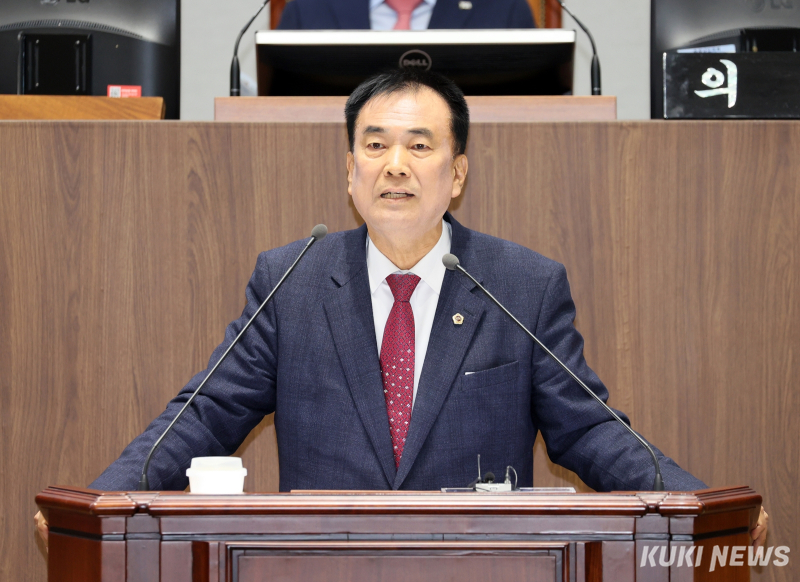
Rep. Bang Han-il (Yesan 1, Independent) said the AI-driven transformation requires a comprehensive overhaul of Chungnam’s education system so students can develop as creative, interdisciplinary thinkers.
Bang cited examples from researchers at the Max Planck Society and prominent scientists to argue that the arts expand scientific insight and imagination. He noted that figures such as Einstein and Heisenberg cultivated creative thinking through music.
He referenced research by Professor Root-Bernstein’s team at Michigan State University showing that Nobel laureates engage in arts — music, visual arts, literature — at higher rates than other scientists, suggesting artistic experience correlates with creative achievement.
Bang criticized Korea’s current system, which pressures students to choose between science and the arts after entering high school due to track selection and exam demands. He said this fragmentation limits students’ thinking and suppresses creativity.
Quoting former MIT president Charles Vest — who said “the arts hold a deep and lasting place at MIT” — Bang argued that even leading science and technology universities treat the arts as central to creativity and innovation.
He urged the Chungnam Office of Education to lead reform and proposed expanding a Chungnam-style interdisciplinary education model that fuses scientific principles with artistic imagination; creating school-based creative fusion spaces and cooperative networks for regular exchanges between science and the arts; and undertaking efforts to shift perceptions across the education community.
Rep. Shin Han-cheol urges immediate fixes to kindergarten priority admissions for multi-child families
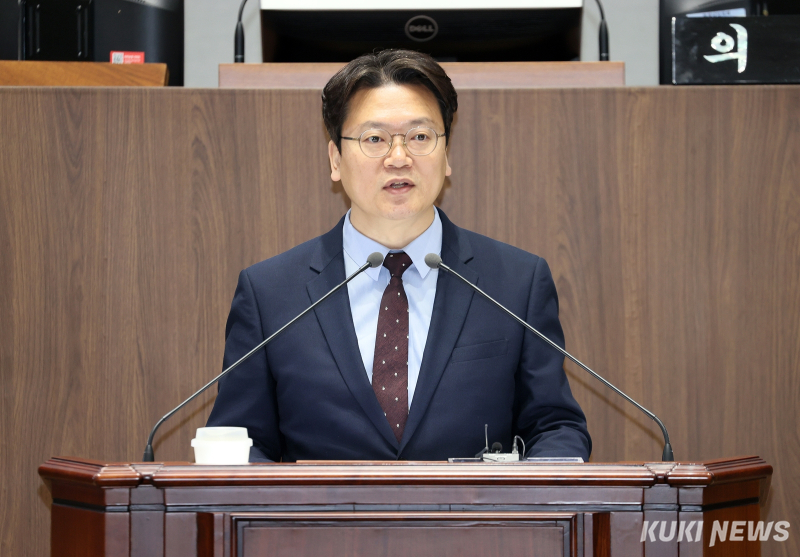
Rep. Shin Han-cheol (Cheonan 2, People Power Party) criticized the Chungnam Office of Education for failing to implement an ordinance that grants admission priority to multi-child families at kindergartens and demanded immediate corrective action during his five-minute statement.
In 2023, the council amended the “Ordinance on Kindergarten Child Recruitment and Selection in Chungcheongnam-do” to grant priority to families with two or more children and to differentiate priority by family size — creating a legal basis for meaningful support of multi-child households during kindergarten admissions.
But Shin said three years after the amendment, the ordinance’s intent has not been fully reflected in practice. The rule’s first application in the 2024 school year was not implemented, and despite an official apology by the superintendent and promises to prevent recurrence, improvements remain inadequate.
Chungnam Office of Education data show the differential implementation rate for multi-child priority was 72.1% in 2025 and 80% in 2026. The data also show that 70 kindergartens have refused to implement the ordinance for two years, and 20 kindergartens that once applied it later revoked the practice.
Shin said, “This shows the education office’s administrative guidance is not functioning in the field. The ordinance is a promise to residents and a legal duty that must be upheld.” He added, “That the rule has been neglected for three years calls into question the education office’s enforcement will and its management responsibility.”
Rep. Jeong Gwang-seop urges introduction of a “price-difference support system” for tax-free fuel used in agriculture and fisheries
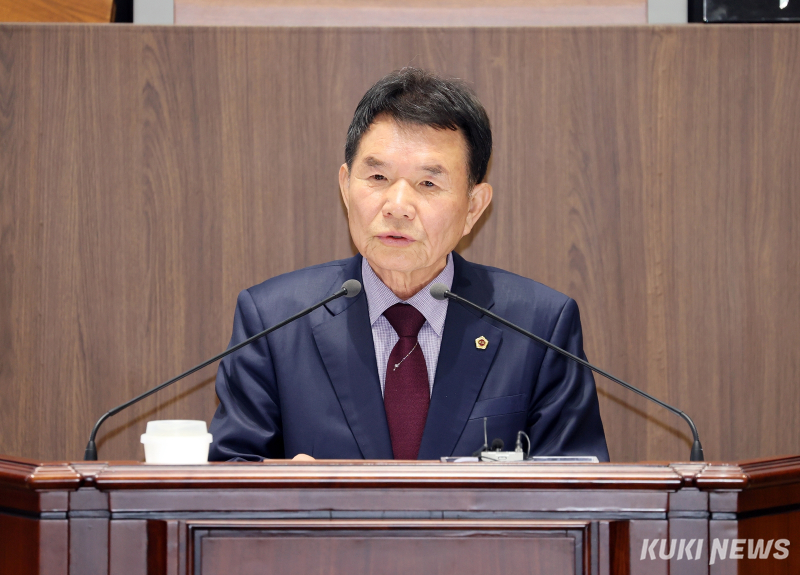
Rep. Jeong Gwang-seop (Taean 2, People Power Party) warned about sharp price increases in tax-exempt fuel used by farmers and fishers amid rising global oil prices, and urged Chungnam to adopt a price-difference support mechanism.
Jeong said international oil prices have risen due to conflict in the Middle East and geopolitical instability, driving up prices for tax-exempt fuel used in agriculture and fisheries by as much as 21% between early January and early April.
He said diesel rose from 1,152 KRW to 1,396 KRW per liter (about $0.86 → $1.05), a roughly 21.2% increase; kerosene rose from 1,143 KRW to 1,312 KRW per liter (about $0.86 → $0.98), up about 14.8%; and gasoline rose from 1,054 KRW to 1,198 KRW per liter (about $0.79 → $0.90), up about 13.6% — all within three months.
Jeong explained that agriculture depends on fuel to operate tractors and combines, and greenhouse farmers rely heavily on tax-exempt fuel for heating. Fisheries likewise depend on fuel for vessel operation, so rising fuel costs can quickly force fishers to reduce operations and see incomes decline.
He noted that although the national government implemented a maximum fuel price policy, farmers and fishers still face severe cost pressure. “Producers are squeezed by rising production costs and price controls, pushing many toward a management crisis,” he said.
Jeong added that because Chungnam relies heavily on agriculture and fisheries, any collapse in these sectors would directly affect the regional economy and residents’ livelihoods. “While we cannot predict global oil prices, we can prepare policies to minimize the damage,” he said.
Rep. Hong Ki-hoo pushes to institutionalize a Chungnam-style, win-win offshore wind industry
The Chungnam Council has moved to establish a legal framework to develop the offshore wind industry and create a Chungnam-style industrial ecosystem where fisheries, the environment, and local communities can coexist.
The council said that Rep. Hong Ki-hoo (Dangjin 3, Democratic Party) led the passage of the “Ordinance on Supporting the Revitalization of the Chungcheongnam-do Offshore Wind Industry” at the third plenary of the 365th extraordinary session. The ordinance sets out measures to systematically build offshore wind farms, stimulate related industries, and create jobs to boost the regional economy.
The ordinance includes provincial support measures for the offshore wind industry and addresses coexistence with fisheries, securing resident acceptance, marine environmental protection, and regional economic revitalization.
Notably, it authorizes the governor to pursue R&D on measures such as increasing marine resources within offshore wind farms; stabilizing the livelihoods of fishers and related organizations affected by reduced fishing; generating income for local residents; promoting local economic activity; and monitoring marine environmental changes. These provisions aim to support coexistence between offshore wind development and fisheries.
The ordinance also allows the creation of a “Public–Private Council for the Offshore Wind Industry” to secure resident acceptance and guide project planning. The council will discuss candidate locations, local win-win measures, and benefit-sharing arrangements.
In addition, the ordinance requires that offshore wind development preserve marine environments and fishery resources and minimize environmental harm, institutionalizing a balance between development and conservation so residents can live in healthy, comfortable communities.
To maximize local economic benefits, the ordinance establishes the basis to encourage developers to prioritize locally produced goods and equipment and to hire local workers, fostering local industry growth and job creation.
Rep. Hong said, “Promoting the offshore wind industry is critical for job creation and regional economic revitalization. At the same time, we must protect fishers’ livelihoods and preserve the marine environment.”
He added, “I hope this ordinance serves as the starting point for building a Chungnam-style offshore wind ecosystem that coexists with local communities. The council will support thorough on-the-ground implementation through all available means.”