[NewsCulture columnist Choi Byung-il]
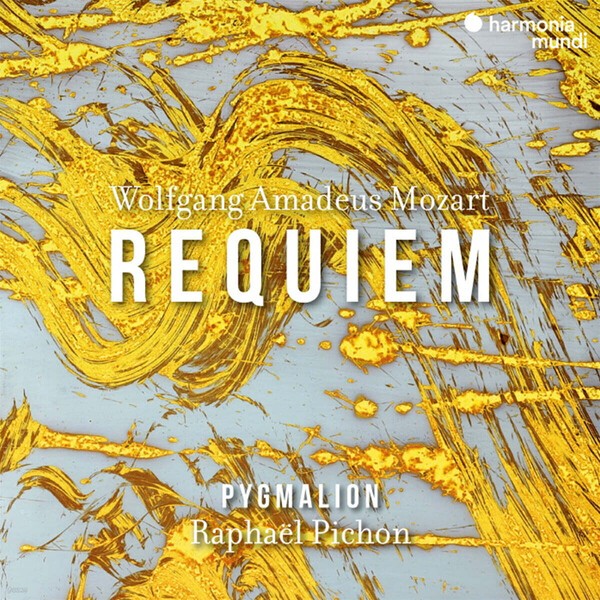
Some days the world feels like it's cracking open. Whether from a fresh loss or a moment when pain seems to consume you, a mournful melody can cut straight through and offer an odd kind of comfort. When Mozart's Requiem plays, the music stops being a performance and becomes, for a moment, a handkerchief for your tears.
In 1791, as he entered the final season of his life, Wolfgang Amadeus Mozart kept a single score on his desk. The title was simple; its resonance was anything but. Music historians still ask: for whom, exactly, was this Requiem—the mass for the dead—intended?
A familiar story surrounds the work's origin. One day, a mysterious man in black visited Mozart and asked him to compose a Requiem on behalf of an anonymous patron. Later investigators identified that patron as the Austrian nobleman Franz von Walsegg, who, grieving his wife's death, planned to present the piece as his own composition.
As his health declined, Mozart reportedly said, "I am composing my own funeral mass." Even if that sounds like a romantic embellishment, the Requiem's cold, tense beauty makes it hard to dismiss.
The Introitus opens with low strings and a chorus that settles like dusk. It does not so much inspire dread as a difficult, inward sinking—a tremor in the face of an inevitable fate, less the terror of death than the hush before it.
The Dies Irae belongs to another register entirely. This section, a hymn to wrath and judgment, crashes through like a storm. Driving rhythms and explosive choral bursts drag out fears hidden deep within us. Yet Mozart never leaves it at raw terror: even amid tumult, the architecture remains clear and the emotions deliberately shaped.
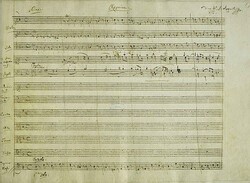
Mozart did not complete the work. His pupil, Franz Xaver Süssmayr, finished it from Mozart's sketches. That circumstance has long fueled the debate: is the Requiem purely Mozart's work, or a collaboration?
Süssmayr's completed sections can sometimes feel coarse or plain. Paradoxically, that plainness sets off Mozart's earlier music and creates a human space—a kind of honest margin. Imperfect, it feels more intimate.
People often call Mozart's music divine. The Requiem, though, sounds different. It reads less as a hymn to God than as a ledger of human feeling in God's presence.
Fear, grief, resignation—and a trace of hope—coexist in this score.
Perhaps that is why the Requiem makes us think less about death than about life: how fleeting this moment is, and how precious it can be.
Mozart died in December 1791 at thirty-five—far too young. His Requiem is not mere liturgical music; it poses one of humanity's deepest questions in one of its most beautiful forms.
NewsCulture Choi Byung-il skycbi@naver.com