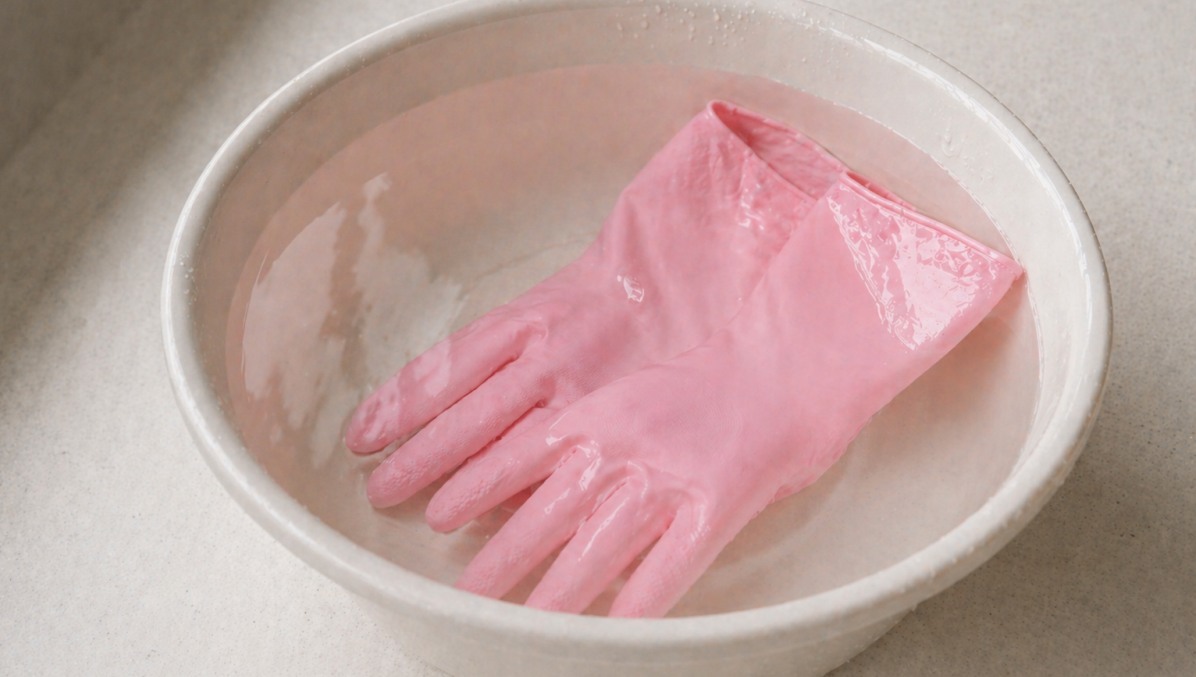
Rubber gloves are a kitchen workhorse—protecting our hands from hot water and detergents—yet we often neglect the gloves themselves.
Few people haven’t flinched at a musty odor from inside a glove or felt the irritation of tossing an otherwise usable pair because of a tiny hole. The remedy, however, is simple and likely waiting under your sink: plain vinegar and an old pair of gloves.
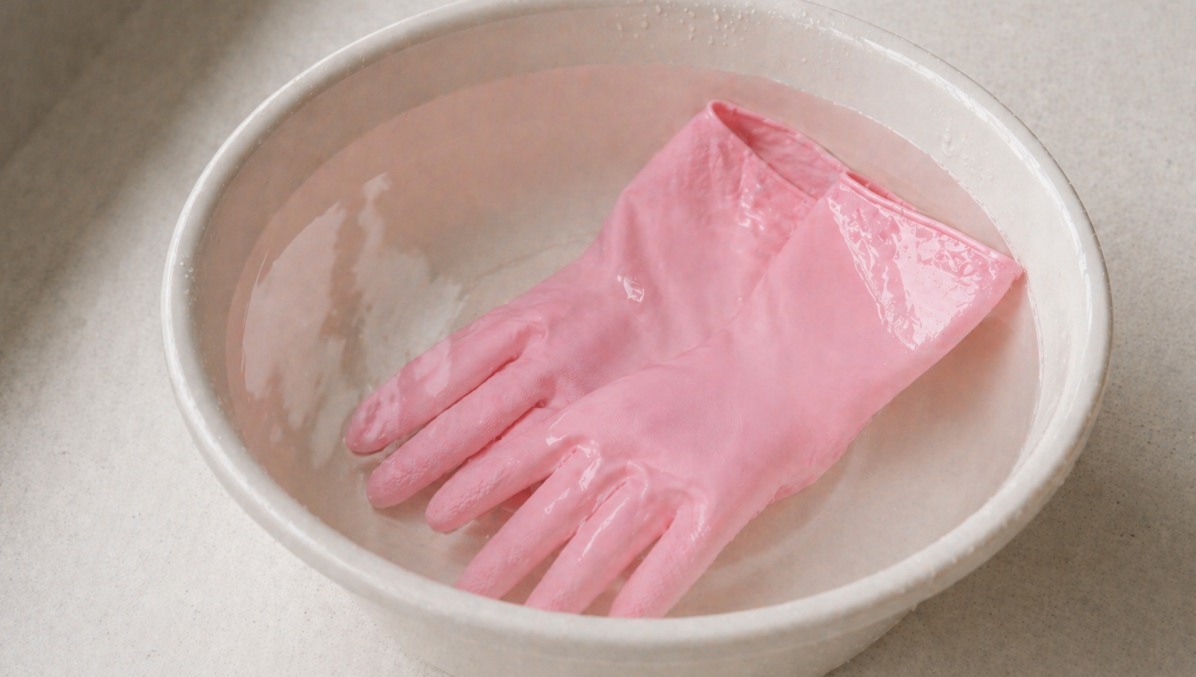
How to Remove Rubber Glove Odor: Use Vinegar
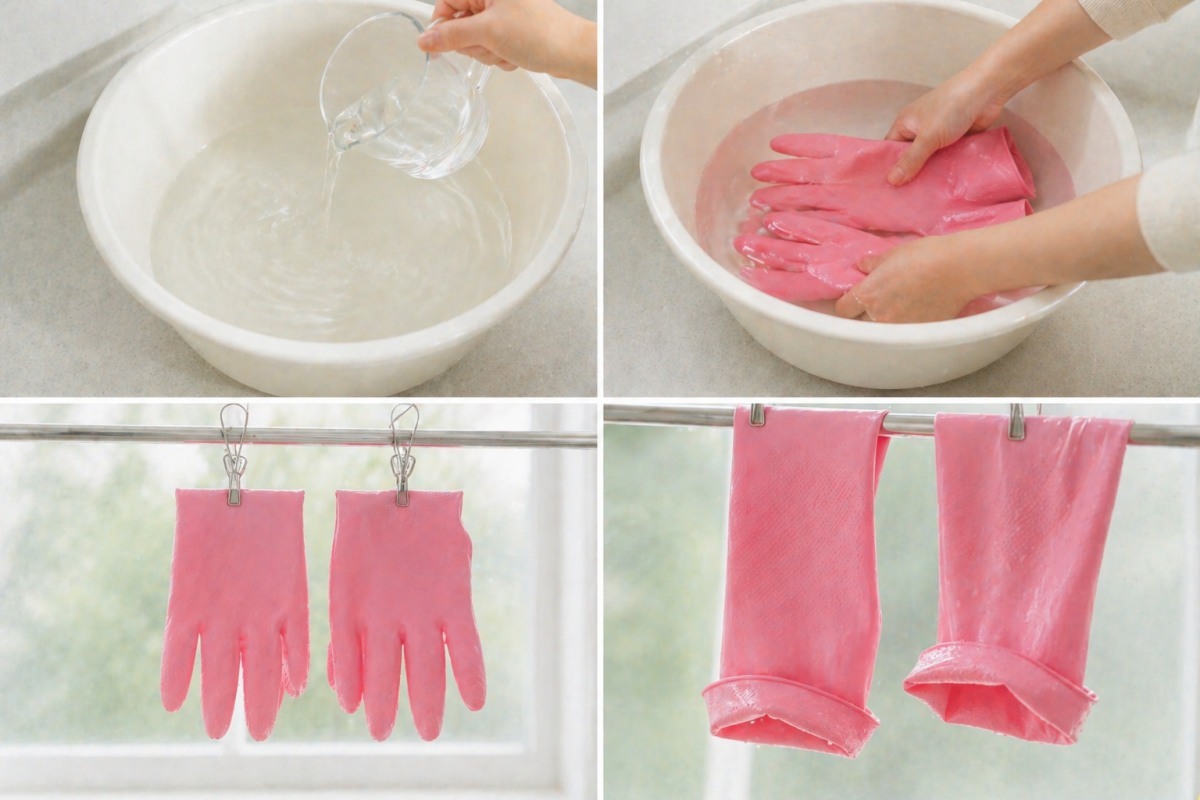
Removing it is easy. Mix lukewarm water and vinegar at a 3:1 or 4:1 ratio. Turn the gloves inside out so the interior is fully wet, then soak them for about 20 minutes. Acetic acid—the active ingredient in vinegar—helps neutralize odor molecules and break down protein residues.
Temperature matters. Keep the water lukewarm, about 30–40°C (86–104°F). Water that’s too hot can weaken the rubber’s polymer structure, leaving gloves sticky or hardened.
Don’t stop after soaking. Rinse the gloves thoroughly, turn them right-side out, and dry them completely in the shade with good airflow. Direct sunlight accelerates rubber oxidation, so avoid it. Use clothespins to secure the fingertips so moisture doesn’t linger before they’re fully dry.
Other Ways to Use Vinegar
Vinegar’s acidity helps dissolve alkaline grime and inhibits microbial activity.
Use it to descale kitchen appliances. White mineral buildup (limescale) from calcium and magnesium in tap water resists ordinary detergent. Fill an electric kettle with water, add about 2–3 tablespoons of vinegar, and bring it to a boil. The acid helps dissolve limescale. After boiling, rinse by boiling clear water once or twice to remove any remaining residue.
You can also steam-clean a microwave. Stubborn splatters and grease are hard to wipe away. Place a container of equal parts vinegar and water in the microwave and run it for about five minutes. The steam loosens grime on the interior walls; a quick wipe with a dry cloth completes both sanitizing and cleaning.
Use Vinegar to Remove Odors
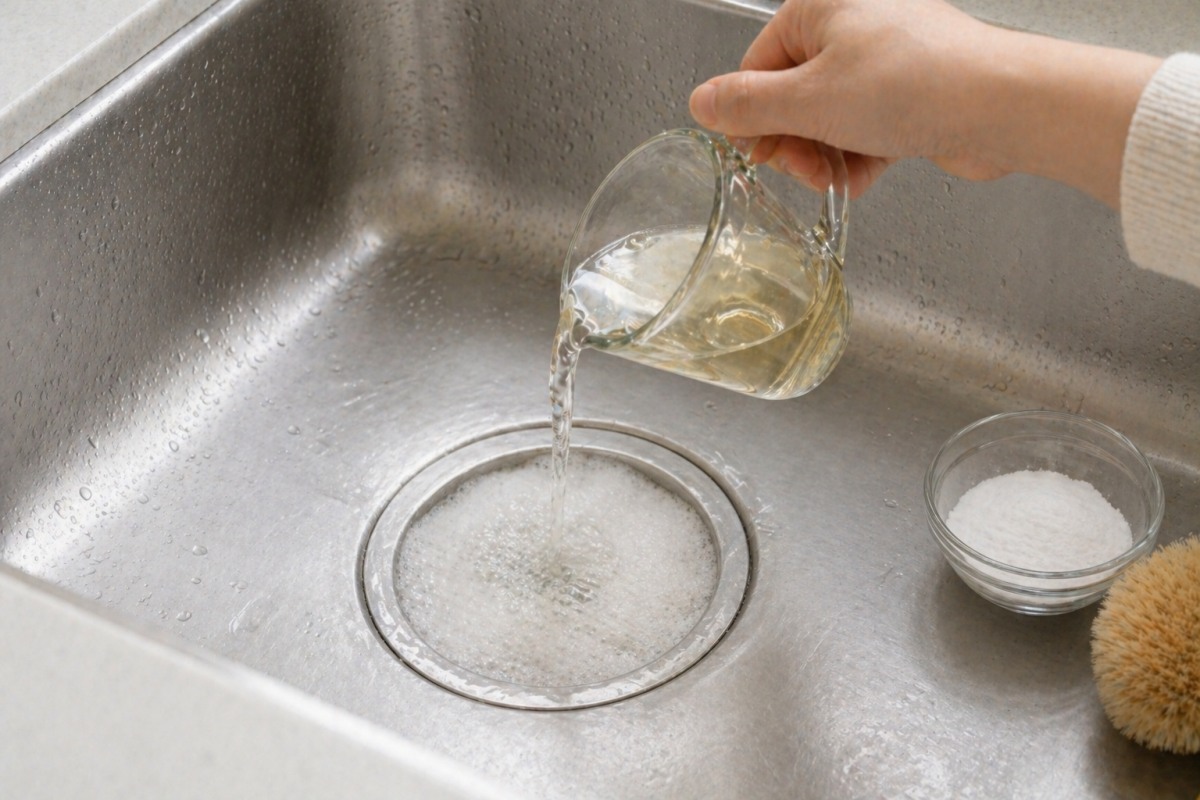
Those fine bubbles help dislodge grime lodged deep in pipes where your hand can’t reach. After 15–30 minutes, flush the drain with hot water to finish; this not only reduces odors but also helps limit microbial growth.
Fabric Softening and Anti-Static Uses
Instead of commercial fabric softeners, try vinegar for both environmental and fabric-friendly results. Laundry detergents are generally alkaline; adding a small amount of vinegar in the final rinse neutralizes residual alkalinity and can reduce skin irritation.
Vinegar smooths fibers and keeps fabrics soft, and it significantly reduces static cling in dry winter air. The sharp vinegar scent dissipates during drying, so clothes won’t retain a sour smell. Using vinegar on towels preserves absorbency, unlike some fabric softeners that can reduce it.
Ensure Food Safety

Fill a large bowl with water and add 2–3 drops of vinegar (or a small amount relative to the water volume). Soak grapes, apples, or leafy greens for about five minutes; the acid helps loosen surface contaminants.
Vinegar’s organic acids have antibacterial effects against foodborne pathogens such as E. coli and Salmonella. Don’t soak produce for longer than five minutes—prolonged exposure can reduce water-soluble nutrients like some vitamins. Always rinse thoroughly under running water after soaking.
Don’t Throw Away Old Rubber Gloves—Repurpose Them!
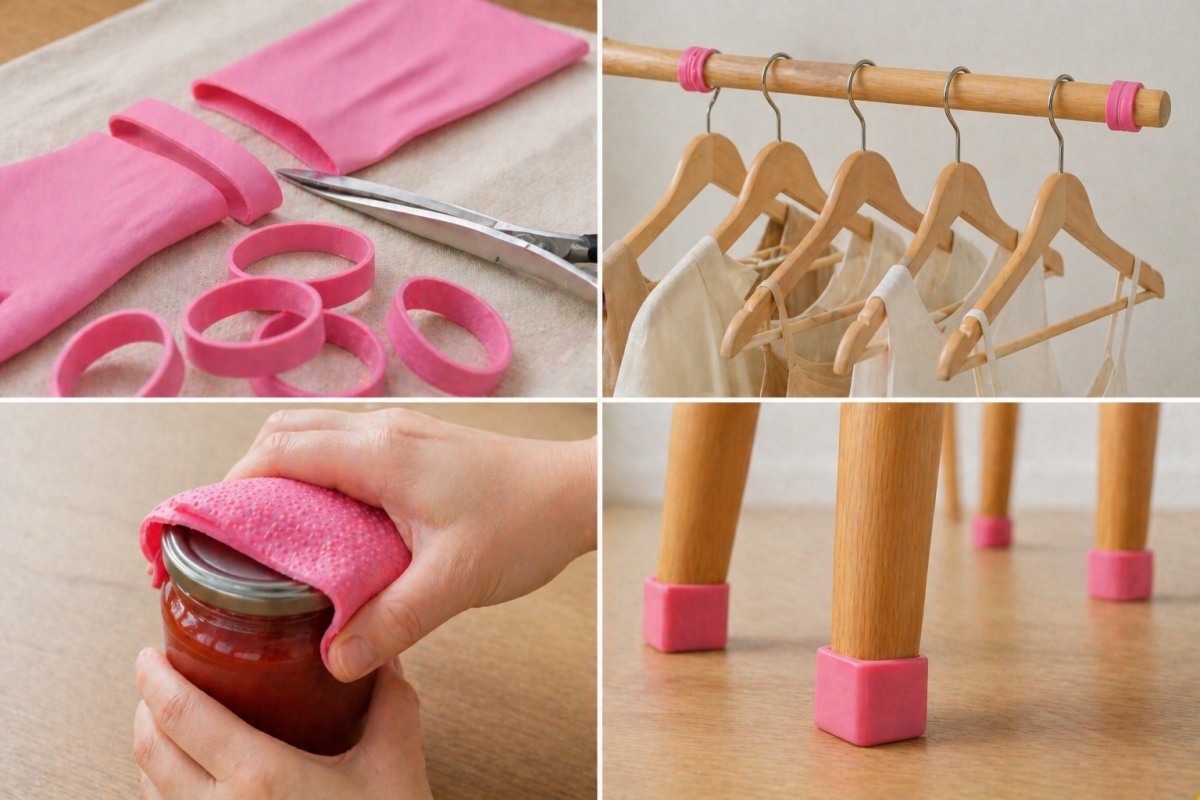
Save fingertip or palm sections as jar-openers. Place a rubber piece over a tight jam jar or sauce lid and twist—the rubber’s grip makes opening much easier.
Use glove material to protect furniture and dampen noise. Cut the thick wrist section to fit a furniture leg and attach it to the bottom of chairs, tables, or small appliances with strong adhesive or double-sided tape. These pads reduce scraping sounds and protect wood floors or vinyl from deep scratches.
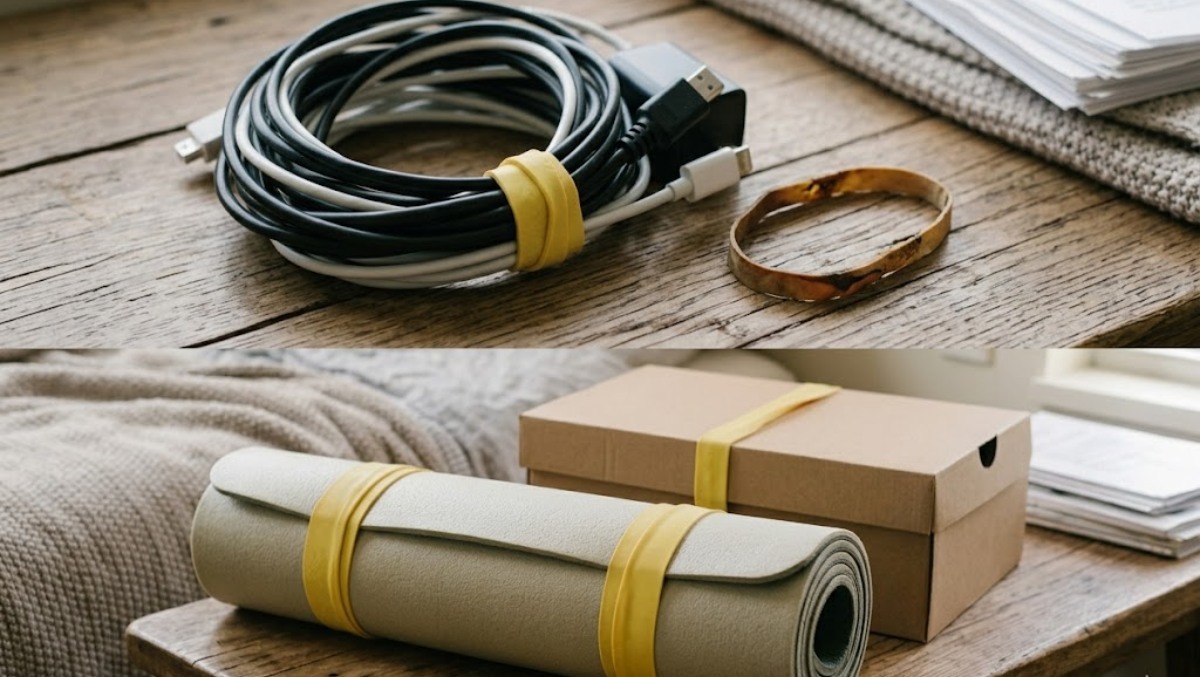
But don’t leave recycled rubber bands on items for years. Rubber oxidizes over time and can become sticky or adhere to surfaces. Check periodically and replace any bands that have lost elasticity.
Precautions When Using Rubber Gloves and Vinegar

If a glove’s surface turns sticky or becomes excessively hard despite cleaning, the rubber has aged. Replace the gloves for hygiene and safety.

Also use caution when combining vinegar with other substances. Although vinegar is a natural cleaner, it can trigger dangerous chemical reactions if mixed with certain chemicals.
Never mix vinegar with bleach. Combining acidic vinegar and alkaline bleach releases chlorine gas, which can severely damage respiratory tissue. Do not use them together or in the same enclosed space.
Finally, avoid prolonged contact between vinegar and non-stainless metals. Extended exposure can cause corrosion, so apply vinegar briefly and rinse immediately when cleaning ordinary metals that aren’t stainless steel.