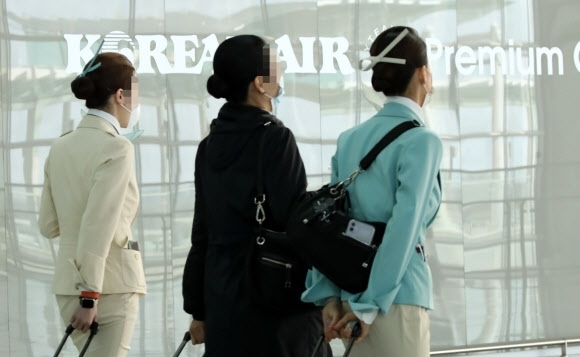
 [Herald Economy = Reporter Jang Yeon-joo] After 57 years of insisting that flight attendants wear heels, Korean Air is preparing to change the rule. The airline says it plans to allow sneakers so crew members can move more comfortably.
On the 22nd, industry sources said Korean Air is reviewing a uniform-policy overhaul through talks with labor representatives to let cabin crew wear sneakers or other functional footwear during in-flight duties.
Until now, Korean Air required flight attendants to wear shoes with 3–5 cm heels (about 1.2–2.0 in) while on duty in the cabin.
A Korean Air official said, “When crew accumulate physical fatigue, their ability to respond in an emergency declines,” adding, “The company believes that when employees are comfortable, cabin safety and service quality improve.”
High heels are widely known to contribute to chronic fatigue and musculoskeletal problems among flight attendants.
According to the Korean Air Employees Union, cabin crew walk more than 15,000 steps a day on average and stand on duty for over 14 hours.
 Allowing sneakers for crew has become a trend across the airline industry at home and abroad.
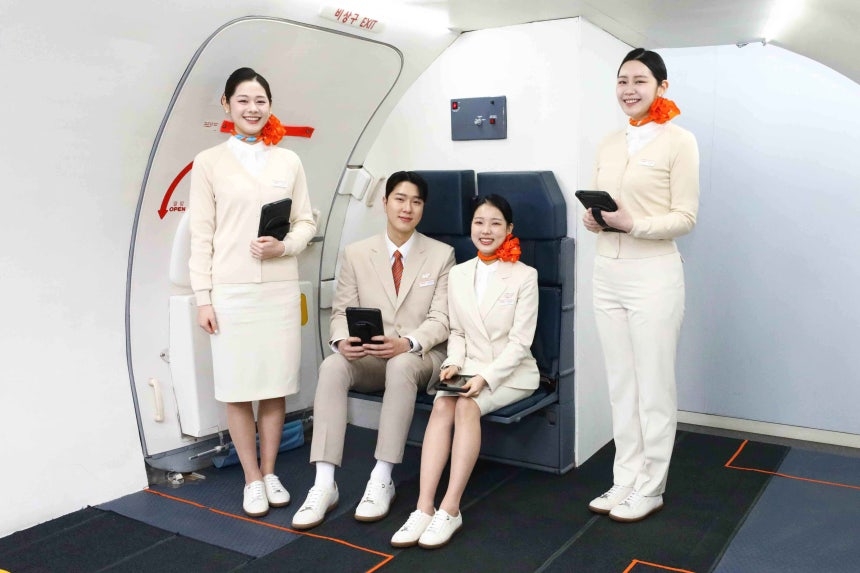
In February, Jeju Air issued sneakers as official work shoes to all cabin crew to improve in-flight working conditions and strengthen emergency response capability.
Aero K adopted sneakers as its official uniform footwear when it launched in 2020, and Eastar Air allows crew to skip heels as long as they wear uniformly black shoes.
Abroad, Japan Airlines (JAL) permitted sneakers for 14,000 cabin and ground staff last year.
These moves aim to reduce the discomfort of rigid, standardized appearances and to reflect the realities of long shifts and other working conditions.
China’s Air Travel also scrapped its high-heel rule, saying, “Flat shoes dramatically improve safety during emergency evacuations.”