Yoon Hong‑woo, Political Editor
The 386 Generation That Accumulated Wealth Is Now Retiring in Earnest
Younger People Resent Universal Welfare amid Job Shortages
Welfare Must Change for an Affluent Senior Era
Urgent Need to Reform the Basic Pension to Prioritize the Poorest
The 386 Generation That Accumulated Wealth Is Now Retiring in Earnest
Younger People Resent Universal Welfare amid Job Shortages
Welfare Must Change for an Affluent Senior Era
Urgent Need to Reform the Basic Pension to Prioritize the Poorest
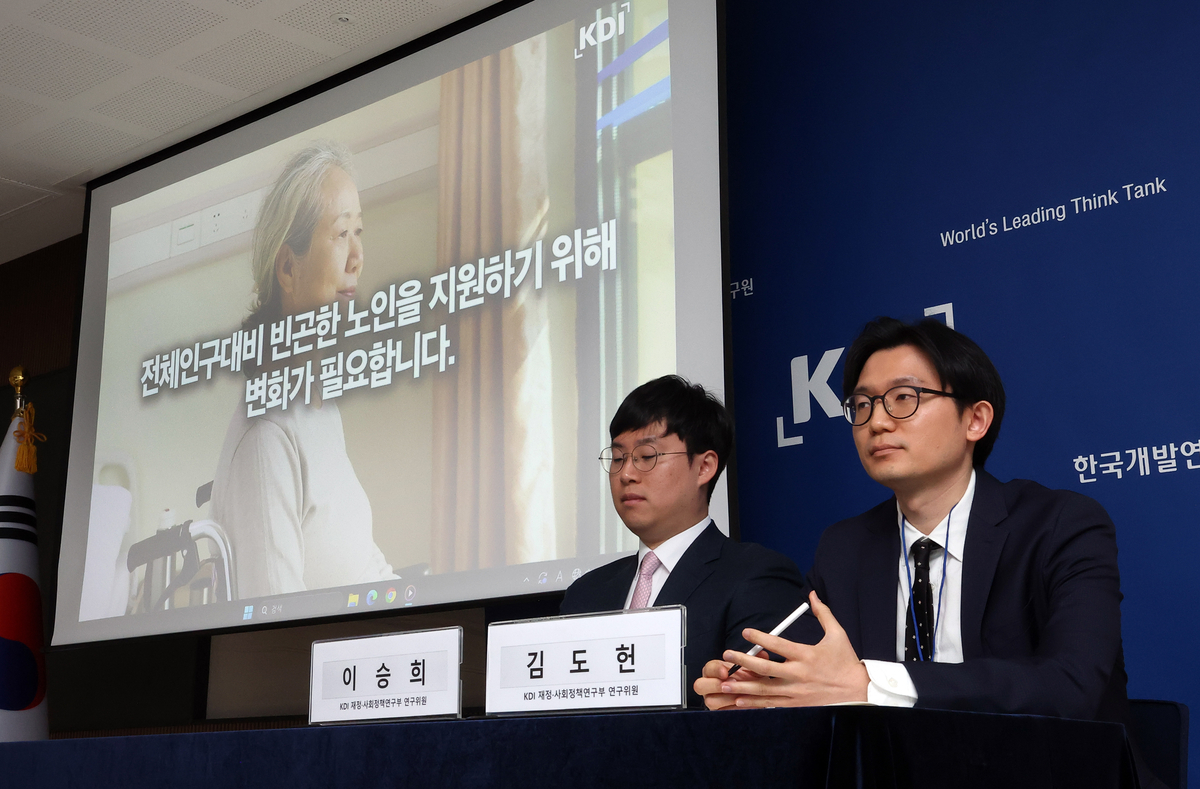 In an era when owning even a single home in Seoul has become a dream for young people, the generation with the largest asset holdings is crossing the threshold into old age. This year marks the 65th birthday for those born in the 1960s—the so‑called 386 generation. A senior finance official I recently met called them “the wealthiest seniors in history.” As a generation that benefited from industrialization, stable jobs, and rising real estate values moves into the basic‑pension age bracket, intergenerational imbalances are starting to surface in earnest.
 The life course of the 386 generation runs alongside South Korea’s high‑growth era. When they entered the labor market in the late 1980s and 1990s, the economy was growing at roughly 10% a year. University degrees more often translated into secure employment, and many had opportunities to build substantial wealth through real estate. Statistics showing that a large share of Korean household assets are concentrated among people in their 50s and 60s underline that their retirement conditions differ markedly from earlier elderly cohorts.
That is not to say their lives were without hardship. They bore the dual burdens of supporting aging parents and educating their children, and they endured the Asian financial crisis and the global financial crisis. Their hard work helped place South Korea among developed countries, and those efforts deserve recognition. But we must also acknowledge a clear reality: they accumulated assets in a period that offered exceptional wealth‑building opportunities.
The next generation faces a very different reality. The era of rapid, catch‑up growth is over and potential growth has slowed. Stable jobs are scarcer, and the spread of artificial intelligence (AI) raises the threshold for young people entering the labor market. With median housing prices in Seoul reaching about 1.2 billion KRW (approximately $900,000), owning a home has become a near‑impossible dream for many. Marriage, childbearing, buying a home, and preparing for retirement have all moved further out of reach for this cohort.
Yet our basic pension still operates on an older image of elderly poverty. The current rule—paying the bottom 70% by income—raises fundamental questions about intergenerational fairness. Is it appropriate to use young people’s tax dollars to provide cash payments to retirees who hold substantial real estate assets? President Lee Jae‑myung’s decision to raise reform publicly earlier this year reflects the judgment that this problem can no longer be ignored.
Acknowledging the need for reform and actually implementing change are very different matters. The basic pension is a monthly cash benefit that seniors feel directly, and older voters vote at high rates. Politicians inevitably approach this topic cautiously in an election cycle. That political sensitivity likely explains why debates over pension reform faded from the National Assembly ahead of local elections.
Still, reform cannot be postponed. The basic pension must move to precise targeting. Policymakers should not rely solely on age and the bottom‑70% income cutoff; they should strictly incorporate the real value of owned real estate. For seniors who own high‑value homes in the Seoul metropolitan area, the policy should expand asset‑liquidity options—such as home‑equity conversion programs—while excluding them from basic‑pension eligibility. Savings from that approach should be redirected to strengthen support for genuinely poor seniors. In short, we need a clear principle of “less for the well‑off, more for the needy.” If we delay, fiscal pressure will grow and the cost of later reforms will balloon.
The 386 generation also has a role to play. Those who led democratization, drove national growth, and demonstrated a keen sense of justice should now show solidarity across generations. If asset‑rich retirees accept policy changes with a broader perspective and politicians design stronger support for poor seniors based on that consent, the basic pension can become a mechanism for generational solidarity rather than a source of conflict. That is how the 386 generation can help preserve and pass on the achievements they built to the next generation.

- The lovesickness Ch'unhyang suffered in classical literature—What’s the real cause? [Workplace Critique]
- Trump’s aftermath: U.S. troop reductions in Germany and a 25% auto tariff increase [Lee Taekyoo's Washington Playbook]
- How much did prices rise in April? Watch March’s current account [Han Dong‑hoon’s Weekly Outlook]
- Market‑mania‑driven economic optimism…Largest gap with the real economy in 16 years
- Foreign investors soar while retail lags…Threefold return gap during the rally [This Chief, That Stock]
- Did you know Russia alone has the world’s only nuclear‑powered cruiser? [Lee Hyun‑ho’s Military! Talk]
- “A whopping 20 matches” — 500 attend a baseball matchmaking event…Who turned Hanwha singles into couples? [Fan Calculator]
- KOSPI nears 7,000…Will the 'sell in May' adage waver? [Sunday Money Cafe]
- Fines in the 100 billion KRW range (approximately $75,000,000) line up...Coupang faces the Fair Trade Commission in June [Pick Economy]
- President Lee: “Illegal loans that exceed the statutory limit are void…you do not have to repay them”