Wando County in South Jeolla Province is launching a large-scale afforestation initiative to increase both the economic value of its forests and their carbon-absorption capacity.
The county announced it will fully implement its 2026 tree-planting program, aimed at cultivating sustainable forest resources. Officials described the project as a central forestry policy to address climate-driven shifts in forest ecosystems and to expand income opportunities for landowners.
Expanding forest-based carbon sinks is a key component of national and provincial 2050 carbon-neutrality strategies. Wando intends to use reforestation to reduce carbon emissions while revitalizing the local forest economy.
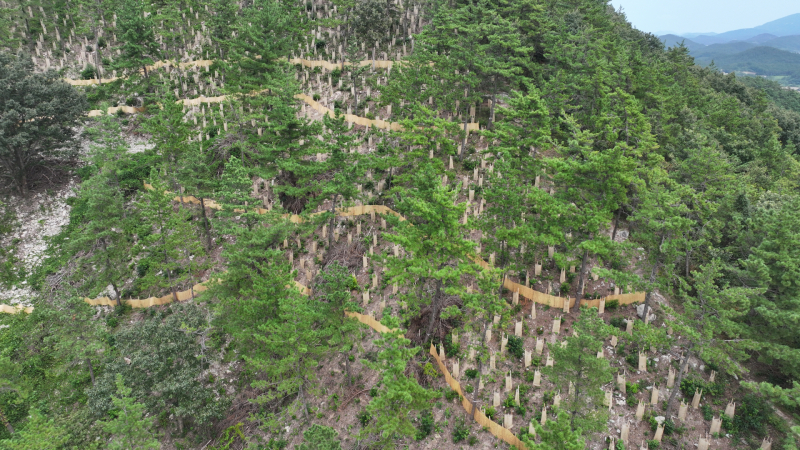
The county will invest KRW 1.3 billion (about $871,000) to establish 102 hectares of new forest: 47 ha (about 116 acres) of commercial forest, 10 ha (about 25 acres) of disaster-prevention forest, and 45 ha (about 111 acres) of regionally specialized forest. Planting sites will extend beyond existing woodlands to include underutilized land such as marginal farmland and riparian zones to broaden the carbon-absorption base.
Wando will also assist landowners in planting commercially viable species so forests can serve as income-generating resources. Planned species include hwangchil (a traditional lacquer tree), hinoki cypress, Wando holly, and red oak—selected for their suitability to local conditions and practical value.
After planting, the county will maintain the stands through ongoing management—forest tending, mowing, and removal of kudzu vines—to ensure healthy growth. Officials say these measures will strengthen the forests’ carbon-absorption function and provide public benefits such as disaster mitigation and improved forest environments.