Prime Minister Kim Min-seok has placed an interagency council overseeing pet policy under the Prime Minister’s Office. The Ministry of Agriculture, Food and Rural Affairs will remain the lead agency for administrative tasks, while other ministries will share responsibility for expanding policy areas such as social welfare and family services.
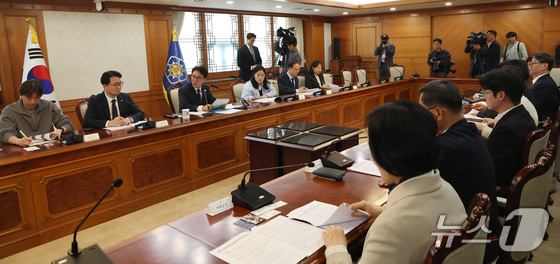
On the 30th at the Government Complex Seoul, Prime Minister Kim chaired the Pet Policy Committee and said the Agriculture Ministry will handle operational duties, but that broader policy coordination will be managed through a committee under the Prime Minister’s Office.
The move is intended to resolve interministerial disputes over pet policy and strengthen whole-of-government coordination by giving the Prime Minister’s Office a clear control-tower role.
Participants at the meeting discussed key issues including standards for pet access to restaurants, improving welfare and recognition for national service animals, and care arrangements for pets when owners enter social-welfare facilities.
The Ministry of Food and Drug Safety reported that improvements to restaurant access standards have increased the number of establishments permitting pets. Attendees welcomed the change and requested further refinements.
The Ministry of Agriculture, Food and Rural Affairs said it will pursue programs to improve welfare for national service animals—such as rescue and detection dogs—and to provide post-adoption care subsidies. The Ministry of Health and Welfare and the Ministry of Gender Equality and Family agreed to study options to allow pets to accompany residents into nursing or protection facilities or to provide pet-care support in those settings.
Earlier, following a presidential directive, the government debated which ministry should lead pet policy. Officials ultimately retained the Agriculture Ministry as the lead but agreed an overarching coordinating function was necessary.
In his opening remarks, Prime Minister Kim observed that, “Traditionally the Agriculture Ministry has managed this policy, but if we treat pets the same way we handle livestock, many people who live with pets—often like family members—will find that emotionally difficult to accept.”
He added that some have argued that aspects such as insurance point to a role for the Ministry of Health and Welfare, and that, over the long term, recognizing pets as family members could justify placing some responsibilities with the Ministry of Gender Equality and Family—illustrating how prominent pet-related issues have become in Korean society.
Kim described the committee’s launch as the result of several discussions to narrow the agenda and prioritize problems affecting families and individuals who live with and care for pets.
He emphasized that pet policy intersects with many sectors and called for active collaboration among relevant ministries, ordering officials to review today’s proposals promptly and move them toward implementation.
The Pet Policy Committee said it will work to identify policy blind spots and develop measures so that pet owners, their families, and non-pet owners can coexist without conflict.