 The government is advancing the Basic Act on the Rights of Working People (the Working People Basic Act), but labor groups say broadening worker protections under the existing Labor Standards Act would be a more fundamental solution than creating a separate law. They urged policymakers to prioritize immediate, practical measures—such as applying fair-pay formulas and establishing industrial safety and health committees—if a full statutory overhaul is not feasible in the short term.
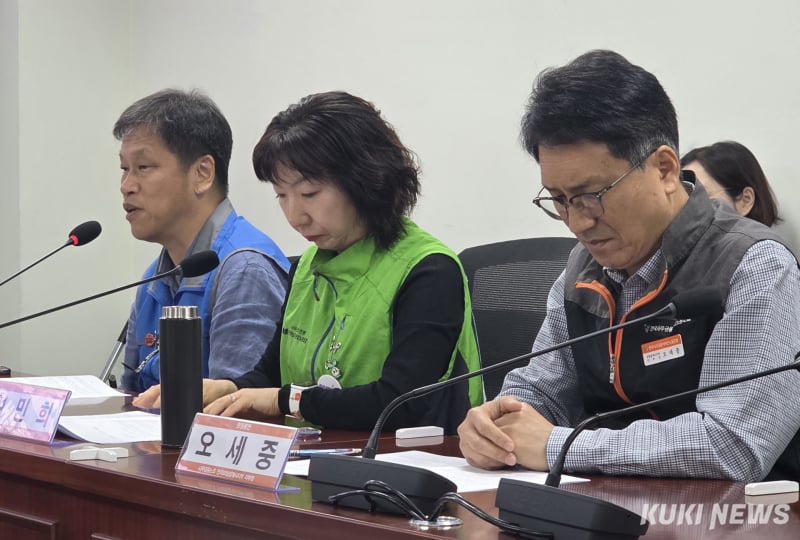
At a May 21 testimony event organized by the Korean Confederation of Trade Unions calling for amendments to the Labor Standards Act to recognize special and platform workers as employees, labor representatives argued that the Working People Basic Act has limits. They said the Labor Standards Act must be updated to reflect new forms of nonstandard work, including special-contract and platform-based arrangements.
Speakers repeatedly highlighted safety concerns for drivers and delivery workers, arguing that AI-driven algorithms that rank performance push workers into dangerous situations.
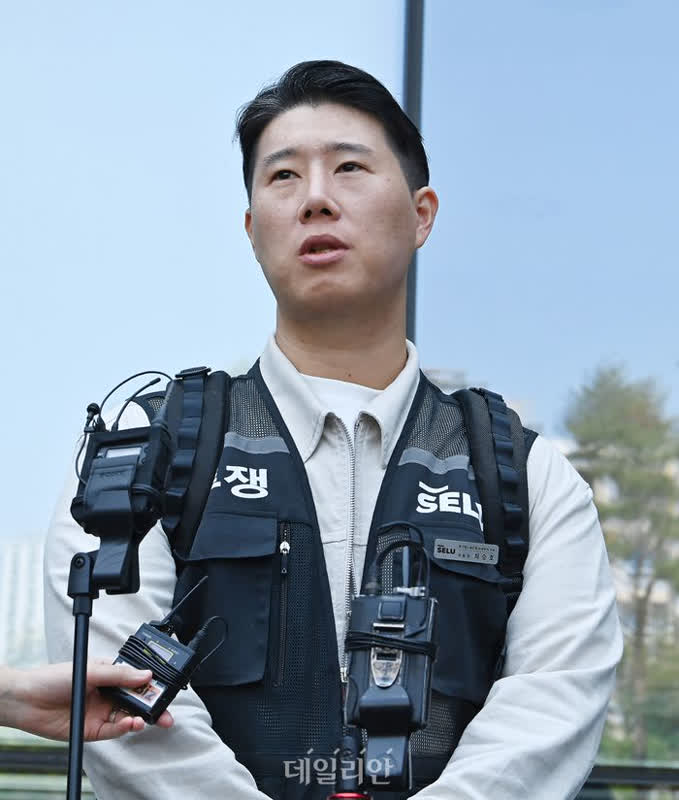
Lee Chang-bae, chair of the National Substitute Driver Union within the Service Federation, said, \"Drivers and delivery workers rush to accept the next job to meet algorithmic score targets. If their ratings fall, they receive fewer assignments, which forces them into a cycle of constant work and risk.\" He added, \"Many substitute drivers, out of sheer necessity, risk their lives by riding electric scooters on roads intended for cars.\"
According to the Korea Workers' Compensation & Welfare Service, substitute drivers filed 555 industrial-accident claims in the second half of 2024—an annualized rate of more than 1,000 claims.
Delivery-worker safety has become a chronic problem. The delivery platform Baedal Minjok has logged roughly 2,000 approved industrial-accident claims annually since 2022 and has ranked first in workplace injury cases for four consecutive years, including the first quarter of this year.
Delivery platforms reported higher injury counts than traditionally high-risk sectors such as construction and manufacturing. In the first quarter of last year alone, Baedal Minjok recorded 527 industrial accidents, followed by Coupang Eats with 241; Daewoo E&C ranked third with 101.
Under the current Labor Standards Act, special-contract and platform workers fall outside legal protections because they do not meet the law's \"dependency\" criterion for employee status. While the Working People Basic Act has been proposed to extend protections to workers outside the Labor Standards Act, analysts say substantive change is unlikely without expanding the Labor Standards Act's coverage.
Yoon Ae-rim, director of the Workers' Rights Research Institute, warned that creating a separate law for special-contract workers could entrench misclassification and deepen discrimination. \"The Working People Basic Act as drafted has limits in protecting workers,\" she said.
Critics also note that many provisions of the bill are declaratory and would not take precedence over existing statutes, reducing its practical impact.
The bill includes provisions urging the state to apply related laws, such as the Industrial Safety and Health Act, to working people and allows the government to allocate funds to protect workers' safety and health. It also specifies that social insurance coverage must comply with existing statutes.
While advocates continue to press for revisions to the Labor Standards Act—enacted in 1953 and now more than 70 years old—they say lawmakers should prioritize immediate, implementable protections, such as fair-pay formulas, to protect drivers and delivery workers while broader reforms proceed slowly.
Asked for concrete proposals on fair compensation, Lee pointed to measures already in place abroad: New York City has enacted a law guaranteeing a minimum wage for platform delivery workers, and companies like Uber use formulas that account for driving and waiting time when calculating pay. \"These are fully achievable policies,\" he said.
Gu Gyo-hyun, head of the Rider Union branch of the Public Transport and Transport Workers' Union, urged platforms to form internal industrial safety and health committees and to conduct risk assessments of their algorithms.
Speakers also called for mandatory rest facilities for delivery workers. Under the Industrial Safety and Health Act, employers must provide rest areas for employees covered by the Labor Standards Act, but special-contract and platform workers—often not recognized as employees—frequently receive no such basic facilities.
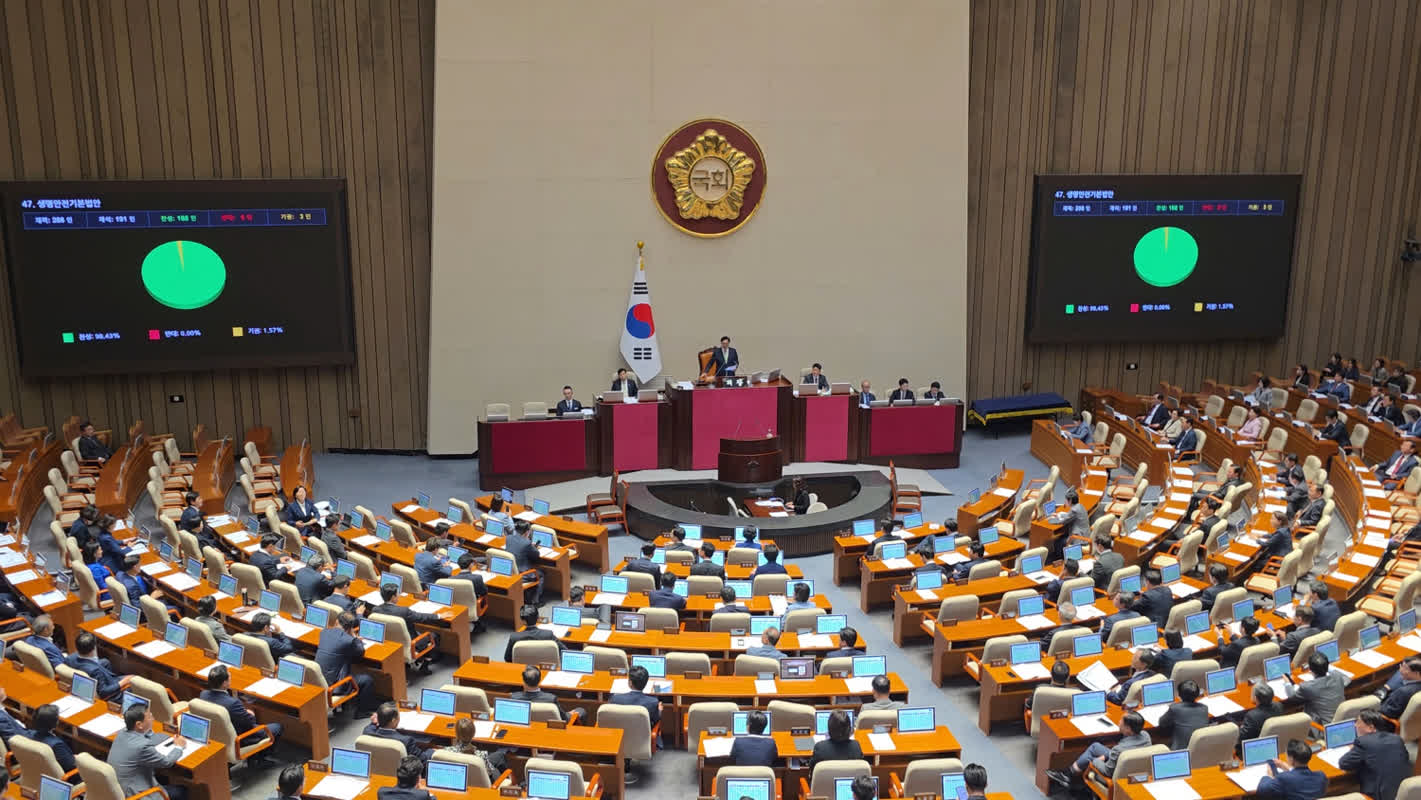
Meanwhile, the Working People Basic Act has become a policy priority under the Lee Jae-myung administration, which has promoted workplaces \"without discrimination or exclusion.\" Lawmakers aimed to pass the bill before Labor Day on May 1, but it remains pending before the National Assembly's Environment and Labor Committee.