Kim Dong‑myung: “We Acknowledge Our Mistakes but the Organization Has Changed” — Organizing Specially Employed and Platform Workers… Target: 2 Million
The Federation of Korean Trade Unions marked its 80th anniversary by naming increased unionization and the establishment of labor-rights protections for the AI era as top priorities, declaring a campaign for a “labor-centered society.”
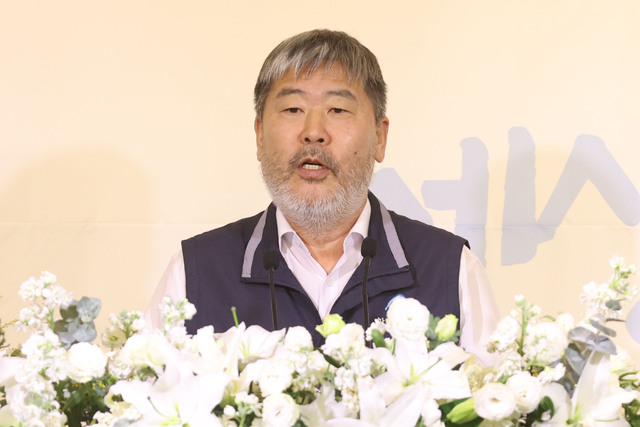
On the morning of the 10th, the federation held an “80th Founding Anniversary and Supporters Day” ceremony at its headquarters in Yeouido, Seoul.
In his commemorative address, Kim Dong‑myung, the federation’s chair, said that more than half of the union’s 80-year history unfolded under authoritarian rule. He acknowledged that the union at times supported military regimes and the Yushin system, a legacy that contributed to its reputation as a “government-backed union.” He added, “On our 80th anniversary, we acknowledge what must be acknowledged and apologize for our mistakes.”
Kim stressed that the federation’s past cannot be defined solely by its pro-government actions. He argued that, even under difficult conditions, the union continued efforts to expand membership and improve workers’ quality of life, and undertook genuine measures to protect workers’ rights.
Kim identified raising unionization and building a labor-rights protection framework for the AI era as the federation’s immediate priorities. He noted that although amendments to Articles 2 and 3 of the Trade Union Act expanded workers’ rights to organize, changes in law and regulation do not automatically translate into higher union density. He highlighted that workers left in the margins—such as specially employed and platform workers, employees at workplaces with fewer than five people, and ultra‑short‑hour workers—still cannot fully exercise their rights.
He said the core of increasing unionization is bringing unprotected workers into the union fold, closing gaps in basic labor rights, and consolidating dispersed labor to strengthen collective bargaining power. He announced a strategy to organize two million members that will reflect shifts in industry and employment forms.
Kim also addressed labor-rights challenges posed by the spread of AI. He said the real concern is not the introduction of robots and AI per se, but the risk that workers will be excluded from the process. He called for the institutionalization of procedures to assess employment impacts and require consultation with workers during technology adoption. He also proposed establishing retraining systems and strengthening the social safety net to reduce income gaps, creating a “transition safety net.”
“Even as everything changes, workers’ greatest strength is solidarity,” Kim said, urging a new form of solidarity that treats people across employment types, generations, and work styles not as rivals but as comrades to protect one another. “United workers can ultimately prevail,” he said, calling on members to “go together, change together, and win together” to make the federation’s next 100 years a century of hope.
At its regular delegates’ meeting on the 25th of last month, the federation resolved to mobilize fully for measures including guaranteeing retirement at 65, strengthening public pensions, expanding employment and social safety nets, eliminating excessively long working hours, restoring real wages and raising the minimum wage, resolving the labor market’s dual structure, fully guaranteeing the right to organize, strengthening the responsibilities of primary contractors, and creating safeguards against worker control, surveillance, and discrimination arising from AI development.
The ceremony drew political and labor figures including former federation chair Park In‑sang; Yang Kyung‑soo, chair of the Korean Confederation of Trade Unions; Lee Dong‑geun, vice chair of the Korea Employers’ Federation; Deputy Minister Kwon Chang‑joon of the Ministry of Employment and Labor; Kim Ji‑hyung, chair of the Economic, Social and Labor Council; National Assembly Speaker Woo Won‑sik; Democratic Party leader Jeong Cheong‑rae; People Power Party leader Jang Dong‑hyuk; and Jo Guk, leader of the National Innovation Party. President Lee Jae‑myung congratulated the federation’s 80th anniversary in a video message.
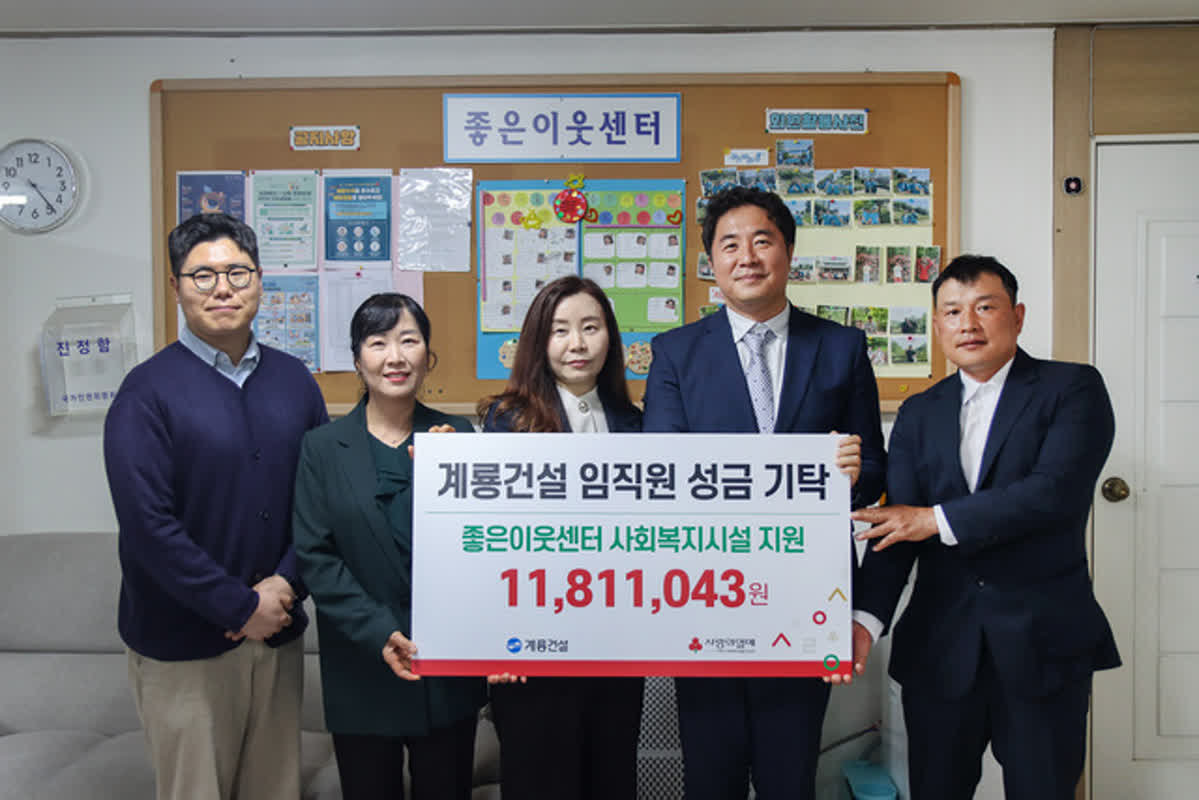
The event also served as a fundraiser for the “Good Friend Industrial Welfare Foundation.” Since 2010, the federation has used donations raised at its founding ceremonies and Supporters Day events to fund social-contribution programs for marginalized groups.
By Kwon Ki‑baek baeking@viva100.com