Haenam County: Don't Burn It — Shred It ... Support Program for Shredding Agricultural Residues
Focused operations in the first half (Feb–Apr) and second half (Oct–Dec); on-site visits to farms

▲Support for shredding agricultural residues. Courtesy: Haenam County
Haenam — Energy Economy News reporter Baek Jun. On March 23, Haenam County announced it will intensify its on-site Agricultural Residue Shredding Support Service ahead of the spring farming season to shred residues left in fields.
The Agricultural Technology Center's shredding team will visit farms to process residues that are difficult for farmers to handle themselves — including pepper and sesame stalks and pruned branches from fruit trees. The service plays an important role in addressing labor shortages among vulnerable groups, notably elderly farmers and women farmers who often cannot manage disposal on their own.
Rural areas have traditionally disposed of agricultural residues by burning, a practice linked to large wildfires and to elevated fine-particle pollution. To combat these problems, the Agricultural Technology Center adopted an on-site approach to prevent illegal burning and to foster a safer rural environment.
To improve efficiency and reduce wildfire risk, the county designates a village-level \"Shredding Day.\" When a village applies as a unit, the rental office provides shredders free of charge.
The shredded material is recycled and returned to the soil as an organic resource, improving soil fertility and supporting environmentally friendly farming practices.
A county official said, \"Our on-site shredding service reduces farmers' burdens while protecting valuable forest resources. We will continue expanding tailored agricultural services that reflect the needs heard in the field.\"
The shredding support runs intensively through April. Farms or villages seeking assistance can apply to the Agricultural Technology Center's Farm Machinery Team or to their local eup/myeon office.
We Take Responsibility from Settlement to Citizenship — Haenam County's Three-Stage Support for Multicultural Families Draws Attention
Targeted programs — settlement incentive, formula subsidy, and naturalization fee support — help families integrate into the community

▲Multicultural family couple program. Courtesy: Haenam County
Haenam — Energy Economy News reporter Baek Jun. Haenam County will continue three tailored support programs in 2026 — the Settlement Incentive, Infant Formula Purchase Subsidy, and Naturalization Fee Support — to help multicultural families settle into the community and stabilize their lives.
On March 23, the county said it has established a step-by-step support system covering early post-marriage settlement, child-rearing and naturalization, intended to enhance living stability and strengthen community integration for multicultural families.
The Multicultural Family Settlement Incentive provides up to 5,000,000 KRW (approximately $3,750) linked to education. Couples and families participate in 40 hours of Korean-language instruction and family counseling; participants must complete at least 90% of the program to qualify.
Eligible households are those registered in Haenam at the time of international marriage registration. Eligibility begins when the foreign spouse enters the country and completes foreigner registration after marriage, and applies to couples whose married status has been maintained for less than six months from that registration date.
The incentive is disbursed in two installments: 3,000,000 KRW (approximately $2,250) after course completion and an additional 2,000,000 KRW (approximately $1,500) if the marriage remains in effect for six months. Payments combine cash and Haenam Love gift certificates.
The Infant Formula Purchase Subsidy supports households with children under 24 months to reduce child-rearing costs. The county pays 75,000 KRW (approximately $56.25) per child per month, for up to 24 months from the month of application through the month before the child's birthday. Payments are deposited into recipients' personal accounts on the 25th of each month.
The Naturalization Fee Support assists marriage immigrants seeking expedited Korean citizenship. It covers the 300,000 KRW (approximately $225) naturalization application fee once for marriage immigrants who naturalized after June 1, 2016, and who have registered and lived in Jeollanam-do for at least six months. The county pays the amount into the applicant's account after verifying supporting documents; certain fee items, exempt cases, or duplicate supports may be excluded.
Applications are accepted at the applicant's local eup/myeon office and require submission of the program application form and supporting documents for each initiative.
A county official said, \"These three support programs provide comprehensive assistance to multicultural families from settlement through child-rearing and citizenship. We will keep expanding tailored policies so multicultural families can live stably and build happy homes in the community.\"
Haenam also continues a range of customized services for multicultural families, including maternity-helper support, cultural experiences for marriage-migrant women, self-help group support, case management, and language and foundational learning support for children. The county plans ongoing aftercare through home visits and living-condition checks to continually assess and meet multicultural families' welfare needs.
Wando Marine Healing Center Re-Designated by Korea Tourism Organization as an Excellent Wellness Destination
National certification elevates status as a leading marine healing and wellness spot in Korea

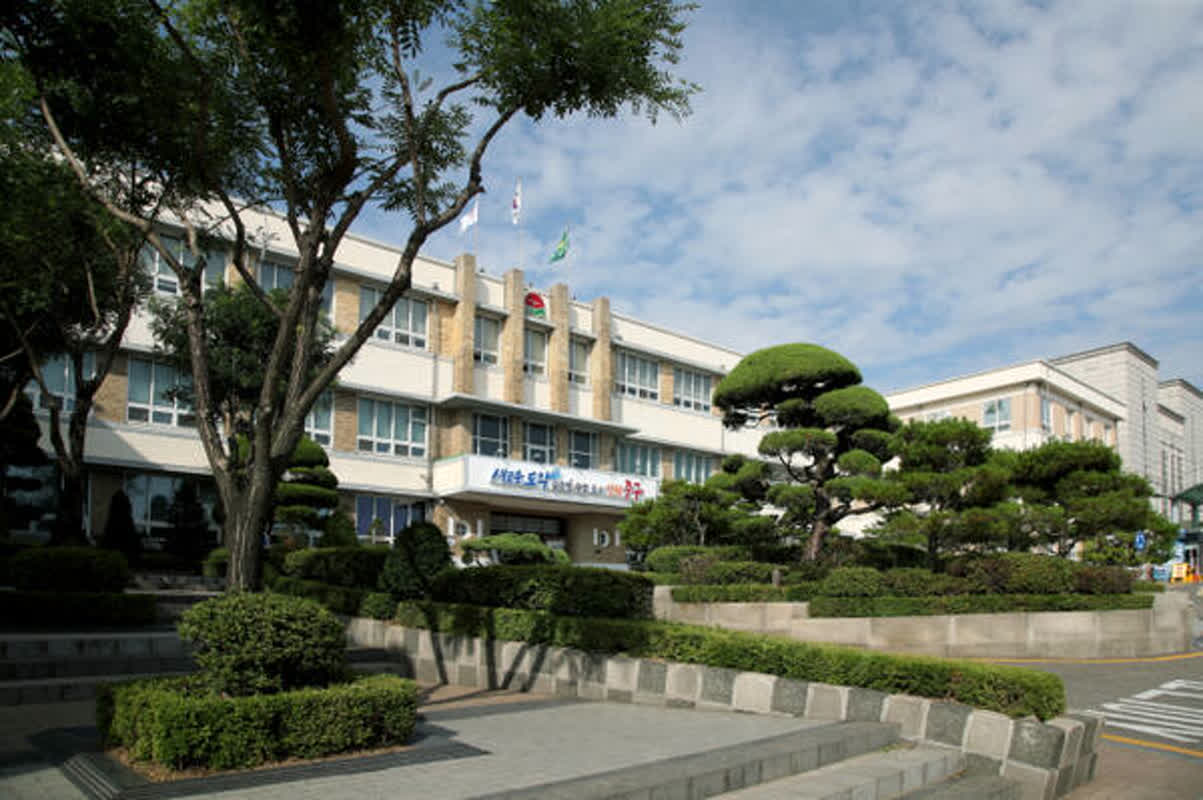
▲Wando Marine Healing Center exterior. Courtesy: Wando County
Wando — Energy Economy News reporter Baek Jun. The Wando Marine Healing Center was re-designated by the Korea Tourism Organization as a 2026 Excellent Wellness Destination in the natural-healing category, reaffirming its standing as a leading marine-healing and wellness attraction in Korea.
The Korea Tourism Organization evaluates wellness sites nationwide on criteria including the suitability of wellness content, visitor attraction, operational performance, management practices and development potential when naming Excellent Wellness Destinations.
Opened in November 2023 as Korea’s first specialized marine-healing facility, the Wando Marine Healing Center received a new-site designation in 2024 and had welcomed more than 130,000 visitors as of the end of February 2026.
In the 2026 re-designation review, the center scored highly across several areas: professional operations, differentiated marine-healing programs, an increase in foreign visitors, strong customer satisfaction, and excellent products that link the center with regional tourism assets.
Reviewers highlighted the center’s use of natural resources in healing programs and its professional services as central reasons for re-designation.
The re-designation is expected to strengthen the center's brand as a hub for the marine-healing industry and as a flagship wellness destination.
The county plans to enhance competitiveness by developing marine-healing tourism products, operating programs to encourage repeat visits, expanding group and school experience offerings, and strengthening domestic and international marketing.
Mayor Shin Woo-cheol said, \"This re-designation recognizes the results of our healing, wellness and tourism policies. We will continue to enhance visitors' healing experiences and build a sustainable healing-tourism model that grows with the region.\"
Jindo County Launches Major Job Programs to Strengthen Local Settlement
About 4,000 people targeted, 104 projects with 32.7 billion KRW investment (approximately $24.525 million USD)

Jindo — Energy Economy News reporter Baek Jun. Jindo County is launching a major jobs initiative this year to revitalize the local economy and provide stable employment for residents.
The county plans to invest a total of 32.7 billion KRW (approximately $24.525 million USD) across 104 job projects in 2026, aiming to provide work for roughly 4,000 people.
Jindo will expand direct public-sector employment and pursue policies residents will notice, including age-targeted support for young and mid-career workers and private-sector job creation tied to local specialty industries.
In the public sector, the county will allocate about 13.2 billion KRW (approximately $9.9 million USD) for direct employment programs targeting vulnerable groups and job seekers, offering stable, public-interest work in environmental maintenance, local management and public-service support.
The county will also strengthen youth employment policies to help young people settle locally and expand opportunities, while bolstering reemployment support for middle-aged workers.
Approximately 12.5 billion KRW (approximately $9.375 million USD) will fund youth and mid-career programs — including internships, on-the-job experience, job-skill training and incentive payments — and will support a youth start-up school that teaches entrepreneurship, strategy and accounting.
Linked to these efforts, Jindo is promoting a Food Online Sales Startup Support program to assist with prototype development, consulting and funding to generate concrete startup outcomes.
The county will also focus on reemployment and skills training for mid-career workers, creating roles that leverage their experience. The initiative aims to create around 730 jobs for young and mid-career residents.
Additionally, Jindo plans to invest about 7 billion KRW (approximately $5.25 million USD) in sectors that reflect the county's character — agriculture and fisheries, tourism and community-based jobs — to identify new opportunities and expand private-sector employment through industry cooperation.
Separately, following last year’s 50 billion KRW (approximately $37.5 million USD) investment agreement between Jindo County and Seonggyeong Foods, construction of Seonggyeong Foods’ second plant is underway.
The second plant will complete five dry-laver production lines this year and begin operating in November. The county plans to add five more lines in 2027, bringing the total to ten production lines.
When the production system is complete, the project is expected to create 128 jobs and generate about 120 billion KRW (approximately $90 million USD) in annual sales, helping to ease private-sector labor shortages and boost the local economy.
Jindo County Governor Kim Hee-soo said, \"We expect these job programs to provide employment opportunities and revitalize the local economy. We will continue pursuing sustainable job-creation policies that reflect Jindo’s unique characteristics and industrial conditions.\"
Jindo Holds Briefing on Designation of Offshore Wind Power Cluster
Estimated total project cost about 20 trillion KRW (approximately $15 billion USD) + joint connection facility 1.06 trillion KRW (approximately $795 million USD); fixed resident income expected around the 400 billion KRW level (approximately $300 million USD)

Jindo — Energy Economy News reporter Baek Jun. Following the Ministry of Climate, Energy and Environment's designation of the Jindo Offshore Wind Power Cluster, Jindo County held a briefing in its main conference room on March 21, marking the start of a new era of community income from wind power and future industry development for the county.
About 80 people attended the briefing, including Governor Kim Hee-soo, National Assemblymember Park Ji-won, Jindo County Council Chair Park Geum-rye, county council members, Jeonnam provincial assembly member Kim In-jung, Deputy Governor Kim Mi-soon, senior officials, heads of the seven eup/myeon village leaders and community association chairs.
Officials outlined the details of the offshore wind power cluster designation.
The planned total capacity for Jindo offshore wind is 3.6 gigawatts (GW), enough electricity to power roughly 2.5 million households.
Construction and operation of the cluster are expected to create about 50,000 jobs and to spur growth in related industries such as equipment manufacturing, maintenance, ports and logistics.
Jindo County estimates it will secure approximately 308.4 billion KRW (approximately $231.3 million USD) in local government renewable energy certificate (REC) cluster support funds over 20 years.
Those funds will provide an important source for strengthening local finances and promoting regional development projects.
In addition, the project will allocate 89 billion KRW (approximately $66.75 million USD) in construction support to areas around the power plants; those resources are intended for resident welfare projects, local infrastructure improvements and village income programs.
The county also plans a resident-participation benefit-sharing model that will distribute a portion of project revenues to local residents. Through REC revenue, the county aims to implement a \"wind pension\" system.
If residents collectively invest 4% of the total project cost (about 20 trillion KRW), the wind-pension program would generate participation earnings for households. The county estimates an average annual resident participation income of about 4,360,000 KRW (approximately $3,270 USD) per household, and projects total resident income of about 1.426 trillion KRW (approximately $1.07 billion USD) over 20 years.
Jindo County expects the offshore wind cluster designation to do more than supply energy: it aims to expand local finances, raise resident incomes and revitalize the regional economy, creating a new model of local collaboration and shared benefits.
National Assemblymember Park Ji-won served as a bridge between the government and parliament during the project's development, providing policy support, helping to establish institutional foundations for the offshore wind industry, and working with central ministries to facilitate smooth project progress.
Park Ji-won said, \"Jindo County officials worked hard to secure this designation in a short period. I hope residents and officials continue to cooperate actively for Jindo’s development.\"
Governor Kim Hee-soo said, \"This designation will attract substantial private investment to Jindo and create many jobs. I thank National Assemblymember Park Ji-won and Jeollanam-do for their support in completing this important task for Jindo's future.\"
Jindo County and Jeollanam-do plan to pursue sustainable offshore wind development by minimizing environmental impacts, developing coexistence measures with fisheries, and expanding resident participation as the project proceeds.
Reporter Baek Jun junewhite@ekn.kr