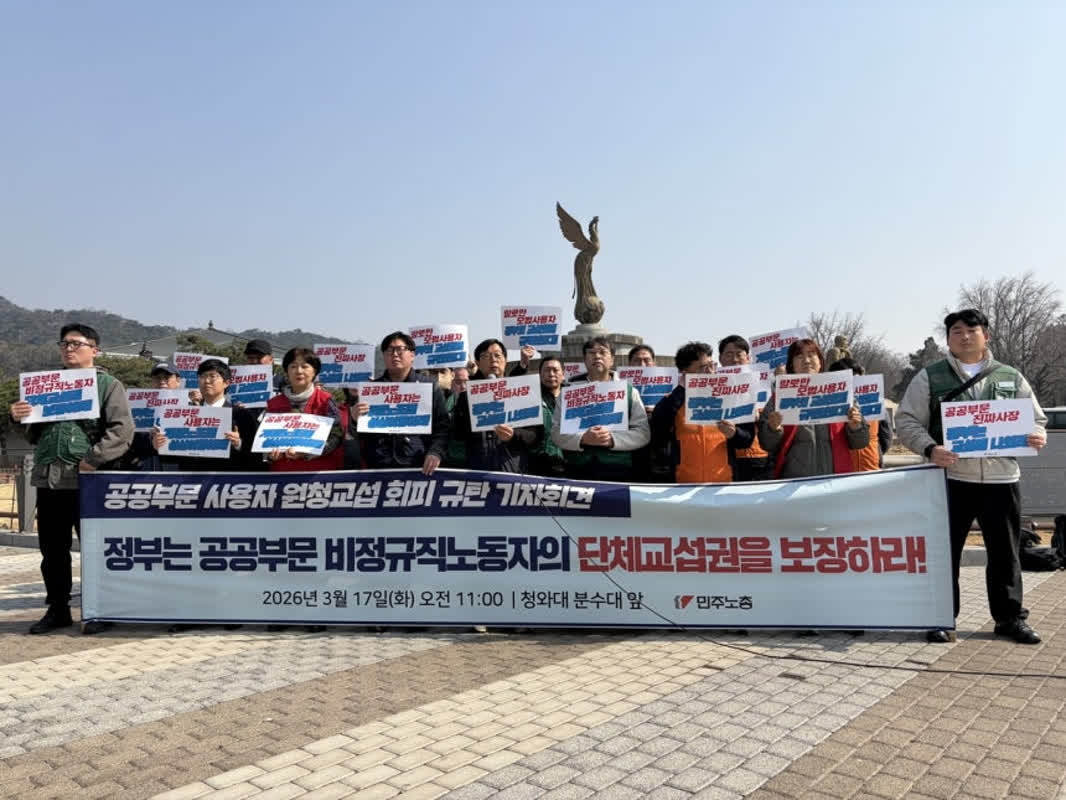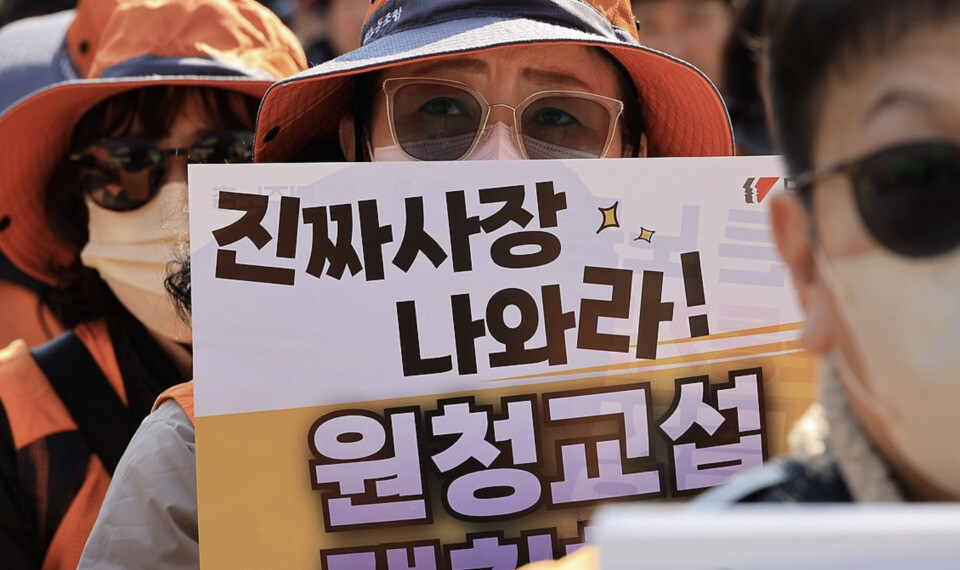
About 40 days after the so-called Yellow Envelope Act — which allows subcontractor unions to demand direct bargaining with prime contractors — Incheon labor panels have issued a string of rulings finding that prime contractors can be the proper bargaining counterparts for subcontractor unions. The regional labor relations commission ruled in favor of subcontractor unions in three cases involving Incheon International Airport Corporation, Incheon Container Terminal (ICT), and Hyundai Steel.
On the 21st, the Incheon Regional Labor Relations Commission said Incheon has received 17 prime–subcontractor bargaining cases since the law took effect on the 10th of last month, and rulings have been issued in three of those cases.
On the 8th, the Incheon labor board ruled that the prime contractor should be recognized as the employer in a petition to split bargaining units filed by the Incheon International Airport Corporation union and seven subcontractor unions.
The board consolidated those eight cases and divided the bargaining units into three groups: the Federation of Korean Trade Unions (FKTU), the Korean Confederation of Trade Unions (KCTU), and other unions. Splitting bargaining units allows subcontractor unions with different job functions or working conditions to negotiate separately with the prime contractor.
On the 13th, the board also found that ICT qualifies as the employer.
The YT branch of the Incheon General Union, which represents workers at an ICT subcontractor, had demanded bargaining with ICT, the prime contractor, but ICT did not post notice of that demand at the workplace.
Under the law, when an employer receives a bargaining demand from a union, it must post notice at the workplace so other unions can join the talks. ICT failed to carry out that obligation.
The union filed a correction request with the Incheon labor board. The board accepted the request and recognized that ICT functions as the employer for the YT branch.
On the 16th, the board accepted both the employer status of the prime contractor and the separation of bargaining units in a petition filed by Hyundai ITC, a subsidiary of Hyundai Steel.
The Incheon board ordered that bargaining units be split into three groups based on their parent organizations: the FKTU Metal Federation (Hyundai ITC and Hyundai IEC); the KCTU Metal Union (Hyundai ISC, Hyundai IMC, and the Hyundai Steel Pipe branch); and the independent Hyundai ITC Democratic Union.
Officials said the remaining seven filed cases were withdrawn by the unions.
An Incheon labor board official explained, \"Of the 17 cases filed, eight related to the airport were consolidated, and aside from the ICT and Hyundai ITC cases, the remaining seven were closed after the unions submitted withdrawal letters. There are no ongoing cases at present.\"
A KCTU-affiliated union that handles household waste collection in Yeonsu and Bupyeong districts plans to file a correction request with the Incheon labor board this month over a prime contractor’s failure to post notice of a bargaining demand.
A KCTU Incheon official said, \"We file with the labor board when a prime contractor refuses to bargain or when the separation of bargaining units becomes necessary. Unions that haven't filed yet continue to press the prime contractors for talks.\"
/Reporter Na-ra Lee nara@incheonilbo.com