The government will raise the maximum penalty surcharge for fraudulent claims on national subsidies from five times the improperly claimed amount to eight times, as part of a broader effort to eradicate abuse.
This year officials will audit more than 13,000 subsidized projects and expand rewards for reporting fraud, paying whistleblowers up to 30% of the amounts actually recovered by the national treasury.
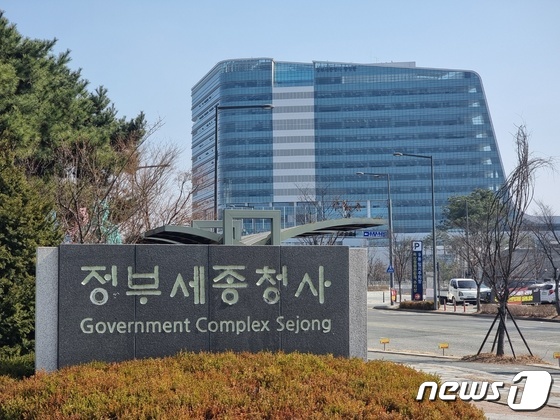
On the 10th, the government announced these anti-fraud measures at a meeting on rooting out subsidy fraud held at Government Complex Seoul and chaired by Prime Minister Kim Min-seok.
Forty ministries and agencies involved in national subsidies attended, including the Planning and Budget Office, the Ministry of Economy and Finance, the Ministry of Science and ICT, and the Ministry of Education.
Last year the government uncovered 992 cases of fraudulent subsidy claims totaling 66,770,000,000 KRW (approximately $50.1 million). That was about 1.6 times the previous year’s figure of 630 cases totaling 49,300,000,000 KRW (approximately $37.0 million).
Investigators documented schemes in which vendors recruited subsidy recipients and siphoned off 5,080,000,000 KRW (about $3.81 million), and cases in which an association leader formed a special-purpose company with family and acquaintances to corner subsidy benefits worth 19,800,000,000 KRW (about $14.85 million) intended for members.
With a focus on prevention, comprehensive detection, and uncompromising follow-up, the government will both expand audits of subsidy fraud this year and strengthen the institutional framework for detection.
Officials said they will increase reward payments and penalty surcharges, reorganize governance for post-detection measures, and upgrade the national subsidy management system, e-Naradoum.
The Planning and Budget Office will scale up this year’s comprehensive subsidy-fraud inspections.
Audits of private-sector subsidy projects will expand to roughly 6,500 cases—more than ten times last year’s level—and the office will add audits of 6,700 large local-government projects worth 1,000,000,000 KRW (approximately $750,000) or more.
To carry this out, the Planning and Budget Office, relevant ministries, and the Korea Fiscal Information Service will form a Joint Ministry Special Execution Inspection Team to conduct six months of focused on-site inspections. The inspection effort will operate 24 teams with about 440 personnel.
On the institutional side, the government will add a fraud-reporting feature to the online Subsidy Integration Portal and expand the Korea Fiscal Information Service call center into a permanent reporting center, creating an online-and-offline reporting system.
Authorities will also codify inspectors’ powers to request documents and reports in law to strengthen enforcement authority.
The government will raise both whistleblower rewards and penalty surcharges.
Under the current system, informants receive rewards based on up to 30% of the amount specified in a return order. Going forward, rewards will be calculated as up to 30% of the amount actually recovered by the national treasury.
The recovered amount will include penalty surcharges, accrued interest, and other sums actually returned to the treasury.
Currently, penalty surcharges can be imposed at up to five times the amount of the fraudulent claim; the government plans to raise that cap to eight times.
For example, under the previous rule a return order of 10,000,000,000 KRW (about $7.5 million) would yield a reward capped at 3,000,000,000 KRW (about $2.25 million). If an 800% penalty surcharge is applied under the new rule, total recoveries could reach 90,000,000,000 KRW (about $67.5 million), and rewards would be paid based on up to 30% of that amount—up to 9,000,000,000 KRW (about $6.75 million).
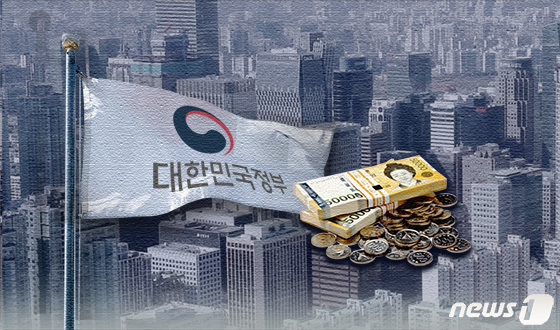
The government will revise rules so that rewards can be calculated on total recovered amounts—including penalty surcharges and accrued interest—not just the original fraud amount.
An official at the Planning and Budget Office said the government will impose sanctions comparable to fines used in stock-manipulation cases.
To encourage reporting of smaller cases, authorities will also introduce a flat minimum reward of 5,000,000 KRW (about $3,750).
Sanctions following detection will also become tougher.
Rather than having each ministry’s subsidy review committee decide sanctions, a Subsidy Management Committee under the Planning and Budget Office will directly review fraud cases of 10,000,000 KRW (about $7,500) or more and determine sanction levels and whether to pursue criminal charges.
At the same time, the government will upgrade the national subsidy management system, e-Naradoum, to integrate local-government subsidies that are currently managed separately. Officials plan to begin system rework this year with a target completion date in 2029.
Until the new system is in place, the government will conduct joint ministry execution inspections twice a year to minimize gaps in subsidy oversight.
A Planning and Budget Office official said the government will exercise enforcement power to ensure penalties for subsidy fraud are actually carried out. If a responsible ministry fails to take action within three months of the Subsidy Committee’s decision, the case will be referred for audit by the Board of Audit and Inspection.
Prime Minister Kim said, “Each minister must take responsibility: thoroughly inspect and root out even a single act of fraud, recover ill-gotten gains, and impose economic penalties multiple times larger than the benefit. We must eradicate subsidy fraud. For repeat and malicious offenders, we will take firm measures, including criminal prosecution.”