Science and talent drove South Korea’s rise from postwar devastation to the “Miracle on the Han River,” propelling the country to advanced-nation status. Initially, the government recruited foreign science and technology experts into government-funded research institutes. Over time, Korea built its own talent pipeline, trained domestic scientists and engineers, established an industrial base and produced significant results.
The boom did not last. In the 2000s, concerns emerged about low research productivity among Korean science and technology professionals. Today, China is advancing by leveraging science and talent in ways that echo Korea’s own past. Demographic shifts and a shortage of STEM workers have also surfaced. As a result, Korean policymakers and institutions are studying talent-development models in countries such as Germany and China to arrest the slowdown.
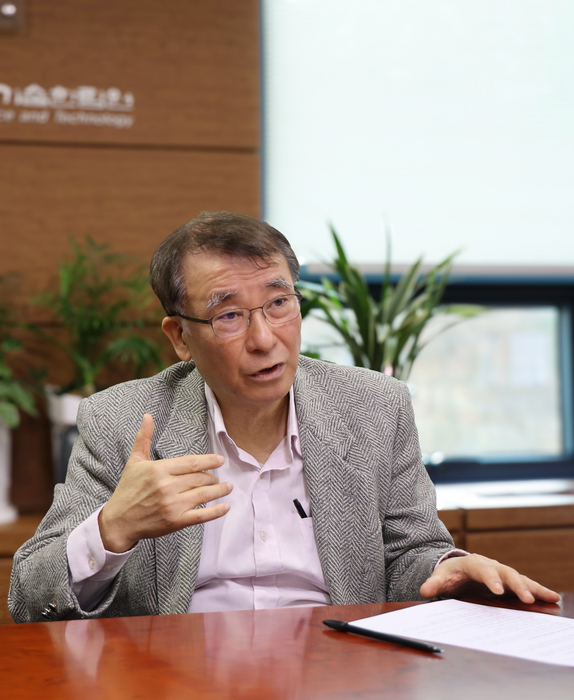
We interviewed Jeong Jin-ho, president of the Korean Academy of Science and Technology and a former university professor, and Jeong Woo-sung, chair of the Korea Foundation for the Advancement of Science and Creativity. Both lead prominent scientific societies and major talent-development organizations in Korea.
They offered their perspectives on cultivating science and technology talent, with a focus on lessons from Germany and China.
◇ Talent circulation expands the science and technology ecosystem
Jeong Jin-ho and Jeong Woo-sung both emphasized how Germany connects universities, research institutes and companies through a “circular structure,” and they argued that Korea should adapt aspects of that model.
Jeong Jin-ho contrasted the two countries’ attitudes toward researcher mobility. “When a researcher moves from academia to industry in Korea, we often call it a ‘brain drain,’” he said. “In Germany, circulation is treated as a network asset that expands the ecosystem.”
He argued that mobility and circulation of talent stimulate R&D. “Basic, applied and strategic research should interact,” he said. “Basic research can evolve into applied or strategic work, and problems encountered in industry can be reframed as questions for basic research. Guaranteeing flexibility for people to move across these domains creates a virtuous cycle.”
He urged Korea to build institutional incentives for movement. If universities, government research institutes and companies maintain more balanced research capacities, and if career disruption is minimized when people move—through protections for salary, research autonomy and reentry opportunities—then healthier, organic circulation can develop.
Jeong Woo-sung echoed that view, highlighting Germany’s integration of universities, research institutes and industry as a driver of ecosystem growth.
He stressed that researchers at organizations like Fraunhofer and Max Planck often also serve as professors at local universities.
“Germany has a higher professor-to-student ratio than Korea, in part because association researchers advise students at regional universities,” he said. “Expanding the scale of educational infrastructure and the research ecosystem plays a major role.”
Jeong noted that regional clusters anchored by Fraunhofer and Max Planck centers help raise national scientific capacity and provide more equal research opportunities across regions.
“Mercedes-Benz conducts cutting-edge research in Stuttgart—where it is based—and offers local students research experience. Other German companies do the same,” he said. “This regional balance is crucial for developing talent nationwide. Korea’s intense concentration in Seoul means that kind of distributed development rarely happens here.”
Jeong Jin-ho added that Germany strategically targets and invests in researchers’ critical life-transition points. The move from postdoc to independent researcher—often through a faculty appointment—is a vulnerable phase. If that transition is overlooked and researchers feel insecure, they may move abroad, hesitate to enter industry, or leave research altogether.
To prevent such attrition, he proposed buffering measures: joint postdoctoral tracks hiring researchers through partnerships between government institutes and companies; bridge funding where the government matches salaries for a set period; and formalized, long-term doctoral-level research tracks within corporate labs.
◇ Respect for long-term scientific careers and stronger education
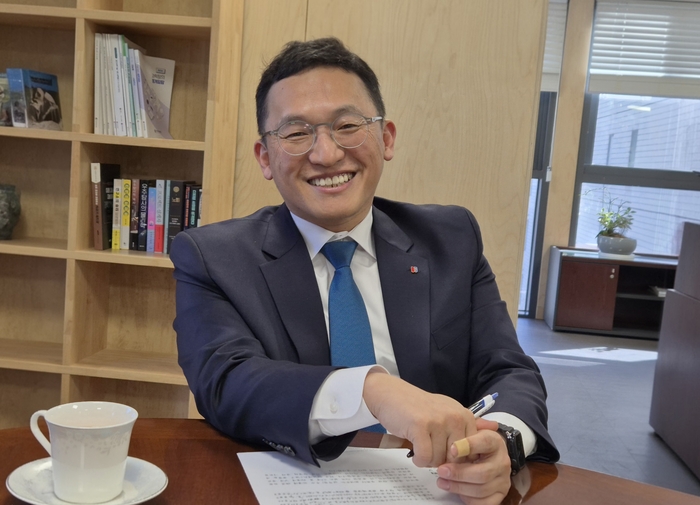
Jeong Jin-ho urged Korea to learn from China, where science and technology have become attractive career choices. He said institutional design should place scientists on clear upward social trajectories.
“In Korea, scientists do not yet have institutionalized influence in policymaking or the formation of public discourse,” he said. “Compared with other professions, science is less attractive, and top students increasingly gravitate toward medicine.”
He identified three conditions to make science and technology a compelling choice again: meaningful improvements in financial compensation; career structures that allow reattempts after failure; and restoring scientists’ social standing.
“When society recognizes science as a long-respected profession, as it often does in China, the talent pipeline can normalize,” he said. “The government must also play a role so scientists can focus on research.”
Jeong Woo-sung argued for strengthening STEM education itself. China emphasizes early STEM training, and Korea should expand laboratory infrastructure and experiment-based classes in middle and high schools.
“For example, we no longer perform frog dissections because of animal protection concerns,” he said. “Animal welfare is important, but we should ask whether society has reached sufficient consensus to balance protection with the pedagogical needs of science education.”
He also noted that Chinese universities invest heavily in basic-science education. In Korea, departments in foundational fields are sometimes merged or eliminated, which undermines overall talent development.
“National universities tend to retain basic-science departments, but private universities often drop them in favor of applied fields with clearer employment links,” he said. “The Foundation is preparing programs to strengthen basic-science capacity at universities. Robust university programs in foundational sciences are essential to nurturing talent nationwide.”
◇ Beware closed, elite-focused models
They cautioned that Korea should not adopt every element of German or Chinese policy wholesale.
Jeong Jin-ho warned against China’s elite-concentration model. While it can deliver rapid gains, if it hardens into closed elitism it may erode the diversity and breadth of the research ecosystem.
“We should balance an appreciation of China’s performance-centered concentration strategy with awareness of its potential to weaken ecosystem diversity,” he said. “Concentrated support for outstanding talent in strategic technologies may be necessary, but it must be accompanied by a broad base that includes regional researchers, women and the next generation.”
Kim Young-joon kyj85@etnews.com