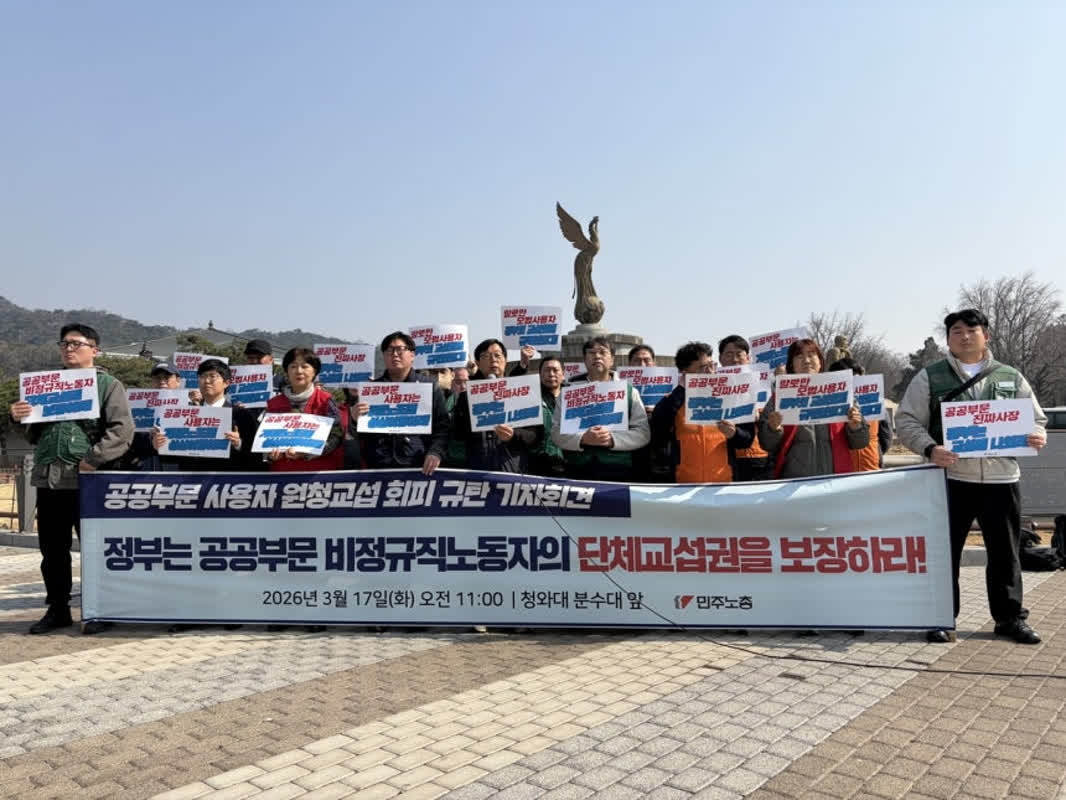
A local public institution union has, for the first time since the revised Labor Union Act’s Articles 2 and 3 — the so‑called “Yellow Envelope Law” — took effect, formally demanded direct bargaining with a local government. Observers are watching whether this push for primary-contractor bargaining in the public sector will reshape labor‑management relations at local public institutions.
The Gyeonggi Credit Guarantee Foundation Union announced on March 10 that it had formally requested collective bargaining with Gyeonggi Province. This marks the first instance of a local public institution union seeking direct negotiations with a local government.
The union says the demand goes beyond raising issues; it aims to correct a long‑standing institutional arrangement in which Gyeonggi has exercised substantive influence over the employment conditions of foundation workers.
According to the union, Gyeonggi has relied on its oversight powers over funded and affiliated agencies to intervene across agency operations — from budget approvals and staffing controls to prior consultation on board agendas. The province’s approval has also strongly influenced financial and organizational decisions directly tied to wages, benefits and personnel management.
On that basis, the union argues that Gyeonggi qualifies as the “employer” under Article 2 of the revised Labor Union Act. It also cited repeated instances in which the province’s approval — or its refusal — limited or blocked implementation of collective‑agreement terms.
The union said some collective agreements between the foundation’s labor and management included clauses such as “implementation subject to the province’s prior consultation,” and that Gyeonggi’s opposition has at times delayed or derailed enforcement of those agreements.
Under this structure, the union contends, internal labor‑management agreements at the foundation alone cannot determine actual working conditions. Because Gyeonggi holds effective decision‑making authority, the union insists the province must be the bargaining counterpart.
Accordingly, the union presented the following principal bargaining demands to Gyeonggi: establish an internal performance‑pay item under budget guidelines; consult on staffing levels by rank and introduce a seniority‑based promotion system; compensate employees for livelihood losses caused by agency relocation; and consider other union‑proposed agenda items.
The union emphasized that the Labor Ministry’s interpretive guidelines identify an “employer” by its “substantive and concrete control and decision‑making over working conditions,” and argued that because Gyeonggi holds such powers, the province should serve as the bargaining party.