Education subsidies expanded to 8.5 billion KRW (≈ $6.38 million)
Public education strengthened with eco-friendly meals and enrollment grants
Public education strengthened with eco-friendly meals and enrollment grants
Seoul’s Gwangjin District announced on March 10 that it will invest 14.7 billion KRW (≈ $11.03 million) this year to support 68 kindergartens and elementary, middle and high schools, aiming to help students pursue their goals within the local community.
The budget is designed to create a safer, more comfortable public education environment. This year the district will provide a total of 14.7 billion KRW (≈ $11.03 million), including 8.5 billion KRW (≈ $6.38 million) in education subsidies, 5.6 billion KRW (≈ $4.20 million) for eco-friendly school meals, 380 million KRW (≈ $285,000) for enrollment-preparation grants, and 220 million KRW (≈ $165,000) for community-linked curricula.
To improve the quality of public education, Gwangjin increased the education subsidy by 500 million KRW (≈ $375,000) from last year to 8.5 billion KRW (≈ $6.38 million). That is more than double the 4 billion KRW (≈ $3.00 million) provided in 2022. The district finalized its 2026 education spending plan for 68 local kindergartens and schools through the education subsidy review committee.
Specifically, the district will roll out programs tailored to each school’s needs: specialized projects for individual kindergartens and schools; operating-cost support for schools that open their facilities to the community; additional assistant staff for special education classes; basic-skill improvement initiatives; and reading programs such as “50 books per student.” The district also plans facility upgrades, including installing artificial-turf playing fields and renovating aging school buildings.
This year Gwangjin will expand support for schools that actively open their facilities to neighborhood residents, encouraging schools to function as shared community spaces. The district will increase assistant staff for special classes and strengthen “student-tailored supporter” programs for students facing emotional crises or needing extra care. It will also launch new cultural-activity grants to broaden students’ cultural exposure.
Under the Gwangjin Education Cooperation Special Zone project, the district plans to allocate 220 million KRW (≈ $165,000) for community-linked curricula, covering instructor fees for arts and sports village programs, school club operations, and joint school-community programs.
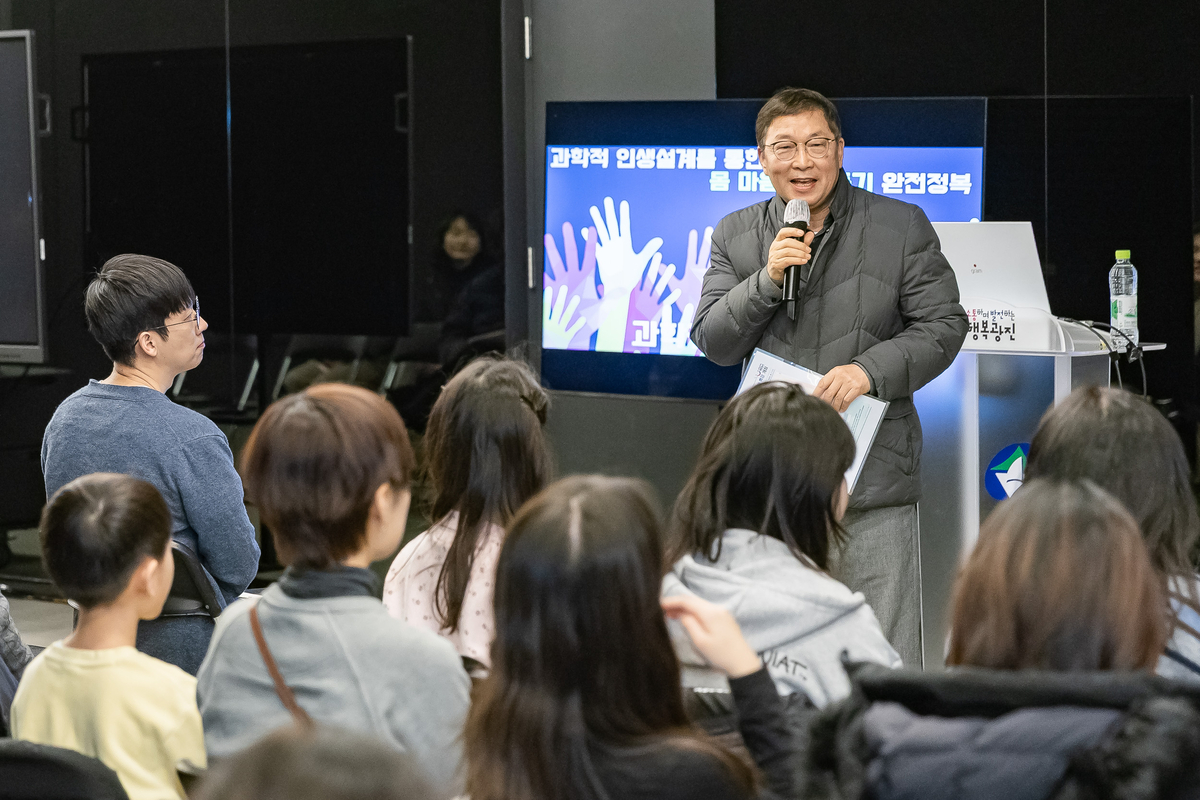
Gwangjin recently opened the Gwangjin Future Technology Experience Center, where residents can try out AI, robotics and drones, further expanding the district’s educational infrastructure. Since opening, it has become a popular hands-on learning venue that attracts many visitors.
The district also operates programs such as native-speaker online English lessons and online learning for elementary students to support self-directed study and to expand access so no student is left behind.
Gwangjin District Mayor Kim Kyung-ho said, “Gwangjin prioritizes the creation of a safe learning environment and the qualitative improvement of public education. Through ongoing communication with schools, parents and the community, we will continue to pursue student-centered improvements to the educational environment.”