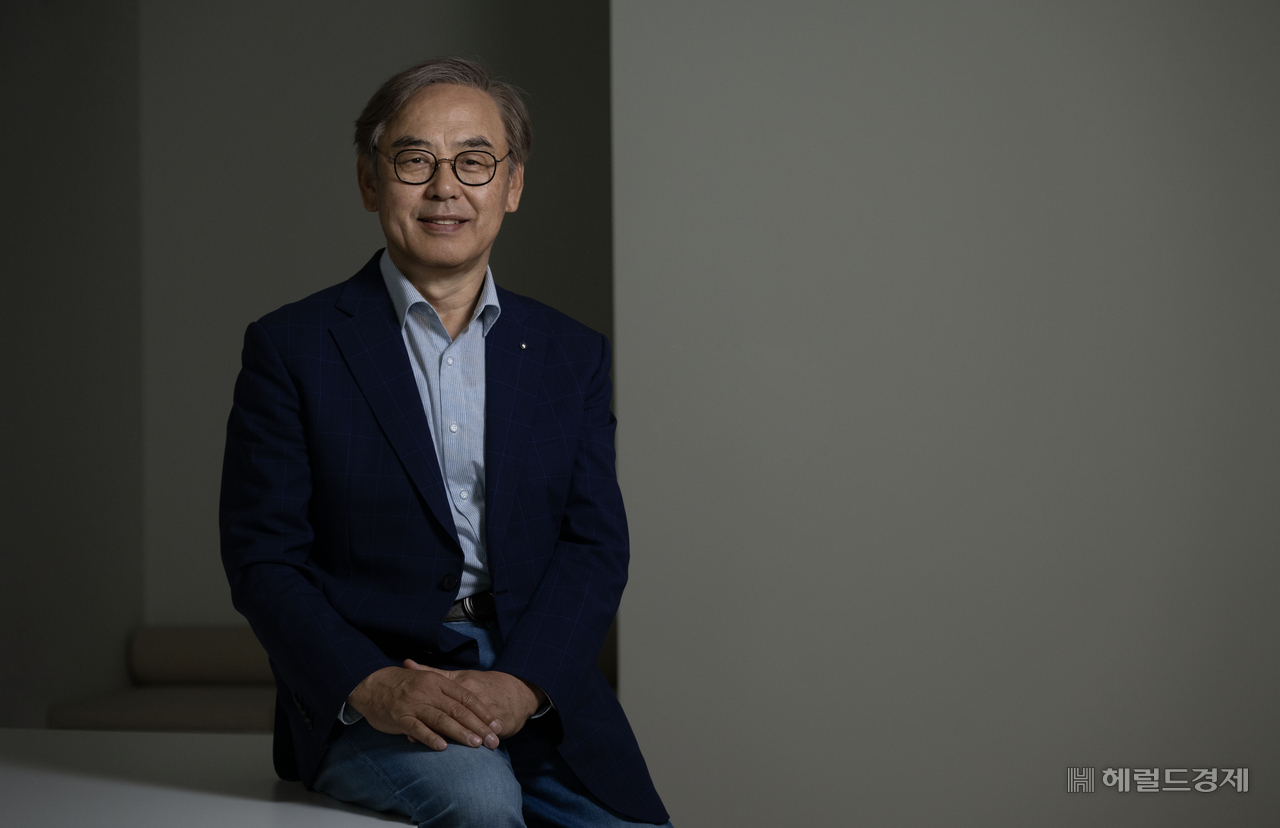
 [Herald Business reporter Kim Do-yoon] “I survived five brutal setbacks, and on the sixth try I fully recovered and stood back up.”
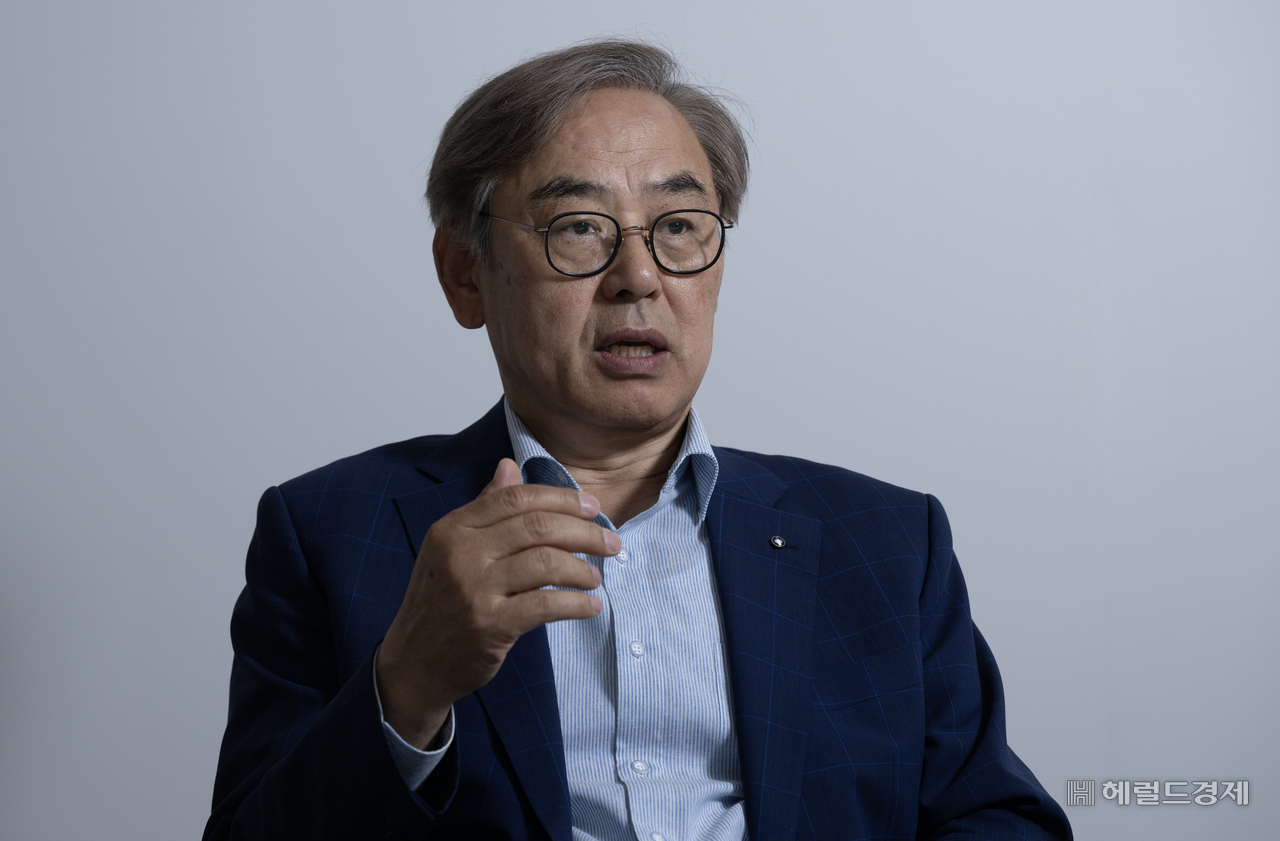
When I met Kim at Gamachi Chicken’s headquarters office in Seocho-gu, Seoul, on the 24th of last month, he described his life as “falling five times and getting up six.” To understand the generosity he shows today, you have to look at those five defeats first.
October, he said, always feels particularly cold. Both of his parents died in October 1972. Born in 1958, Kim was only 14 and in middle school at Dongshin when he learned of their deaths during class.
“We held the funeral at Kyung Hee University Hospital’s mortuary with borrowed money, and relatives helped me bury their ashes in our hometown,” he said. “I cried for days.”
After the funeral, reality set in. As the family’s young breadwinner, he had to provide food, laundry and basic care for his siblings. He struggled. His siblings scattered to relatives’ homes; the two youngest moved in with a larger household. Kim delivered newspapers while still going to school, earning 2,000 KRW (approximately $1.50) and surviving on 20 KRW (approximately $0.02) instant noodles.
He worked for the Donga Ilbo evening paper and, after school, went straight to the distribution office. He took a job at a chicken shop in Namdaemun Market, sleeping only four hours a day while slaughtering and delivering chickens. His starting wage, 5,000 KRW (approximately $3.75), rose to 10,000 KRW (approximately $7.50) after a year, but it still wasn’t enough to support his siblings. He left the chicken shop, served at a restaurant for a year, attended daytime classes and prepared for a driver’s license.
 The second blow came in April 1984, when he was 27. Hoping to earn enough working in the Middle East to secure a deposit on an apartment and buy a private taxi, he obtained a heavy commercial driver’s license and passed Daewoo Construction’s overseas-dispatch exam and medical check.
One dawn while making a delivery, two middle-school boys rode down a hill on bicycles, sped past his truck and crashed into the trunk of a taxi beside him. His truck showed no damage. The boys sustained minor injuries requiring about two weeks’ treatment. But the taxi driver falsely accused Kim of a hit-and-run to avoid responsibility. Kim spent two unjust months in Seoul Detention Center in Seodaemun-gu.
“I’d already spent 10 hard years struggling. I felt so crushed I thought either of taking revenge on the people who destroyed my life or ending it myself,” he said.
 The trials didn’t end there. His beloved youngest brother, ten years his junior, disappeared and was later found dead after falling from a cliff in Seoul. The brother had enrolled in Chung-Ang University’s electrical engineering program and had been a top student who received scholarships.
To make matters worse, his first daughter began having violent seizures and eye-rolling spasms around seven months old. Doctors at Seoul National University Hospital diagnosed malignant epilepsy and cerebral palsy. “It felt like the world went dark,” he said.
 As if that weren’t enough, another catastrophic setback came after he had found professional success. While serving as CEO of Mokuchon and the Maniker Chungju plant, the company was sold and he lost his job. Determined to prepare for retirement and fund mission work, he took out a large loan to buy 10,000 pyeong (33,057 m²) in Chungju, North Chungcheong Province, to build a personal poultry farm. He completed environmental reviews and other required procedures, but unexpected complaints and opposition from local residents sank the project.
He couldn’t repay the massive loan, and his home faced foreclosure. His debt reached 2.9 billion KRW (approximately $2,175,000), with monthly interest of roughly 10 million KRW (approximately $7,500). He decided to take on hard labor, like in his youth, to try to pay it off.
He prayed every morning at a retreat center. Then hope arrived unexpectedly. A friend who ran a poultry processing plant in Gimpo contacted him and asked for help because the plant’s operating rate had fallen. Kim described this as seeing “a sliver of hope at the bottom of life.”
He accepted the friend’s request and became head of sales. Colleagues he had met in the poultry industry offered help. The money-losing plant turned a profit. That turnaround became the springboard for his full comeback. He later launched Gamachi Chicken and built it into a national brand.
Company motto: “Use honesty and diligence as capital to share with neighbors”
After enduring hardship, Kim has turned his attention to the most vulnerable in society. He helps families raising children with intellectual and developmental disabilities, because he knows firsthand the struggles of parents caring for children with epilepsy and cerebral palsy. “I know the pain these families endure, and I wanted to help,” he said. Doctors once told his daughter she might live only a couple of years, but thanks to devoted family care she is now healthy at 40.
He has identified 10 families caring for nonverbal children who can barely control their bodies, chosen through recommendations from acquaintances and community contacts. This year he began providing a monthly caregiving stipend of 1 million KRW (approximately $750) to two households where a sole caregiver could not leave the home to work because of the child’s needs.
His goal is to support all 10 families, providing about 3 million KRW (approximately $2,250) in total assistance each month.
As he recounted the stories of the two families he currently supports, Kim choked up several times.
“Like the saying ‘let your left hand not know what your right hand does,’ I believe in giving quietly—so the giver does not draw attention and the recipient is spared embarrassment,” he said. “I worry that those we help might feel ashamed.”
Kim’s outreach also extends to correctional facilities and disaster sites. In April he visited Somang Prison in Yeoju, Gyeonggi Province, encouraging inmates to choose forgiveness over hatred as a path to rebuilding their lives. In February he supported the Daniel Welfare Center in Seocho-gu, and last March he aided communities hit by wildfires in Gangwon Province.
He continues to support vulnerable groups through organizations such as the Small Church Revival Movement Union, the National Homeless Facilities Association, and the Social Cooperative Heenyeon.
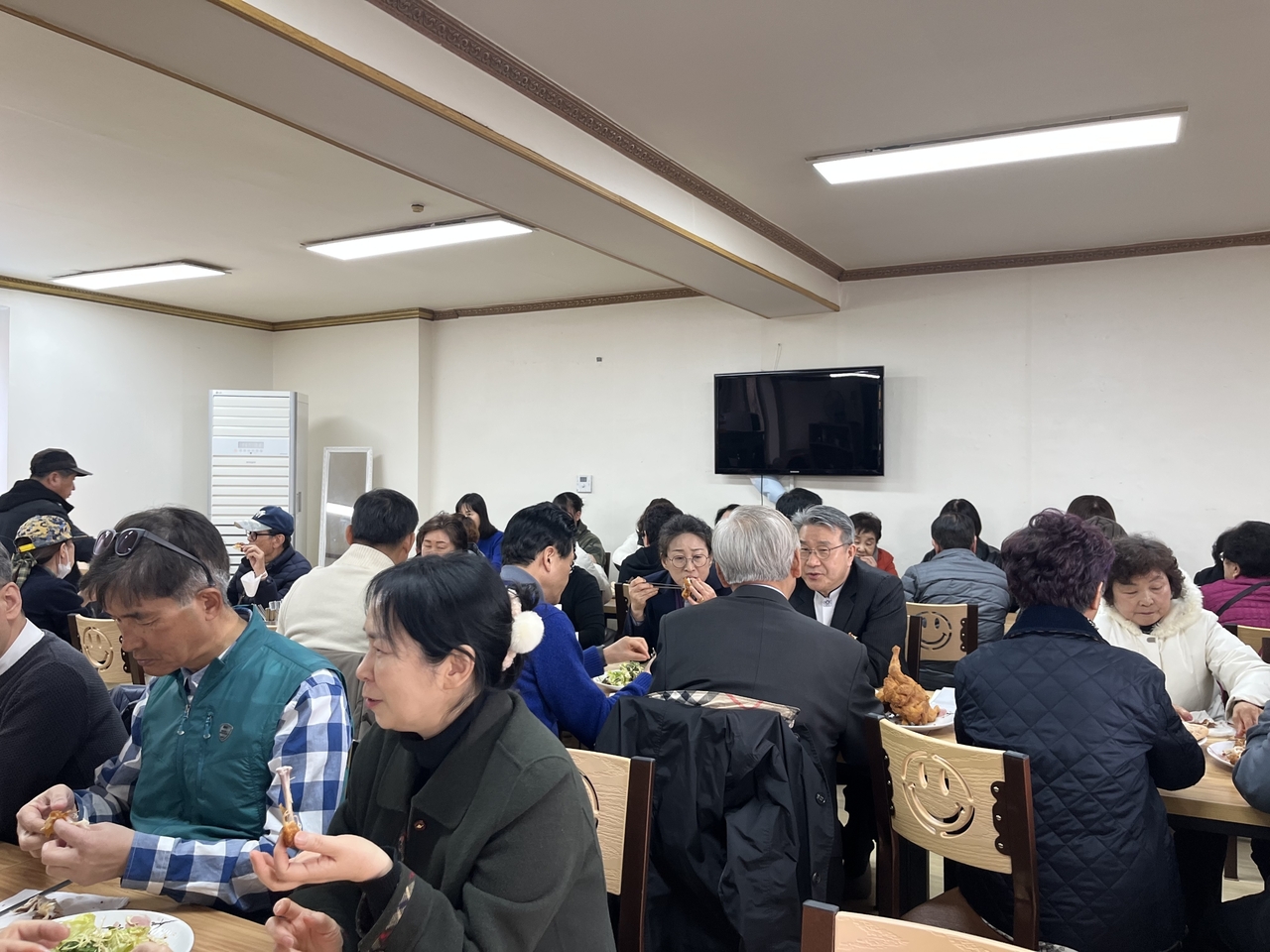
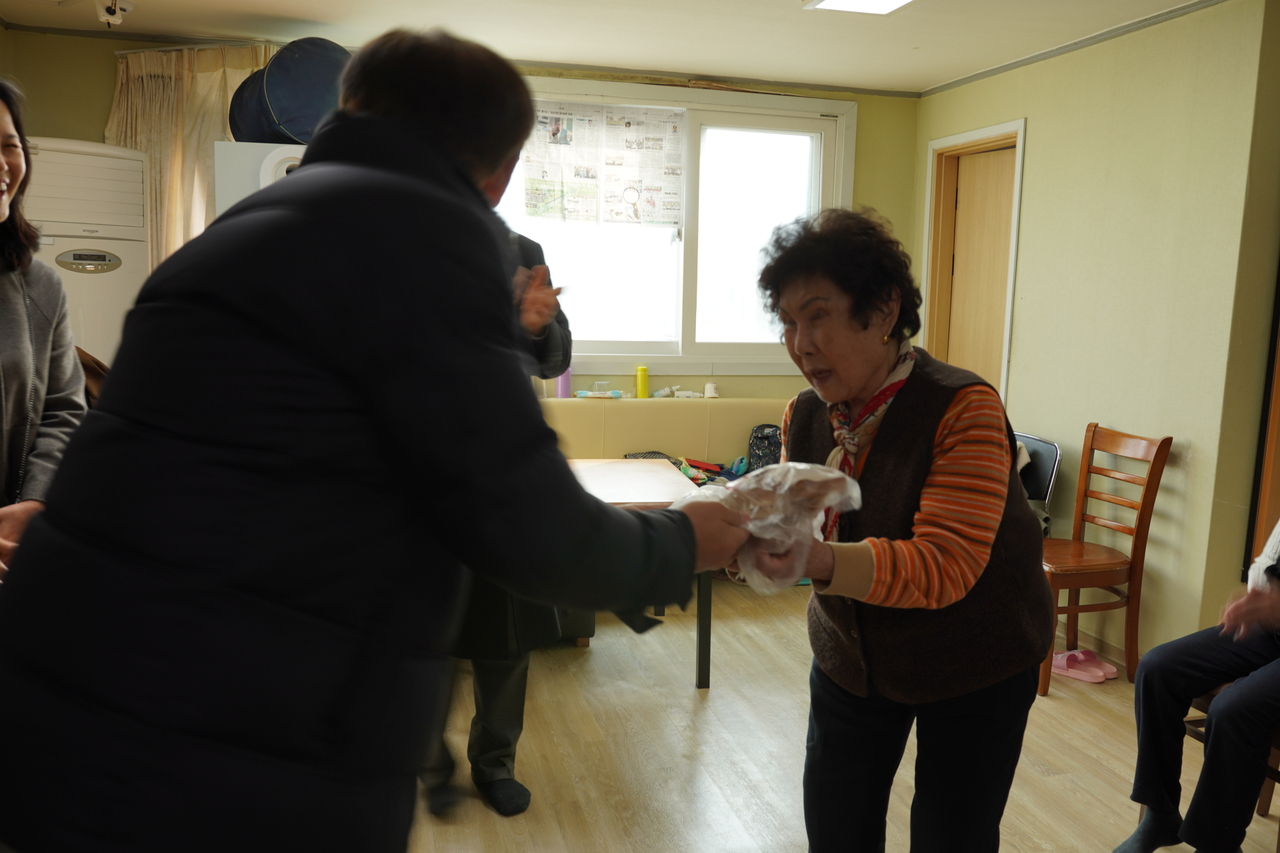
Since June last year he has donated 1,000–2,000 bowls of samgyetang (ginseng chicken soup) each month to about 40 homeless shelters and meal centers nationwide, including free meal sites at Seoul Station and Yeongdeungpo, the Suwon Restart Support Center, the Incheon Jaemulpo Soup Kitchen, and “House Opening Tomorrow.” His annual donations exceed 100,000 whole chickens. He also provides meals to elderly scrap collectors, survivors of domestic violence and homeless people working toward independence.
Kim has fallen many times, yet he always recovered. He credits those who helped him in his darkest moments and says, “I want to use my gratitude to help neighbors in need.”
![[헤럴드DB]](https://cdn-union.viewus.co/contents/crawler-dev/image/2026/05/CP-2023-0083/image-dea6ccc4-bae6-40ae-968b-99c06539336a.jpeg)