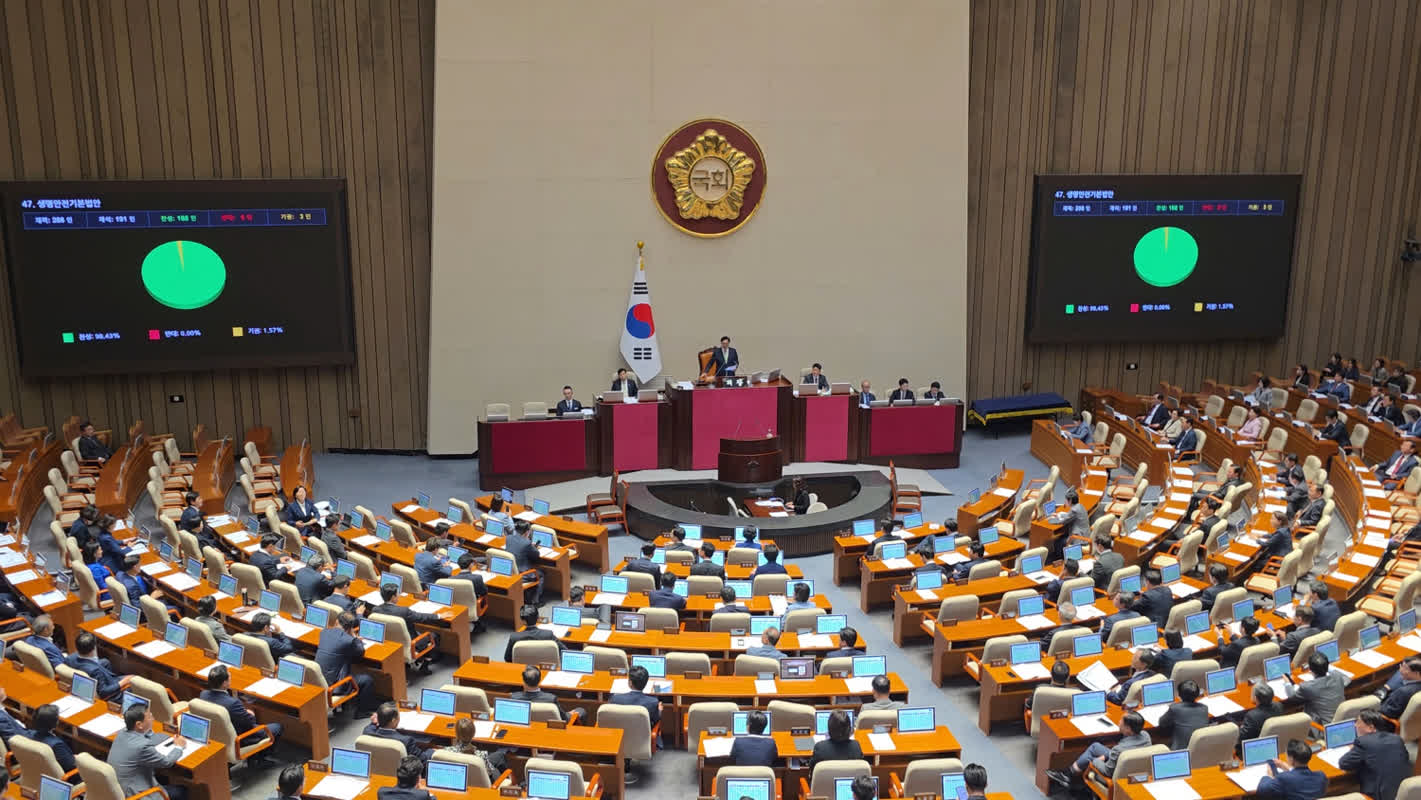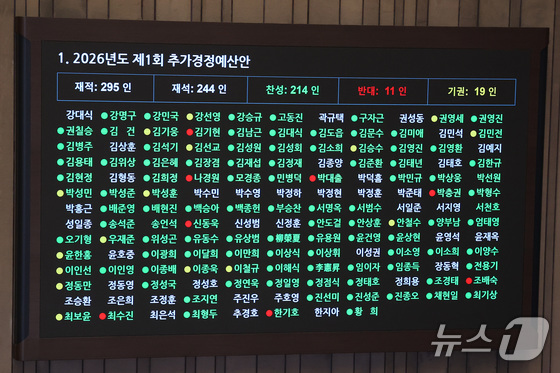
The Ministry of Climate, Energy and Environment announced that the National Assembly passed its first supplementary budget for 2026 on April 10, confirming an increase of 616.2 billion KRW (about $462.15 million, using an exchange rate of 1 KRW = 0.00075 USD). The package prioritizes expanding renewable energy, supporting vulnerable populations and responding to high fuel prices.
The ministry said the supplementary budget grew by 91.7 billion KRW (about $68.78 million) from the original government proposal after the National Assembly adjusted funding for programs such as zero-emission vehicle deployment and added support for equipment to produce weight-based recycling bags and for replacing aging renewable-energy inverters. As a result, total climate, energy and environment spending for 2026 rose 2.8%, from 21.7588 trillion KRW (about $16.32 billion) to 22.3750 trillion KRW (about $16.78 billion).
The largest increase was allocated to renewable-energy financing. The government added 232.3 billion KRW (about $174.23 million) to provide long-term, low-interest loans for installing solar, onshore and offshore wind facilities. It also newly included 6.0 billion KRW (about $4.50 million) for a second round of compensation to villages participating in the \"sunlight income\" program. An additional 124.5 billion KRW (about $93.38 million) was directed to solar projects in industrial parks and on factory rooftops to accelerate deployment in areas where grid connections and site availability are relatively straightforward.
Support for renewable-energy deployment rose by 76.7 billion KRW (about $57.53 million) to expand solar installations in homes, schools and traditional markets. The program aims to equip 100,000 households with home solar systems. The budget also newly allocates 1.8 billion KRW (about $1.35 million) for an integrated platform to manage village-level revenue and operations for the sunlight-income program.
In the power-grid sector, 58.8 billion KRW (about $44.10 million) was added to support construction of AI-enabled energy storage systems. The project will install storage on saturated distribution lines and encourage additional solar projects currently waiting to connect to the grid. The government said it will leverage integrated power-plant operators to better coordinate distributed renewable resources and contribute to grid stability.
The package also created new measures to prepare for reduced supplies of synthetic-resin raw materials amid a prolonged Middle East conflict. A 13.8 billion KRW (about $10.35 million) program will support production equipment for weight-based recycling bags by helping producers replace key extruders so they can increase the share of recycled materials in bag production.
To ease the burden of high fuel prices, the government expanded electric-vehicle support, increasing EV subsidies by 150.0 billion KRW (about $112.50 million) to meet rising demand for small electric cargo vehicles that are commonly purchased by small business owners. Attached materials show the expanded support will cover 20,000 passenger cars and 9,000 cargo vehicles.
Funding for vulnerable populations was also increased. Energy-voucher funding rose by 10.2 billion KRW (about $7.65 million), and support for energy-efficiency upgrades for low-income households increased by 12.8 billion KRW (about $9.60 million). The energy-voucher expansion will add assistance for 200,000 households currently using kerosene or LPG, and the upgraded funding will expand heating and cooling installations and equipment support for low-income households and social welfare facilities.
Other allocations include 36.3 billion KRW (about $27.23 million) for operating support for island self-generation facilities, 2.2 billion KRW (about $1.65 million) for industry and job-transition support payments, 22.4 billion KRW (about $16.80 million) for a CCU mega-project, and 296 million KRW (about $222,000) for education and publicity for the sunlight-income villages.