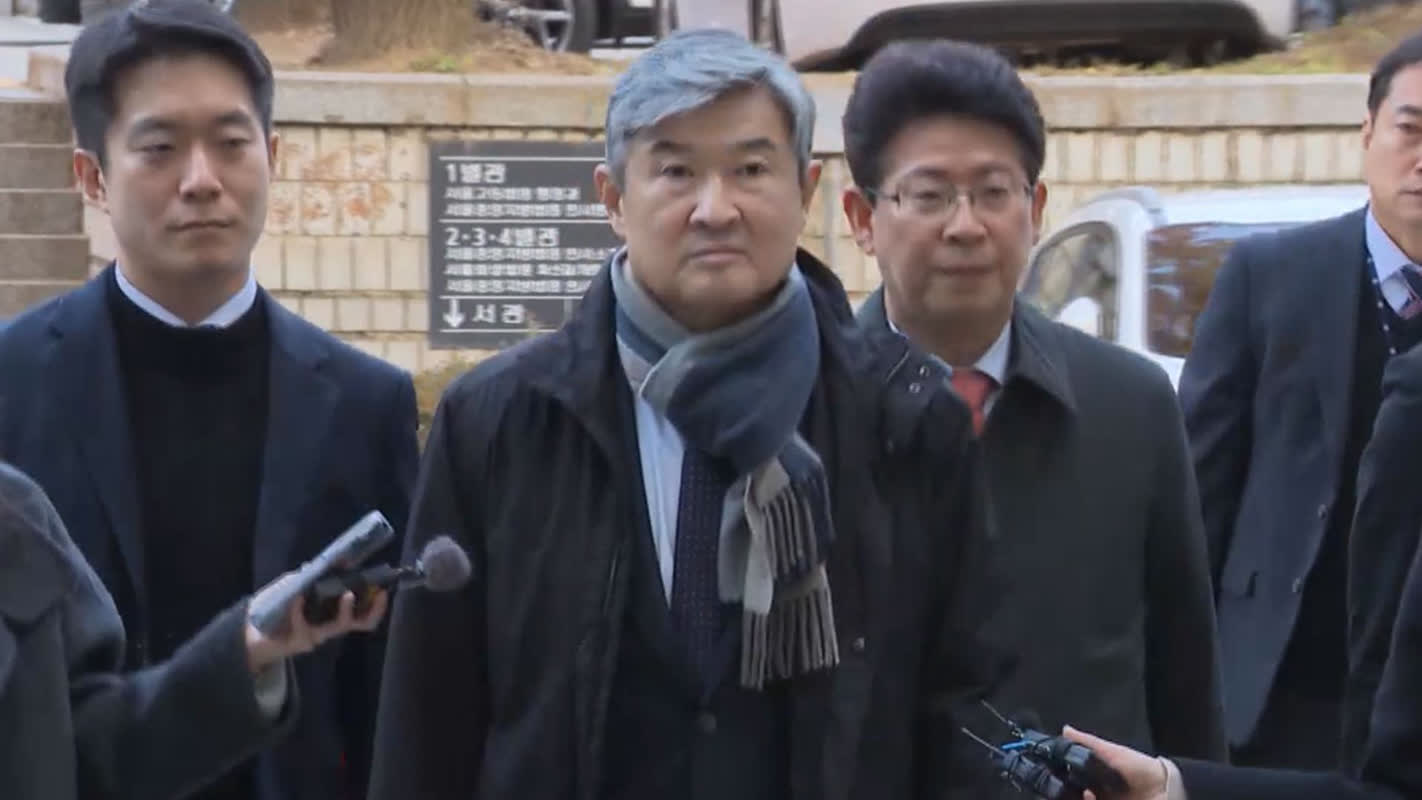
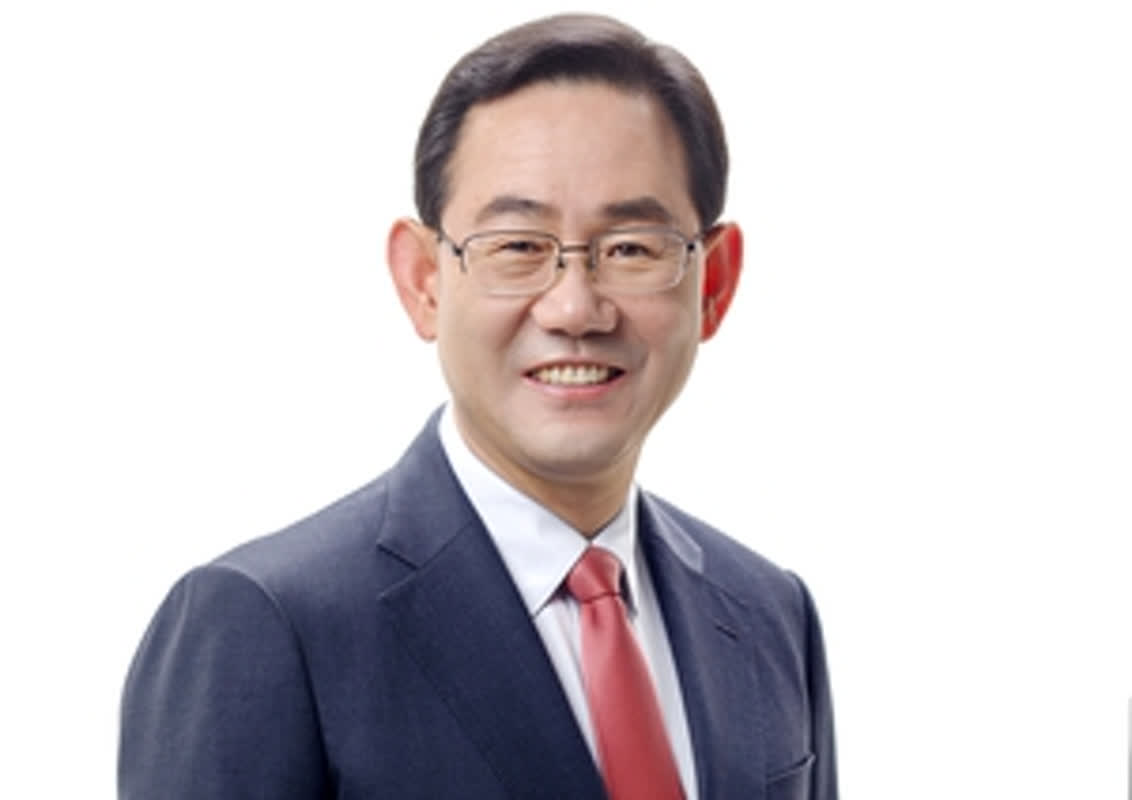
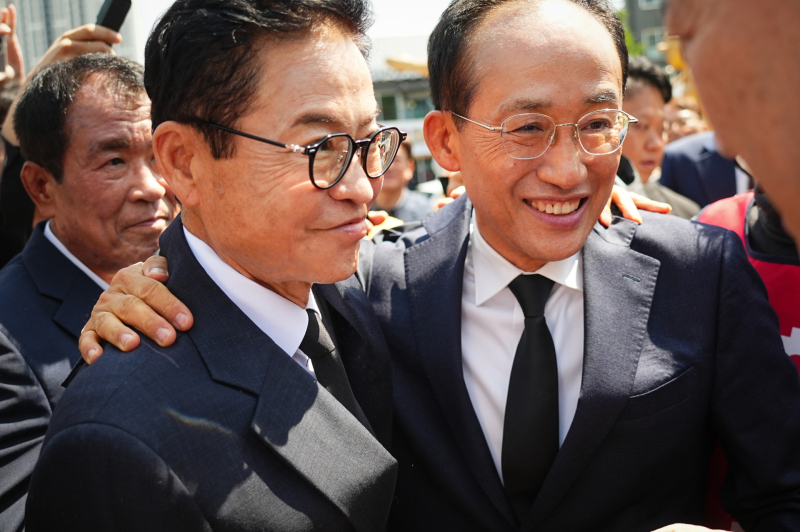
 The People Power Party’s Daegu mayoral candidate, Choo Kyung-ho, and its North Gyeongsang gubernatorial candidate, Lee Cheol-woo, formally launched a “TK One Team” initiative to bind Daegu and North Gyeongsang into a single economic bloc as they head into the June 3 local elections.
 They placed Park Chung-hee’s industrialization legacy at the center of their appeal, presenting a joint vision for regional growth focused on an integrated new airport, administrative consolidation, and industrial restructuring to consolidate conservative support.
At 2 p.m. on the 1st, Choo and Lee visited Park Chung-hee’s birthplace in Sangmo-dong, Gumi, paid their respects, and then held a joint press conference to unveil a shared declaration outlining their plan for “integrated leadership” across Daegu and North Gyeongsang.
About 3,000 party members and supporters joined the event, turning it into a demonstration of strength that reaffirmed Daegu and North Gyeongsang’s conservative identity and amplified calls for regional unity.
In the joint declaration, the two candidates said, “Daegu and North Gyeongsang are one community with a shared destiny,” adding, “The region’s future opens when we pool our strength.”
The declaration set out three core priorities: creating a joint Daegu–North Gyeongsang economic zone; advancing the integrated new TK (Daegu–Gyeongbuk) airport alongside administrative consolidation; and defending conservative values while strengthening regional competitiveness. For select issues, it also proposed economic relaunch strategies centered on industrial restructuring and securing future growth engines.
Choo wrote in the guestbook, “I will carry on President Park Chung-hee’s leadership of challenge and growth to revive Daegu’s economy. With a united Daegu–Gyeongbuk, we will secure victory,” pledging to lead the TK One Team to success.
At the press briefing he said, “Daegu needs not merely improvement but structural transformation,” adding, “We will reshape the economic framework through industrial restructuring and restore Daegu as a city that draws young people back.”
Choo also announced plans to pursue an ordinance to institutionalize support for former presidents’ post-presidential activities. The proposal would formalize their advisory role on economic, diplomatic, and security policy, press for restoration of national-level honors and protocol, and leverage their domestic and international networks for regional development strategies.
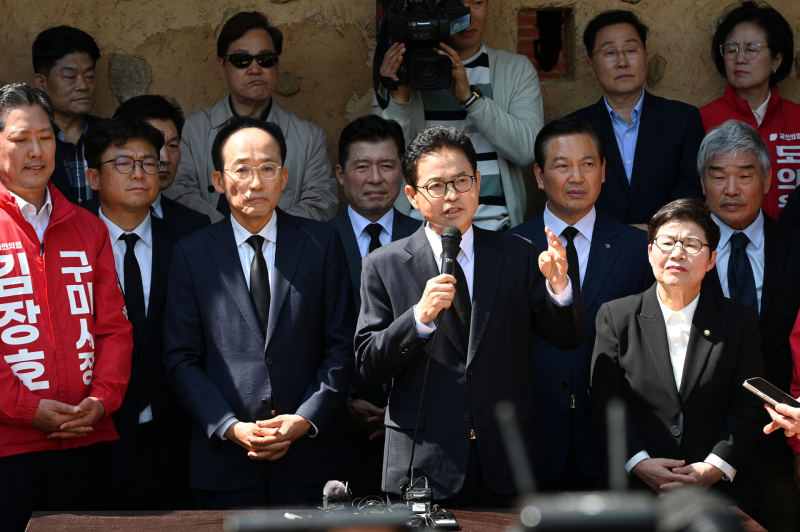 Lee said, “We will restore Daegu, North Gyeongsang, and the nation on the foundation of Park Chung-hee’s spirit,” and set out concrete industrial and economic plans for the TK region.
 He pledged to modernize Park’s patriotic, industrial vision through a “Park Chung-hee G-Culture City” project that blends industry, history, and culture. Lee aims to brand Gumi as a city where Park’s industrial legacy meets cutting-edge industry, and to pair that branding with transport and logistics projects tied to the integrated new airport to produce tangible economic gains for residents.
Both candidates identified the integrated new airport as a core piece of the TK joint economic zone and reiterated their commitment to advance the project quickly. They said the airport will be linked with transport and logistics networks to forge a single, large economic area spanning Daegu and North Gyeongsang, creating a “future growth platform” to attract jobs for young people and high-tech investment.
Analysts view the joint visit as a strategic effort by the TK camp to defend the conservative “Nakdong River front”—long seen as a last bastion of conservative support—and to expand conservative influence nationwide as the Daegu mayoral race tightens.
Campaign officials from both camps called the event a turning point for consolidating conservative voters, boosting electoral momentum, highlighting integrated regional leadership, and strengthening an economic message rooted in industrialization. They said it signals a strategic aim to bind the two regions into a single economic zone and build a foundation for future growth, not merely a short-term electoral alliance.
The press conference drew prominent attendees, including Im Eui-ja, chair of the National Assembly’s Budget and Economy Committee; Koo Ja-geun, chairman of the People Power Party’s North Gyeongsang provincial party; and MPs Kang Myung-gu, Kang Dae-sik, Kim Wi-sang, and Lee Dal-hee, along with mayors, county heads, and candidates for regional and local assemblies who backed the TK One Team plan.
The two candidates reiterated, “Daegu and North Gyeongsang will win together and reclaim their place at the center of Korea,” pledging, “We will defend Daegu and North Gyeongsang—the heart of conservatism—and carry forward a free and prosperous Korea.”