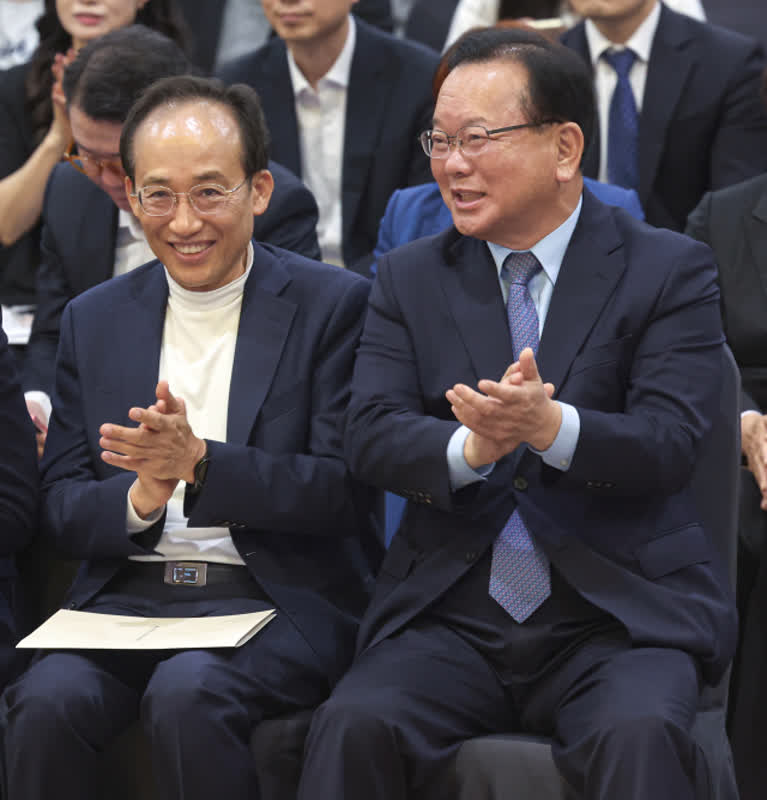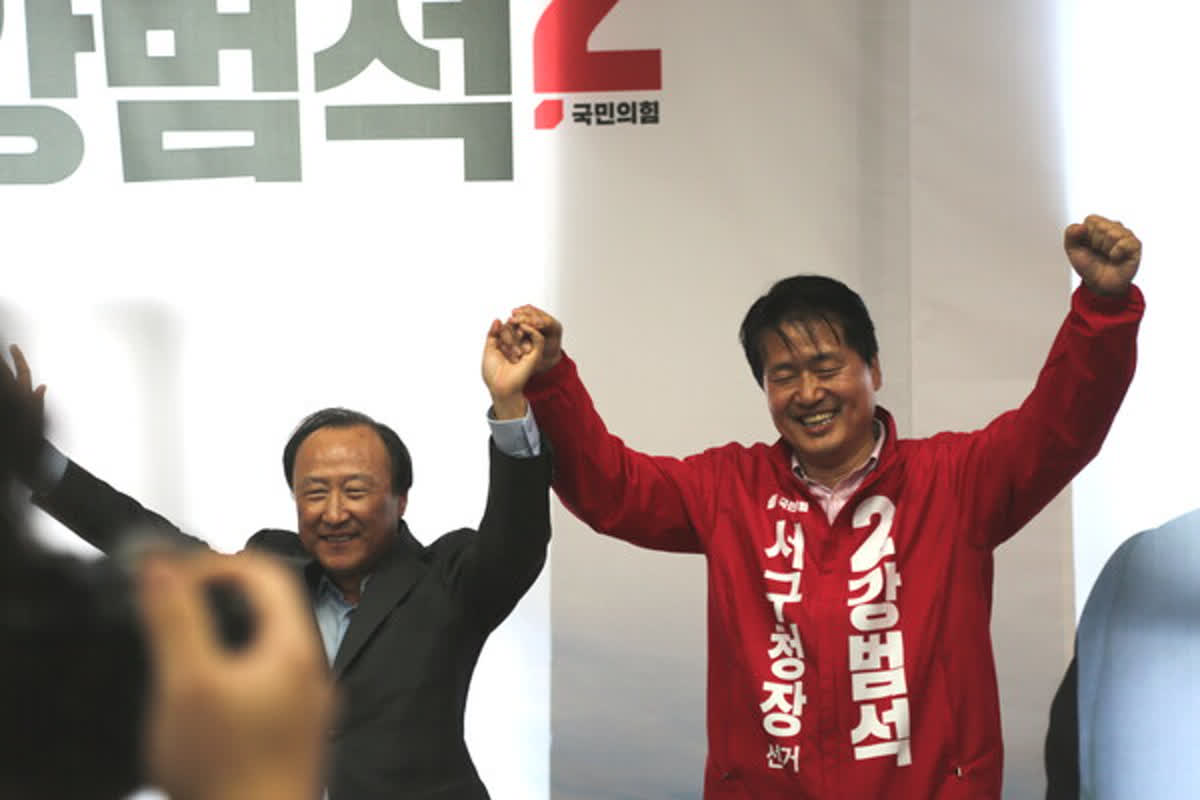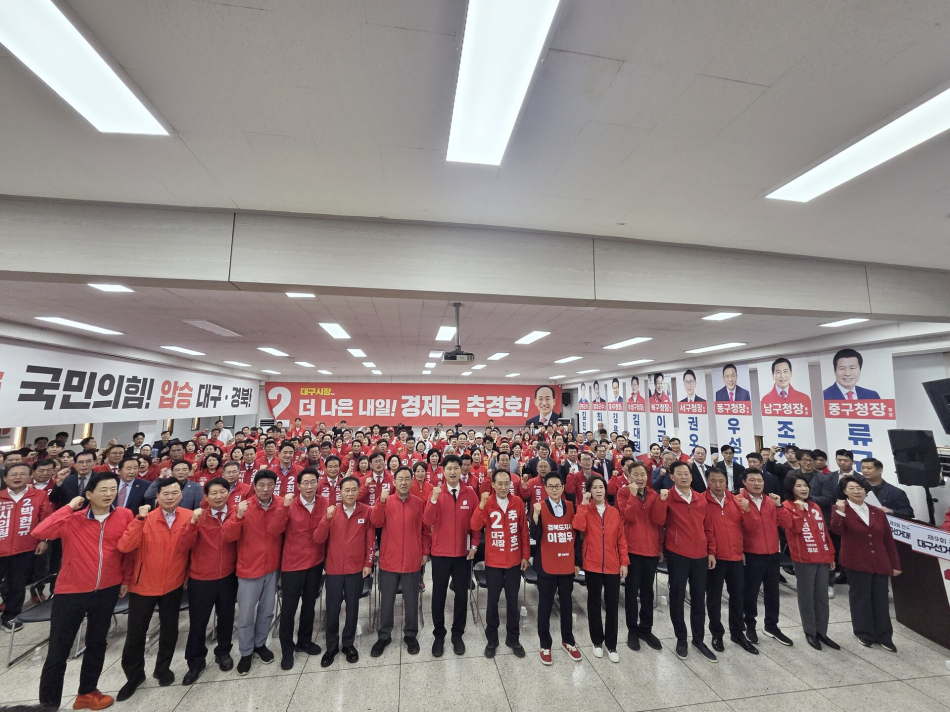
The People Power Party's Daegu city chapter held a campaign kickoff on the 10th in the party's fifth-floor auditorium, formally launching its election drive.
Hundreds of party members and supporters attended, chanting "Victory for the People Power Party — a landslide for Daegu's mayor," and rallied around the campaign's message.
Campaign chief Joo Ho-young emphasized urgency: "Because this is a difficult and important election, we must press on with desperate determination until the end," he said. "Candidates must win voters' support with humility and a sense of urgency."
He warned that if local power were captured by the opposition, it could open the door to one-party dominance and urged voters to back his party.
Daegu mayoral candidate Choo Kyung-ho framed his campaign in terms of responsibility: "I will run out of a duty to protect Daegu and revive the economy," he said, vowing, "I will rebuild Daegu's economy." He characterized the election as a battle to restore the rule of law and common sense and called for conservative unity.
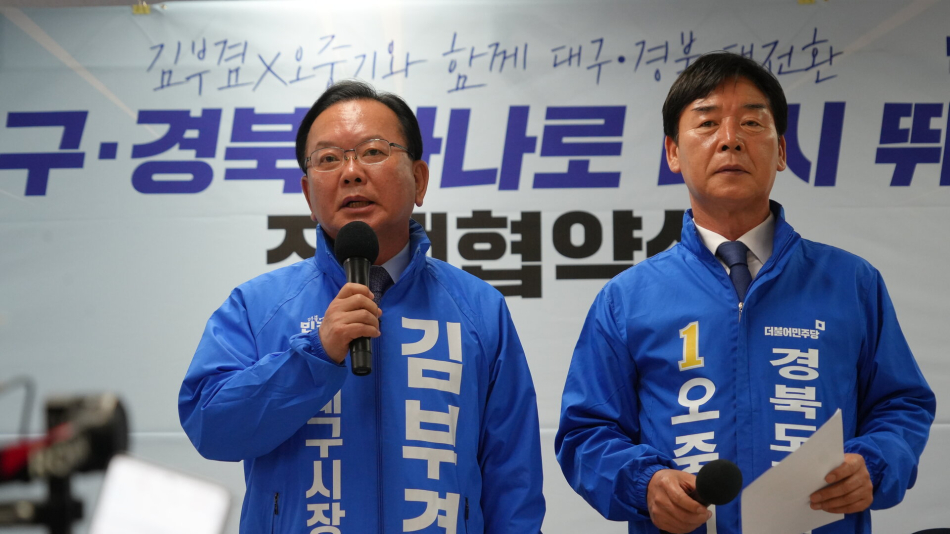
The candidates argued that Daegu and Gyeongbuk should function as a single living and economic zone and proposed coordinated initiatives across industry, transportation, logistics, healthcare and energy.
Their eight joint policies include administrative integration, expedited completion of the new TK airport, improvements to the Nakdong River's water quality, and the construction of a regional transport network—measures aimed at establishing a one-hour living zone.
The proposal also features future-industry strategies, such as creating a biohealth, semiconductor and robotics industrial belt and building multimodal logistics hubs.
Kim said merging Daegu's 2.36 million residents with North Gyeongsang's 2.5 million would position the region to aspire to an economic unit of roughly 8 million that could compete with the Seoul metropolitan area. Oh pledged to drive regional advancement focused on livelihoods and long-term growth.
With about 20 days left until the vote, TK has become a battleground where the conflicting strategies of conservative consolidation and super-regional integration are colliding intensely.