|
 >
>On the 12th, the National Police Agency said the National Assembly Guard is assigned to the Seoul Metropolitan Police Agency under the Enforcement Rules on the Organization and Duties of the National Police Agency and Its Affiliated Organizations, a regulation issued by the Ministry of the Interior and Safety.
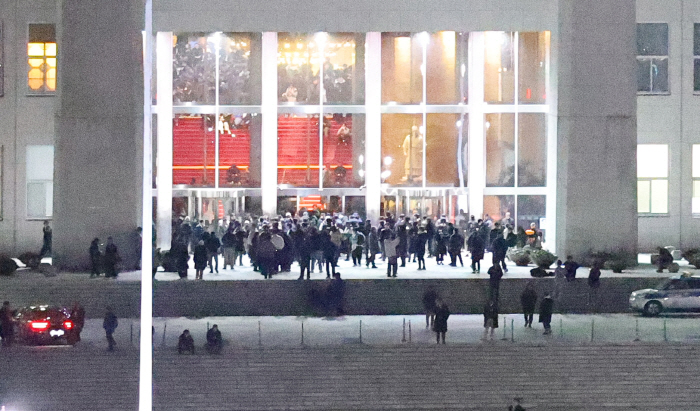
During the martial-law incident, police entered the Assembly and blocked lawmakers from accessing the building, triggering widespread controversy. Former National Assembly Guard chief Mok Hyun-tae was sentenced to three years in prison in the first instance on the 19th of last month on charges of participating in the imposition of martial law; on the 10th he was dismissed from public office by the Central Disciplinary Committee under the Prime Minister. The Constitution-Respecting Government Innovation Task Force, which investigated officials who cooperated with the martial-law measures, on the 12th of last month recommended disciplinary action against 16 police officers at the senior-superintendent level and above; all 16 were suspended from their posts on the 19th.
The guard’s institutional role also came under scrutiny. Critics argue that, rather than protecting the legislature, the unit interfered with its work and therefore should answer to the Speaker of the National Assembly—not the Seoul police chief.
Speaker Woo Won-shik signaled his commitment, and lawmakers filed related bills for a time. A leading proposal would remove the National Assembly Guard from the police and make recruitment, personnel management and command the Assembly’s responsibility. Another idea would keep police officers in the guard on temporary assignment but place operational command under the Speaker when they are deployed.
After the issue subsided following the removal of former president Yoon Suk Yeol and public attention diminished, the debate stalled amid partisan conflict. All bills seeking amendments to the National Assembly Act on this matter now remain pending in standing committees.
The only legal basis assigning the guard is the Ministry of the Interior and Safety’s enforcement rule. A legislative amendment that removes that provision would effectively resolve the question of affiliation.
A National Police Agency official said, "Because the enforcement rule is the only legal basis for the guard’s assignment, transferring its affiliation would not be complicated if the Assembly decides." He added, "The police will follow the National Assembly’s decision."