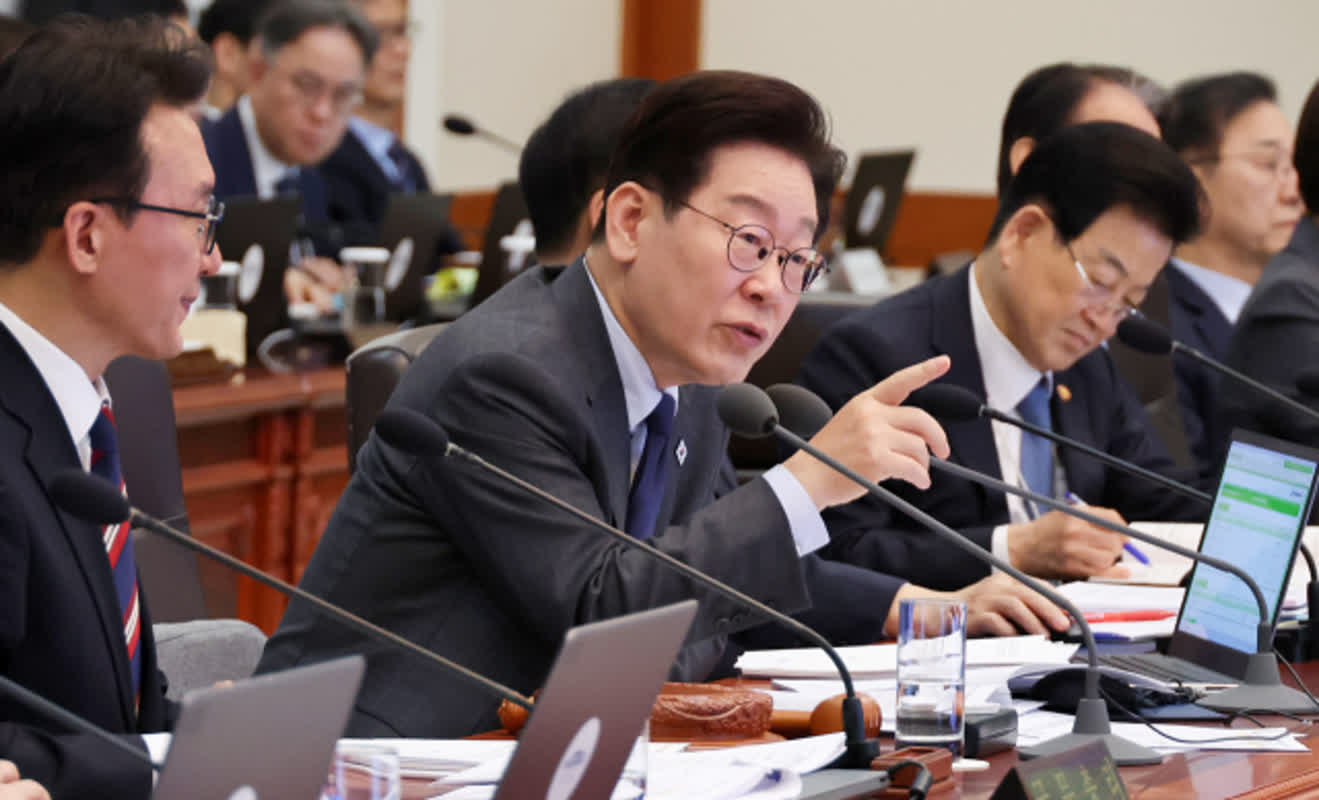
![President Lee Jae-myung speaks at an on-site meeting with freight transport and logistics workers on April 8 at the inland container terminal in Uiwang, Gyeonggi Province, convened to address the high fuel-price crisis. [Photo=Yonhap News]](https://contents-cdn.viewus.co.kr/image/2026/04/CP-2023-0070/image-1331384b-890c-43fe-aca8-db3f9b4c0ad9.jpeg)
Blue House spokesperson Jeon Eun-su said in a written briefing that the president met that afternoon with freight and logistics workers at the inland container terminal in Uiwang, Gyeonggi Province, and instructed relevant ministries to examine the proposed measures.
At the meeting, industry representatives urged additional government action, saying that if high oil prices persist, the nature of the transport business means operators will be forced to absorb the full costs.
In response to a specific request noting that small-business loans become difficult to obtain when a vehicle’s value exceeds 300 million KRW (approximately 225,000 USD), the president ordered the Ministry of Land, Infrastructure and Transport and the Ministry of SMEs and Startups to consult and revise small-business loan programs for truck owners, including measures such as low-interest support.
On calls to expand the categories covered by the safety freight rate system, he noted that systems vary by country and directed the Land Ministry to conduct a detailed review of itemized transport costs and international precedents.
He also reaffirmed that the safety freight rate system will remain in place. \"As long as I am in office, I will not allow it to be phased out,\" he said, adding, \"If anything, I will expand its scope rather than reduce it.\"
Participants also raised concerns that high rents and land shortages in the Seoul metropolitan area are pushing logistics warehouses to the outskirts. The president instructed the Land Ministry to consult with local governments and explore using idle land within the metropolitan area for logistics facilities.
Responding to an industry official's comment that logistics agents in Seoul are often forced out by steep rents, he warned that people themselves could soon be displaced. He then told his aides to consult the Defense Ministry about whether underutilized U.S. military return sites in northern Gyeonggi could be repurposed as logistics complexes, noting that the land exists but is not being fully used.
He expressed strong support for proposals to increase subsidies and expand charging and refueling infrastructure to facilitate the transition to electric and hydrogen freight trucks.
Later that afternoon, he posted on X (formerly Twitter): \"I ordered an immediate review of the requested measures, including improving loan support for truck-owner small businesses, considering expansion of the safety freight rate system, expanding logistics infrastructure through use of idle metropolitan land, and supporting the transition to electric and hydrogen freight trucks.\" He added, \"In difficult times, I will listen even more closely to voices from the field.\"
Separately, when a freight business representative expressed hope after the United States and Iran agreed to a two-week ceasefire that day, the president declined to predict the outcome, saying, \"We don't know how this will turn out.\"
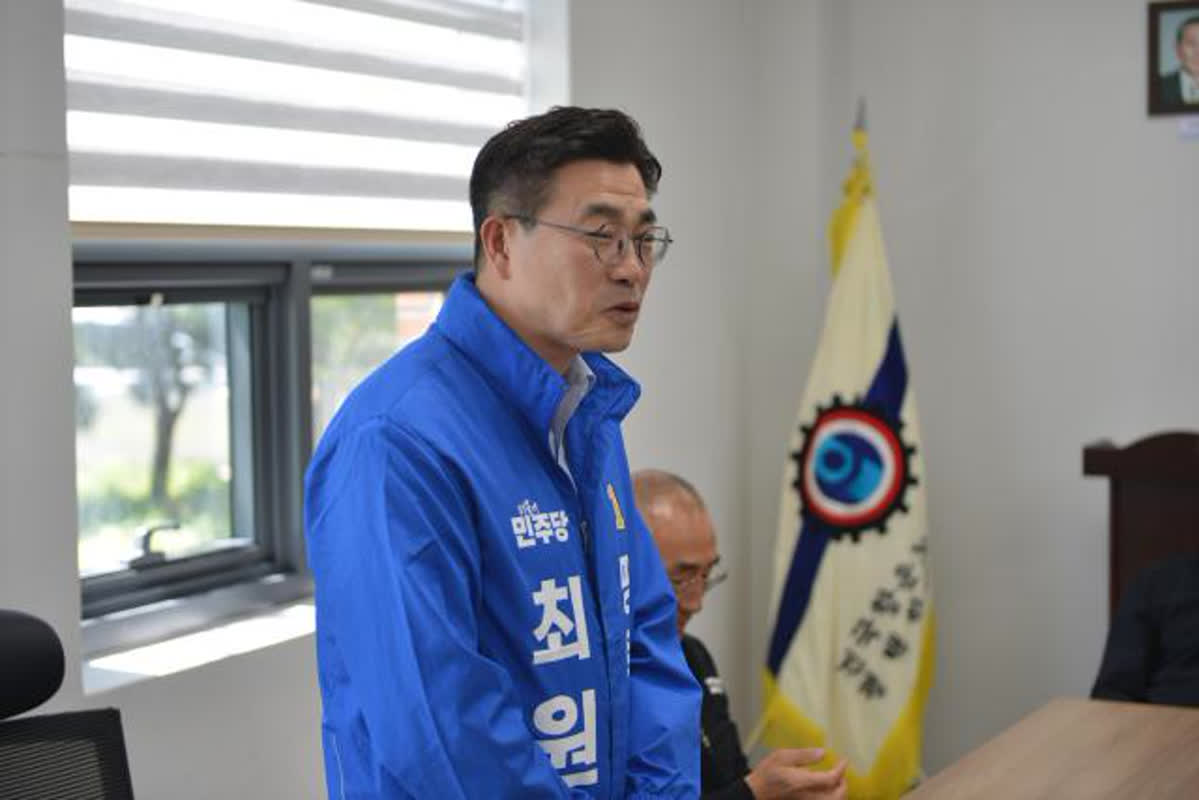
He made the remark in response to comments by Choi Kwang-sik, chair of the National Federation of Freight Trucking Operators, who said, \"Hearing about a ceasefire gives me personal hope that the Middle East situation will calm down; I wish it would end quickly.\" The president cautioned that, although the U.S. and Iran agreed to a ceasefire, officials cannot be optimistic until a final peace settlement is reached.