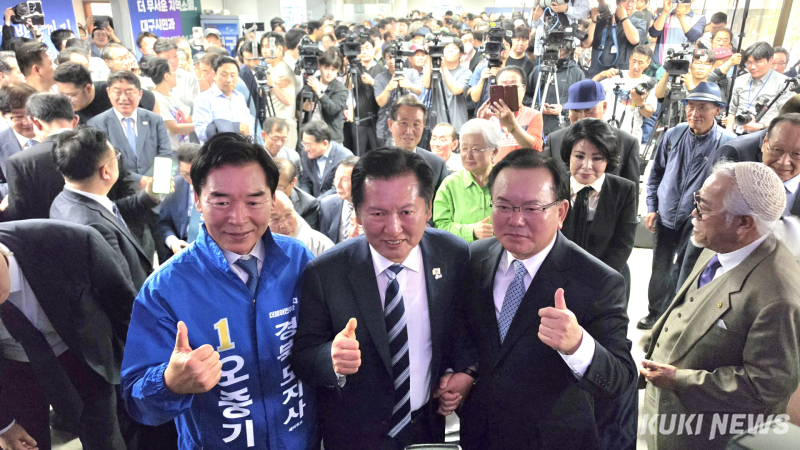
On April 26, Kim Bu-gyeom, the Democratic Party’s candidate for mayor of Daegu, formally launched his campaign with a campaign office opening he described as a “political-event” level ceremony.
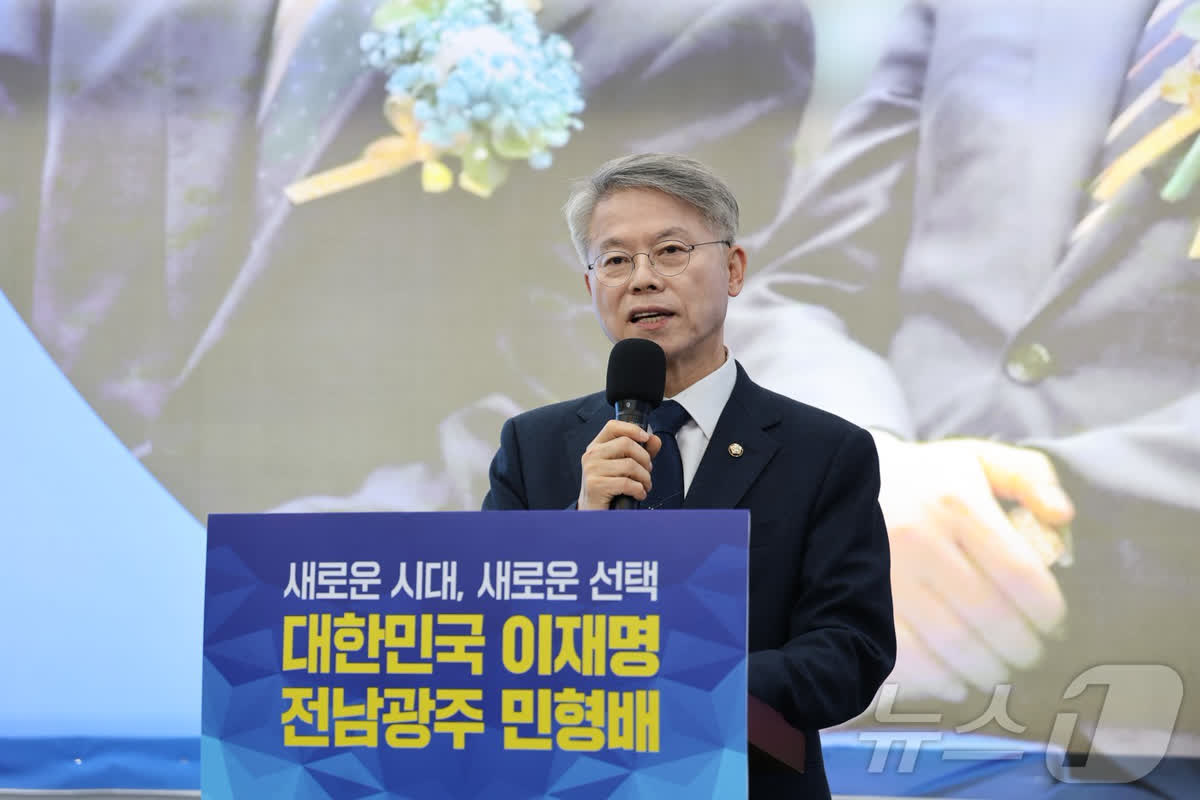
The ceremony ran from 3:00 to 4:00 p.m. in the Duryu Intersection area of Dalseo District and drew a packed crowd of citizens, supporters and guests.
Kim invoked the COVID-19 crisis, the National Debt Repayment Movement and the Feb. 28 democratic movement, describing Daegu as a city that does not flee in the face of crisis and has stepped forward whenever the country faced hardship.
He warned that population decline and industrial stagnation are driving young people away and urged voters, saying, “This election could be Daegu’s last chance to change.”
Noting that he has lost three times in Daegu but remains devoted to the city, Kim asked for support and said, “I can now clearly see what Daegu needs.”
He added, “The mayor of Daegu should not be a fighter; the job is to secure budgets and get things done,” and asked voters to see him as a worker who will hold the People Power Party to account.
Kim unveiled a plan to remake Daegu as a digital-industrial hub by combining traditional manufacturing with AI and robotics. He pledged to create 100,000 jobs for young people by 2035 through relocating the K2 military airport, building a new TK airport and integrating Daegu and North Gyeongsang administrative functions—aiming to turn Daegu into the “Pangyo of the South.”
Pointing to achievements from his time as a lawmaker, minister and prime minister—securing Feb. 28 as a national memorial day, agreeing to move Daegu’s water intake, and attracting projects such as the Moonlight inland railway and a second operations center for the national disaster communications network—he presented himself as a doer rather than a fighter. “Working with President Lee Jae-myung, I will transform Daegu within four years. Put me to work,” he said.
Democratic Party leader Jeong Cheong-rae said Daegu is central to the June 3 local elections and pledged that the ruling party will take responsibility for integrating Daegu and North Gyeongsang, building the TK new airport and driving the AI and robotics industrial transformation.
He introduced Kim’s slogan as “Euratchacha Kim Bu-gyeom,” and explained the acronym RAT as R for Robotics Capital, A for AI/AX industrial transformation, and T for the TK new airport, adding, “For Daegu, I will be a ‘do-anything-for-you’ center director.”
About 60 lawmakers from the Democratic Party and allied forces—including 51 current and 11 former members—attended the opening. Kim’s campaign estimated total turnout at about 5,000 people, and the event featured three rounds of public appearances amid the crowd.
Kim described the attendees as people who will treat Daegu’s livelihoods as if it were their own constituency and emphasized, “Although no Democratic Party lawmakers currently represent Daegu, I will concentrate the ruling party’s clout on Daegu through this network.”
Among citizens at the event, reactions included, “I’ve never seen an opening of this size,” and “This isn’t just an opening— it feels like a signal that Daegu politics could change.”