|
The Sacheon Citizens' Participation Coalition specifically accused DAPA Administrator Lee Yong-cheol of deeply intervening in the selections for KAI president, outside directors and the audit committee chair, calling the situation a distorted governance structure in which the procurement watchdog (DAPA) and the contractor (KAI) appear to be acting as one team.
No gavel, no official meeting room: controversy over a closed-door board vote
The coalition said in a petition submitted to the national grievance portal on the 8th, titled Request to Withdraw the Nomination of KAI President Kim Jong-chul and to Reexamine DAPA-linked Appointments, that holding a vote on a presidential nominee without a gavel and outside the formal boardroom is unprecedented in KAI's history.
According to the petition, the KAI board moved its February 27 meeting from the Seoul office's conference room to a dressing room/holding area after union members blocked the conference-room entrance and demanded to see how the nominating committee operated and how it reached its decision. The board continued the meeting without a gavel.
The petition says that although members of the nominating committee acknowledged they first learned of the nomination through media reports, they described a 30-minute informal meeting with the candidate—arranged after an emergency call from the Export-Import Bank—as if it were a proper verification and evaluation session.
The coalition argued the process lacked procedural legitimacy, calling it so egregious that the union described it as a severe breach of governance. It added that during an earlier attempt to approve the nomination on February 25, a key board member attempted to placate the union by proposing a two-day postponement so the union could meet Kim Jong-chul and raise its demands. The petition also includes testimony from another board insider who said, \"We had no choice; we were told to do this from above.\"
DAPA chief, president and auditor as 'one team' — risks to fair defense procurement
The coalition says the appointment goes beyond a simple parachute hire and represents a structure in which the current DAPA chief effectively controls KAI's presidency, board and audit leadership through career ties and shared alma mater connections.
The petition cites media reports and internal testimony claiming that Lee Yong-cheol—identified with the Seongnam network and an original member of DAPA's founding team—pushed his close associate, former unmanned systems chief Kim Jong-chul, as KAI president. It also alleges Lee played a central role in elevating Hong Sun-young, a former Export-Import Bank executive and fellow Yonsei University alumnus, to an outside director position, and in bringing in attorney Lee Tae-young, a Yonsei Law alumnus and former DAPA legal office official, as outside director and audit committee chair.
The coalition says these moves create what it calls a DAPA one-team governance structure linking the DAPA chief (Lee Yong-cheol), the DAPA-origin KAI president nominee (Kim Jong-chul), and a KAI outside director/audit committee chair drawn from DAPA's legal and procurement ranks (Lee Tae-young).
The petition also quotes a KAI board insider as saying the White House pushed this through and \"we were little more than rubber stamps,\" adding that the DAPA chief is trying to install outside directors he does not even know to seize management and auditing control.
The coalition warned that because DAPA is KAI's largest client and the central planner for defense capability development, procurement, exports and sanctions, packaging the DAPA chief's associates into both the KAI presidency and audit leadership would invite repeated accusations of conflicts of interest and unfairness in future DAPA-run procurements. Competitors could challenge KAI's contract wins as the result of a DAPA-KAI-legal network operating as one team.
The coalition added that this structure creates significant legal and institutional risk that could prompt Board of Audit inspections, criminal investigations, and sanctions barring implicated firms from bidding. If sanctions hit major programs such as the KF-21, transport aircraft, helicopters, or space launch vehicles, KAI and its suppliers and subcontractors could face cascading defaults, the petition warned. It also noted that the rarity of cases in which DAPA executives moved directly into KAI leadership has been a practice designed to avoid precisely this kind of legal and institutional risk.
No aerospace or management experience — a political 'career mover' pick
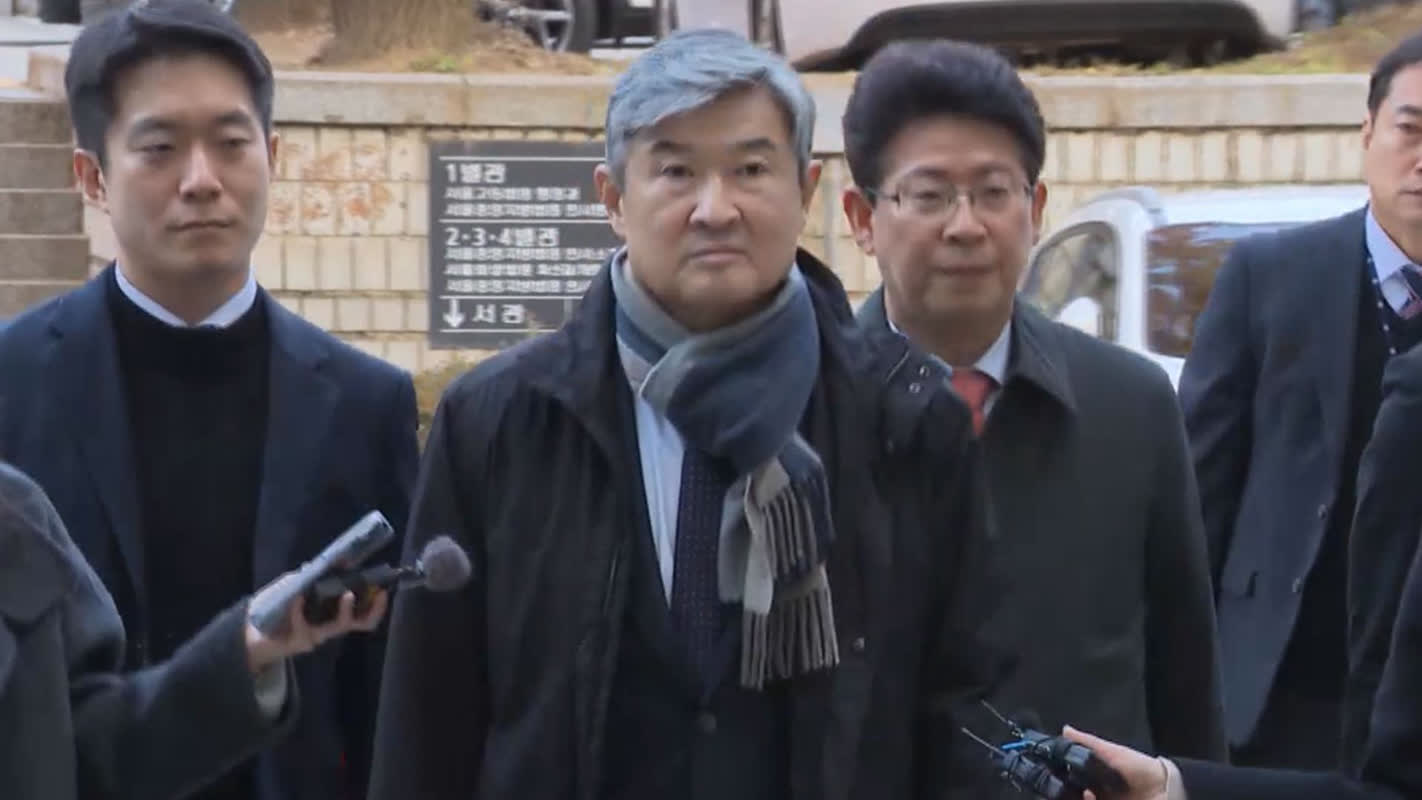
The coalition directly criticized Kim Jong-chul's qualifications and background. According to the résumé cited in the petition, Kim graduated from the Korea Air Force Academy (class 31), retired as an Air Force lieutenant colonel, and joined DAPA as a grade-4 special recruit when the agency opened. He later served as head of the defense export support team, chief of offset trade, deputy head of the strategic planning unit, head of the unmanned systems division, and director of the Office for Defense Technology Protection.
The coalition said Kim has virtually no experience in aerospace industry management or in running a company, and his tenure as head of the unmanned systems division lasted only about three months before his retirement. It also noted he failed to win selection for the head of the Gyeongnam Technopark's defense industry division, where reviewers judged him to have mainly acquisition and procurement administrative experience and insufficient industrial and policy capability.
The petition also cites Kim's past defense of former KAI President Kang Koo-young—publishing a commentary praising President Yoon Suk Yeol's appointment of Kang as \"a brilliant move\"—and his involvement with the Defense Innovation 4.0 Task Force linked to Yoon's presidential campaign. It adds that Kim later joined Lee Jae-myung's presidential campaign (the Korea Transformation Election Committee) to serve in a deputy-chair-level advisory and practical role on the defense and security panel. The coalition said these shifts have prompted criticism that Kim is a political opportunist who moves to whichever side suits him at the time.
The coalition warned that Kim's ties to former KAI president Kang Koo-young raise fears that if Kim takes the KAI post, investigations and audits related to unmanned aircraft deliveries during the Yoon administration could be covered up and that a \"Kang Koo-young season 2\" could reappear. It called presenting someone like Kim as a campaign-born aerospace expert an act of deception against the public and the market.
Union and local backlash, threats to block the shareholders' meeting and mount an open-ended protest
The petition says KAI plans to put Kim Jong-chul's nomination for internal director and CEO to a vote at an extraordinary shareholders' meeting on March 18, and that the union, together with the employee shareholding association, has vowed strong resistance, including blocking the shareholders' meeting venue.
With the rollout ceremony for the first KF-21 production aircraft and VIP attendance scheduled around the same time, the coalition said the KAI president nomination has become a political and social flashpoint that could directly implicate the ruling party.
The coalition said it has resolved to continue an open-ended protest in solidarity with labor, industry and civic groups across western South Gyeongsang, and demanded answers about who pushed the move hard enough to attempt to placate the union and force a dressing-room vote.
Petition demands: withdraw nomination and fully inspect DAPA-linked personnel
In its national petition, the coalition demands: △the withdrawal of Kim Jong-chul's nomination and a reexamination of the selection △a White House and Defense Ministry-level review of Lee Yong-cheol's involvement in the KAI president, outside director and audit chair appointments and an investigation into potential conflicts of interest △improvements to KAI's governance and measures to prevent a defense industry cartel △the opening of channels to hear and consult with local labor and community stakeholders.
The group argued there's no reason why canceling a KAI president nomination should be harder than forcing a cabinet nominee to step down, and urged a legal and institutional review of whether having a current DAPA executive and a legal-team alum simultaneously serve as KAI president and audit chair conflicts with defense procurement and sanctions systems.
It also called for public enterprise governance guidelines to include defense-specific conflict-of-interest provisions to prevent a defense industry cartel that could form through ties among DAPA, KAI and certain law firms.
Sacheon's civil society already warned this — press conference at city hall on the 5th
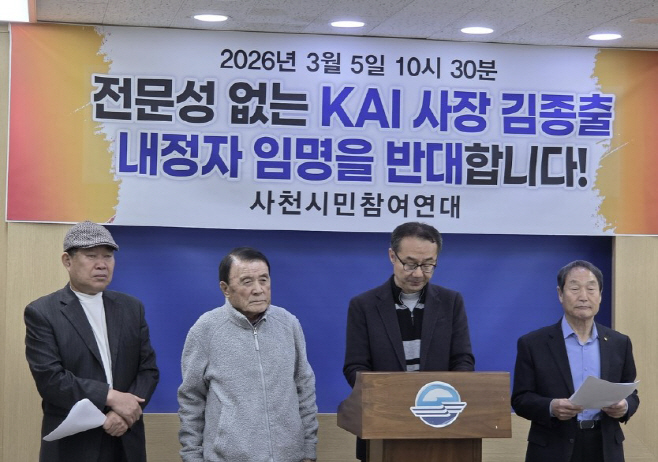
The coalition previously held a press conference in front of Sacheon City Hall on March 5 to formally demand the withdrawal of Kim Jong-chul's nomination.
At that time, the coalition said KAI's achievements rest not only on the company's R&D efforts but also on the patience and cooperation of local residents who have tolerated noise and environmental damage from test flights. Ignoring the appeals of the local community and labor would amount to a betrayal of Sacheon residents, they said.
The coalition added that KAI forms the core industrial base of the western Gyeongnam economy, linking countless suppliers, small and medium enterprises and regional jobs, and that the president selection is not merely a corporate personnel decision but a matter that affects public trust and evaluations of government defense and industrial policy.
They warned that if this flawed appointment goes ahead before local elections, it could seriously damage local sentiment, and urged a strong, direct response from the central government and the Blue House.*