'Orbán Faces Ouster' Political Clash a Week Before Hungary's Election
The Serbian government said it found explosives near a pipeline that carries Russian natural gas to Serbia, Hungary and other countries. Hungary has accused Ukraine of sabotage, while Kyiv denies involvement and calls the incident a staged provocation.
AFP and Reuters report that on April 5 (local time), Serbian President Aleksandar Vučić said authorities discovered two large backpacks containing explosives a few hundred meters from the pipeline in the Kaniza area near the Hungarian border.
Vučić warned that had the pipeline been severed, Hungary and northern Serbia would have lost gas supplies. He said investigators had uncovered “certain traces” he could not make public and that he had briefed Hungarian Prime Minister Viktor Orbán on the findings.
Serbian military intelligence said the suspected saboteur appears to be a foreign national.
The pipeline cited by Serbian authorities is the Balkan Stream, which transports Russian gas from Türkiye through Bulgaria and Serbia to Hungary. It is also the onshore extension of TurkStream, the undersea route that carries Russian gas across the Black Sea to Türkiye.
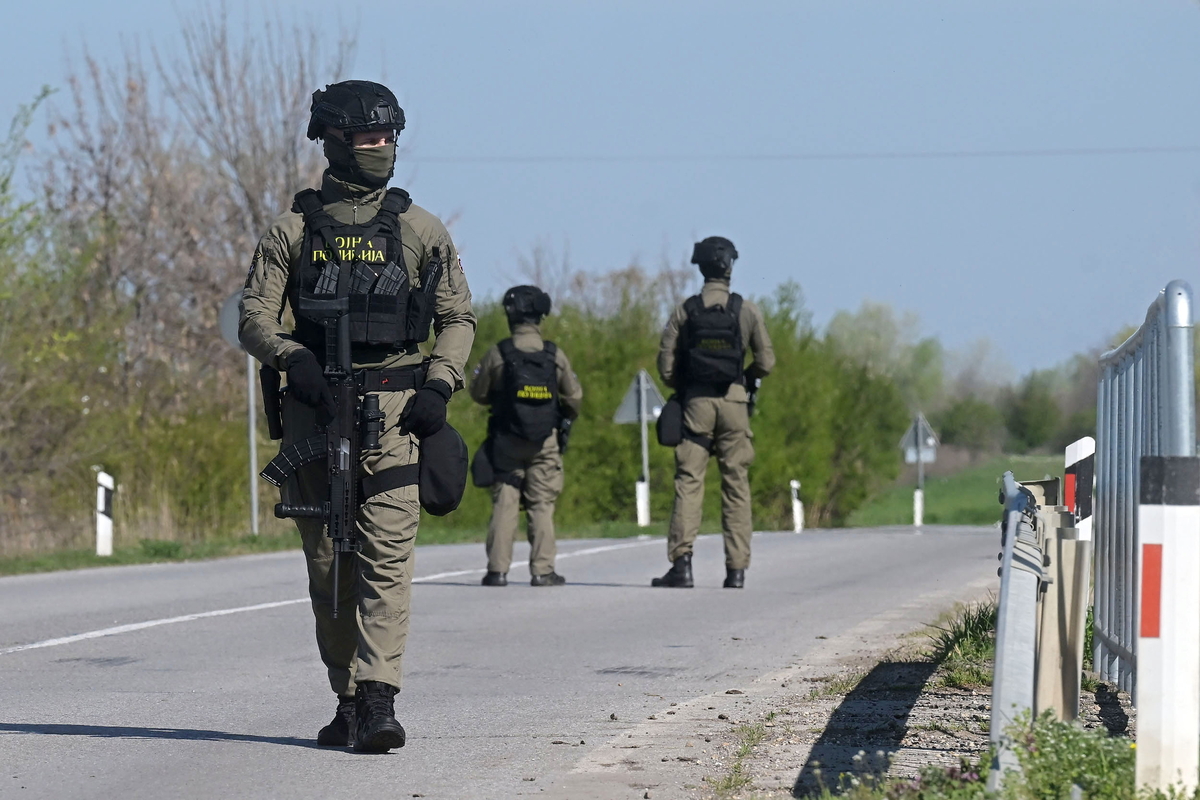
Kaniza, in northern Serbia, is about 10 km (6.2 miles) from the Hungarian border and has a majority ethnic Hungarian population. After Russian warnings that Ukraine might attempt to sabotage gas infrastructure, Serbia deployed special forces and air-defense units last month to protect the local gas compressor station.
Serbia is an EU candidate country, but like Hungary it is landlocked and governed by a party that leans pro‑Russian, leaving it heavily reliant on Russian energy.
Hungary, too, beefed up security at energy facilities in February to guard against potential Ukrainian sabotage. Prime Minister Viktor Orbán has repeatedly clashed with President Volodymyr Zelenskyy and resisted EU sanctions on Russia and some measures of support for Ukraine.
Hungarian Foreign Minister Péter Szijjártó suggested the attempt was consistent with actions aimed at cutting Europe’s supply of Russian gas and oil, saying, “Although Serbia intercepted it, this attack attempt fits the pattern of Ukrainians trying to sever Russia’s energy supplies to Europe.”
But Kyiv and pro‑Western figures in Hungary have pointed the finger instead at Russia—or at a possible provocation by Orbán’s government, which faces a serious challenge in the April 12 election.
Heorhii Tykhyi, a spokesman for Ukraine’s foreign ministry, said, “Ukraine is not involved in this incident,” adding that it is “highly likely Russia carried out a false‑flag operation to interfere in the Hungarian election.”
Péter Merzger, leader of Tiser, a pro‑European Hungarian opposition party, said, “Some people publicly predicted that something would ‘accidentally’ happen at the Serbian pipeline around Easter, a week before the election. And that is exactly what happened,” echoing similar suspicions.
Orbán and his Fidesz party trail Tiser by more than 20 percentage points and could lose the prime ministership after 16 years. Western officials suspect Orbán may be amplifying energy‑security fears stemming from the war in Ukraine to influence voters. The Orbán government has accused Ukraine of deliberately delaying repairs after the Druzhba oil pipeline—which carries Russian crude through Ukraine to Hungary—was bombed and went offline in January.