Guri Adds Two Night-Extended Daycares to Strengthen Tailored Childcare
Namyangju Accelerates 2040 Urban Master Plan…Boosting Fiscal Efficiency
Namyangju Seeks Participants for Interactive Play Heumheum Sinseo: Joseon’s Great Detective, Jeong Yak-yong!
Anyang, PwC Complete Business Briefing on City Hall Site for Corporate Attraction
Why Yangpyeong’s Yongmunsan Wild Vegetable Festival Ranks as a National Eco-Festival Model
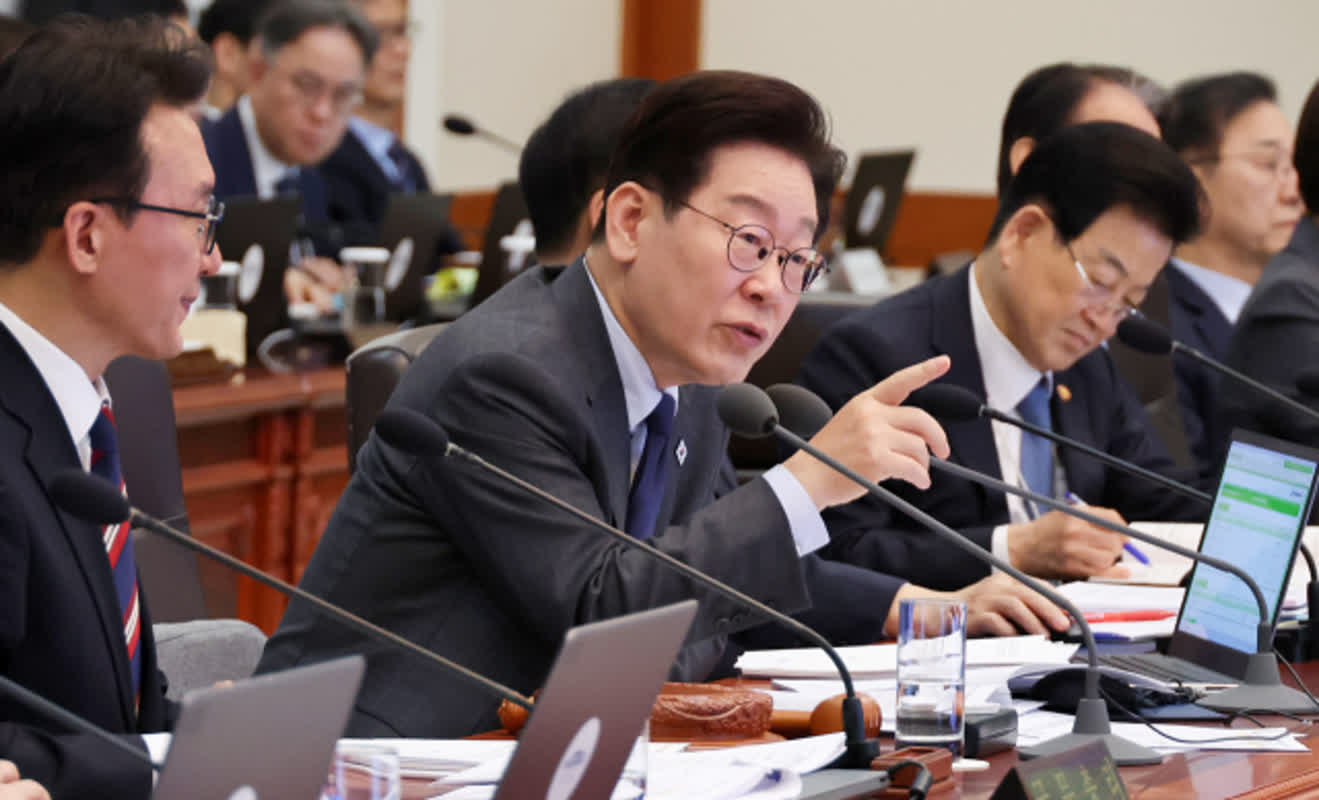
Kang Byung-deok, Lee Kwang-jae Push Fast for Hanam Transit Overhaul and Youth Housing
Guri Adds Two Night-Extended Daycares to Strengthen Tailored Childcare
▲View of Guri City Hall. Provided by Guri City
Guri — Kang Geun-joo, Energy Economy News. Guri City designated two additional night-extended daycares on the 27th to ease childcare burdens for families needing after-hours care, such as dual-income households. That raises the total number of night-extended centers to 36.
Night-extended daycares operate beyond standard hours (7:30 a.m. to 7:30 p.m.) and can remain open until midnight. Families may use them up to 60 hours per month while their children attend other daycares or kindergartens during daytime hours. Details on locations and contact information are available on the i-Sarang parenting portal.
Guri is also expanding public childcare infrastructure and strengthening services for vulnerable children to deliver tangible improvements in the local childcare environment.
The city is broadening tailored services for children who need extra support. This year, Guri added two integrated classes for children with disabilities and plans to open one new hourly independent class.
Additionally, the city will recruit six new hourly integrated classes across six daycares to more flexibly address diverse childcare needs.
To respond to rising demand from residents moving into the Inchang Lotte Castle apartments, Guri plans to open two additional public daycare centers. By aligning openings with move-in schedules, the city aims to minimize disruption and provide a stable public childcare system.
Pyoh Young-sil, director of the Family Welfare Division, said on the 30th, “Through diverse public childcare policies—night-extended care, integrated classes for children with disabilities, and hourly care—we aim to meaningfully reduce families’ childcare burdens. We will continue expanding user-centered, tailored childcare services.”
Namyangju Accelerates 2040 Urban Master Plan…Boosting Fiscal Efficiency
▲Namyangju city flag. Provided by Namyangju City
Namyangju — Kang Geun-joo, Energy Economy News. Namyangju City said on the 30th that it converted the planning contract for the “2040 Namyangju Urban Master Plan (Living Area Plan)” into a two-stage lump-sum contract to shorten the project schedule and improve fiscal efficiency.
The urban master plan is a core statutory document that sets a city’s long-term development direction and operational policies and serves as a guideline for various urban management plans.
Faced with large-scale development such as the third-generation new towns and shifting population trends, Namyangju needs to finalize its plan quickly.
Given limited fiscal resources, the city began the project last November as a five-year, phased continuing contract and invested 300,000,000 KRW (≈ $225,000) of city funds in the first phase. After consultations with the Korea Land & Housing Corporation (LH), the city secured 1,050,000,000 KRW (≈ $787,500) in external funding this February.
Building on that funding, Namyangju converted the contract on the 27th to a two-stage lump-sum arrangement, shortening the task period and accelerating project implementation.
Kim Young-min, head of the Urban Policy Division, said on the 30th, “This urban master plan will be a major opportunity to respond to changing urban conditions and to reorganize spatial structures around living areas. We will lay the foundation for sustainable urban development.”
To encourage citizen participation in planning, Namyangju held a “Jeong Yak-yong Visiting Urban University” last month and plans to recruit a “Namyangju Urban Master Plan (Living Area Plan) Residents’ Planning Group” in May and June.
Namyangju Seeks Participants for Interactive Play Heumheum Sinseo: Joseon’s Great Detective, Jeong Yak-yong!
▲Banner recruiting participants for Namyangju’s interactive mystery play Heumheum Sinseo: Joseon’s Great Detective, Jeong Yak-yong! Provided by Namyangju City
Namyangju — Kang Geun-joo, Energy Economy News. Namyangju City is recruiting upper-grade elementary students for the interactive play “Heumheum Sinseo: Joseon’s Great Detective, Jeong Yak-yong!” to be held at the Jeong Yak-yong historic site on May 24 and 31 and June 14.
The program, part of the National Heritage Agency’s 2026 “Vivid National Heritage Use” initiative titled “A Year-Round Walk Through Jeong Yak-yong’s Masterpieces,” offers an engaging, hands-on way for children to experience Jeong Yak-yong’s scholarship and achievements.
Participants will take on roles as Jeong Yak-yong and, alongside the Dasan Supporters, explore the historic site to solve the “Hambongryeon Case” from the classic Heumheum Sinseo.
Applications open on the 30th via the Naver Cafe “Namyangju Vivid National Heritage Use Project.” The participation fee is 5,000 KRW (≈ $3.75).
Namyangju will also run additional hands-on programs in the second half of the year, including “Abanggang Yeokgo: Joseon Astronomer-Geographer, Jeong Yak-yong!” and “Yeoyudang Jeonso: Joseon Mathematician, Jeong Yak-yong!”
Anyang, PwC Complete Business Briefing on City Hall Site for Corporate Attraction
▲Anyang City and PwC held a business briefing on the 28th for companies about attracting firms to the Anyang City Hall site. Provided by Anyang City
Anyang — Kang Geun-joo, Energy Economy News. On the 28th, Anyang City held a “City Hall Site Corporate Attraction Business Briefing” for company representatives at PwC Korea’s Amore Hall on the second floor of its Yongsan-dong, Seoul headquarters.
Co-hosted with PwC, the briefing aimed to share Anyang’s plan to attract firms to the city hall site and gather feedback. About 150 representatives from banks, asset managers, construction firms, and developers attended.
At the briefing, Anyang outlined site and development conditions, the overall scale of the project, and a tentative timeline for future public offerings. During the Q&A session, participants raised varied views on project structure, development methods, and the scale of prospective tenant companies.
Anyang plans to attract companies that can serve as future engines of growth on the city hall site to revitalize the local economy and create jobs.
Leveraging strong location advantages and regional transport links, the city aims to strengthen its role as a southern Seoul metropolitan hub—connecting neighboring cities, drawing businesses and talent, and energizing surrounding commerce and industry.
Pyo Soon-bo, director of Anyang’s New Growth Strategy Division, said on the 30th, “The briefing provided information on attracting firms to the city hall site and collected practical feedback from businesses. We will review market trends and corporate input comprehensively and reflect them in future project plans.”
Why Yangpyeong’s Yongmunsan Wild Vegetable Festival Ranks as a National Eco-Festival Model
▲Reusable containers used at the 2026 Yangpyeong Yongmunsan Wild Vegetable Festival. Provided by Yangpyeong County
The festival pursued a “carbon zero” goal and eliminated single-use items across the site. Vendors adopted reusable plates, noodle bowls, rice and soup bowls, and cups, strengthening efforts for resource circulation. The county extended the reusable-container policy to agricultural and specialty product booths to broaden its impact.
Organizers used a total of 205,000 reusable containers, cutting carbon emissions by about 10 tons. Waste volume dropped by more than 90%, substantially improving resource-circulation outcomes.
▲Reusable containers at the 2026 Yangpyeong Yongmunsan Wild Vegetable Festival. Provided by Yangpyeong County
▲Reusable containers at the 2026 Yangpyeong Yongmunsan Wild Vegetable Festival. Provided by Yangpyeong County
Yangpyeong’s locally crafted reusable containers, designed to reflect regional character, drew purchase inquiries and increased expectations for broader adoption.
The county placed dedicated drop-off bins across the site to make it easy for visitors to return cups and tableware, encouraging voluntary participation. That system allowed the full reuse cycle—from use to collection—to operate smoothly and demonstrated an effective on-site resource-circulation model.
As reusable containers became ingrained in festival operations, both vendors and visitors increasingly reduced single-use product use.
One visitor said, “Returning the containers myself made me feel like I was protecting the environment. I felt proud to take part in an eco-friendly festival.”
▲Reusable containers at the 2026 Yangpyeong Yongmunsan Wild Vegetable Festival. Provided by Yangpyeong County
A food booth operator said, “The dishwashing load has decreased, and not using single-use items feels rewarding because it helps protect the environment.”
Yangpyeong County’s head of sanitation said on the 30th, “Following the Gorose Festival, Sansuyu Hanwoo Festival, and Nuribom Festival, adopting reusable containers at this wild-vegetable festival sets a nationwide example. We will continue expanding Yangpyeong’s resource-circulation policies and practices.”
The county plans to expand reusable-container use at upcoming events such as the Millet Festival, Watermelon Festival, Chive Festival, and Fermentation Festival.
Kang Byung-deok, Lee Kwang-jae Push Fast for Hanam Transit Overhaul and Youth Housing
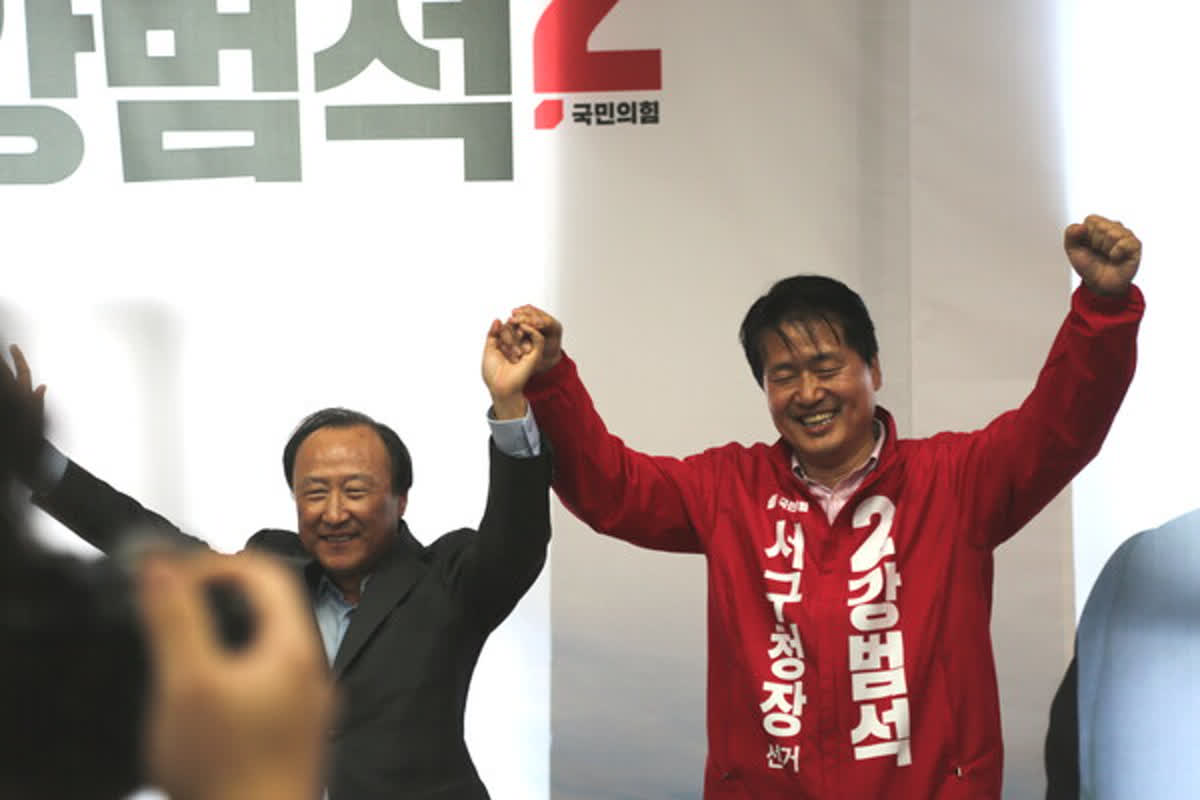
▲Democratic Party candidates Kang Byung-deok for Hanam mayor and Lee Kwang-jae for the Hanam Gap parliamentary seat met with the Land, Infrastructure and Transport Committee chair and members on the 30th. Provided by Kang Byung-deok’s campaign
Hanam — Kang Geun-joo, Energy Economy News. On the 30th, Democratic Party mayoral candidate Kang Byung-deok and parliamentary by-election candidate Lee Kwang-jae visited the National Assembly to meet Land, Infrastructure and Transport Committee chair Maeng Seong-gyu and committee members to formally request policy support for Hanam’s transportation and youth-housing needs.
▷ Push for Rapid Build-Out of Metropolitan Rail Network= Kang urged Maeng and the committee to fast-track construction on Hanam segments of Line 3 (Songpa–Hanam Line) and Line 9 (Gangdong–Hanam–Namyangju Line) in the Gyosan new-town area. He argued this is necessary to prevent traffic chaos when the new town opens and to uphold the “transport first, housing later” principle.
He also called for including the GTX-D line in the 5th National Railway Network Plan and for expedited approval of its preliminary feasibility study to substantially improve access to central Seoul.
Kang formally requested committee consideration of a GTX-D routing option that would pass through Hwangsan Intersection to maximize accessibility for Hanam residents.
▷ Strengthen Wirye–Misa Rail Links…Introduce UAM= Kang requested additional rail projects to improve regional connectivity: extending the Wirye–Sinsa Line to Hanam, constructing a new (provisionally named) Misa–Wirye Line, and establishing an urban air mobility (UAM) vertiport in Hanam.
With the long-delayed Wirye–Sinsa Line now designated a fiscal investment project, Kang emphasized that the line’s extension into Hanam must be included in the revised 4th Greater Metropolitan Area Transport Plan.
Lee argued, “Extending service to Hanam is a matter of political will. The Wirye–Sinsa extension should reach Gam-il.”
Kang proposed a new Misa–Wirye Line to link Misa and Wirye and to close gaps between Wirye, Gam-il, the old downtown, and Misa. He suggested financing the new rail by developing the Choi–Gambuk area.
Maeng responded, “Before we finalize the 5th rail network plan, I will visit Hanam with committee members soon. We will work to make reasonable adjustments.”
The candidates also proposed adding a Hanam vertiport for next-generation transport. The idea aligns with the Ministry of Land’s K-UAM policy and envisions a demonstration route linking Incheon International Airport, Gimpo Airport, Jamsil, and Hanam.
▲Democratic Party candidates Kang Byung-deok and Lee Kwang-jae met with the Land, Infrastructure and Transport Committee chair and members on the 30th. Provided by Kang Byung-deok’s campaign
▷ Convert Knowledge-Industry Centers into Youth Housing= They also proposed concrete measures to ease the youth housing shortage. Kang suggested converting vacant knowledge-industry centers into youth-tailored housing, creating a live-work model that combines housing, startup space, and community functions to help young people settle and to stimulate the local economy.
Kang said on the 30th, “Our proposals aim not only to address Hanam’s issues but to improve eastern metropolitan transport overall. I will make Hanam a transport-focused city with self-sustaining functions rather than one dependent on Seoul.”
Lee added, “Hanam serves as an eastern gateway to the Seoul metropolitan area but still lacks adequate regional transport. The state must take active steps to enforce the transport-first, housing-later principle for the third-generation new towns.”
Kang Geun-joo kkjoo0912@ekn.kr