Local politics in Asan, in South Chungcheong Province, is at a turning point.
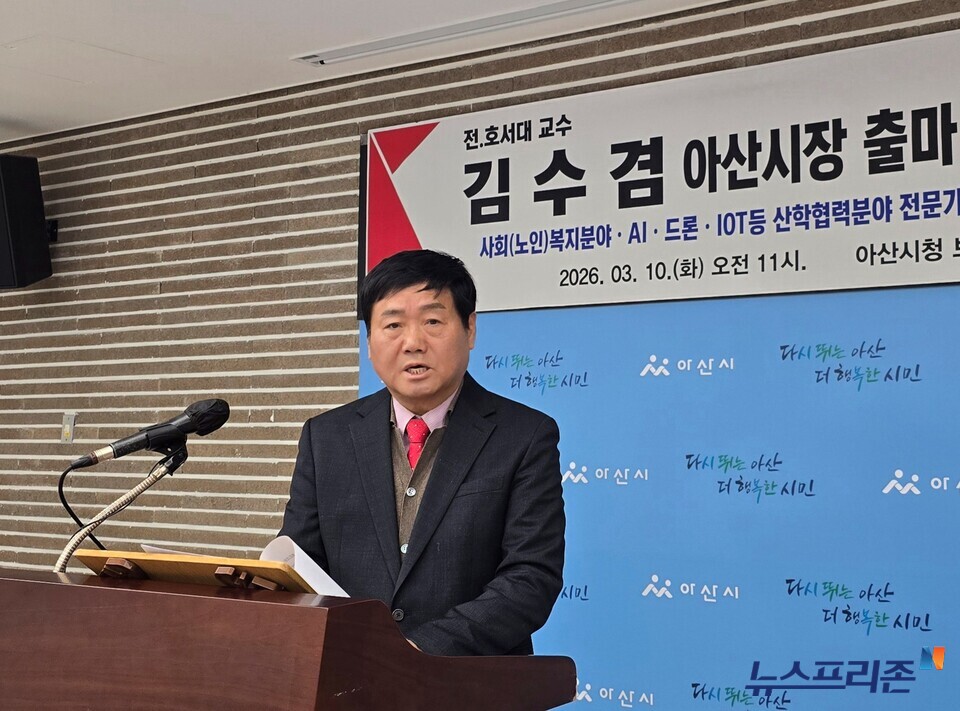
With former Hoseo University professor Kim Su-gyeom’s formal entry into the People Power Party primary for Asan mayor, the race has shifted into a competition between a rising, younger politician and an experienced, policy-focused contender.
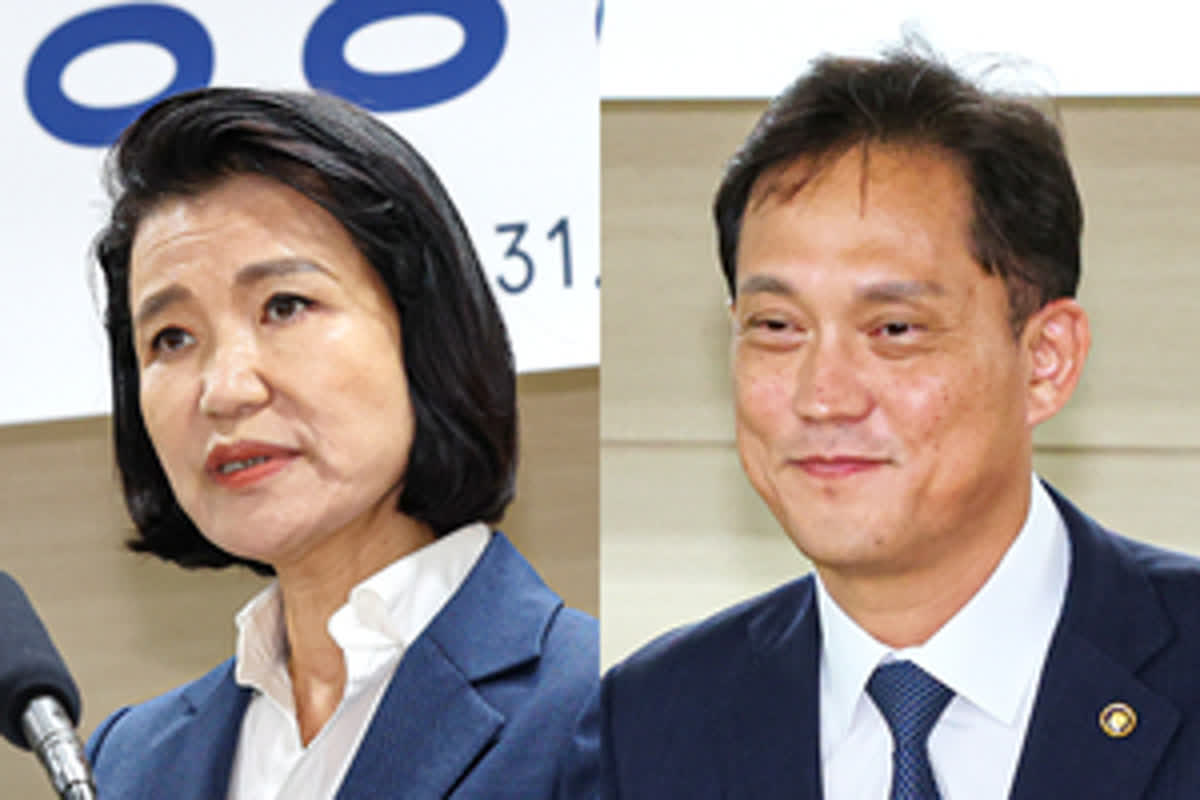
The Chungnam party office reports that two candidates have registered as preliminary contenders in the People Power Party’s Asan mayoral primary: former professor Kim Su-gyeom and Kim Min-tae, a former policy aide to the Asan mayor.
Political observers describe the contest as a symbolic primary that signals both a battle of new faces and a generational struggle.
Kim’s central platform is the “Asan Project: a livable city with a population exceeding 500,000.”
He emphasizes that this is not simply a population-growth plan but a competitiveness strategy that integrates industry, housing, welfare, and culture.
At his campaign announcement, Kim laid out three core pillars—attracting future industries, improving living conditions, and strengthening welfare and education—framing them as the basis for Asan’s structural advancement.
His most prominent pledge focuses on expanding the city’s advanced-industry base. Kim pledged to attract AI data-center firms, provide full (100%) location subsidies for businesses, establish a one-stop administrative system for corporate investment, and recruit future-industry firms to position Asan as a high-tech hub.
He also proposed measures to revitalize industrial parks in ways that create jobs for young people and women, raising expectations for renewed local economic activity.
The second pillar centers on improving living conditions. Kim proposed expanding housing options for young residents, developing public senior living communities, creating large-scale settlements for returning farmers and rural migrants, and building smart-farm and drone industrial parks.
He also called for downtown redevelopment, the creation of mixed-use cultural, commercial, and educational corridors, and expanded cultural infrastructure in the Baebang and Tangjeong new towns to enhance overall livability.
Kim’s plan includes local economic revitalization projects as well, most notably the “Asan Silk Waterway Project” centered on Gokgyocheon.
He proposes creating a waterfront tourism corridor that begins at Dunpo and Seonjang and follows Gokgyocheon, aiming to stimulate tourism, strengthen retail districts, and improve the city’s image simultaneously.
Additional measures include revitalizing traditional markets, expanding tourist shuttle buses, and increasing free public parking to support the recovery of local commerce.
Kim also emphasized expanding education and welfare infrastructure. Key proposals include building a combined cultural center for people with disabilities and women, opening public kids’ cafés and indoor kids’ gyms, expanding support for childcare workers, increasing childcare vouchers, strengthening native-speaker foreign-language instruction, and broadening after-school program support. These measures are aimed at easing pressures on dual-income households and improving youth education.
On campaign strategy, Kim said, “The answer lies in communicating with citizens.”
He added, “Over the coming weeks I will meet citizens in person to hear their views, and I will actively engage with them both online and offline.”
Observers say the People Power Party primary will be about more than selecting a nominee; it could define the future direction of politics in Asan.
Will party members opt for an experienced, policy-oriented leader or a representative of the younger generation? Their choice may shape Asan’s political trajectory.
To date, two candidates have filed for the People Power Party’s Asan mayoral nomination: former Hoseo University professor Kim Su-gyeom, who held a press conference, and Kim Min-tae, a former policy aide to the Asan mayor.
The Chungnam party’s nomination committee will complete candidate vetting and oversee the primary process to select the final nominee.