One fish hauled from the sea sold for ₩270,000 (about $202.50). This ultra-rare catch—something even many fishermen hardly ever see—was turned into sashimi and sushi by a seafood expert. Kim Ji-min, who runs the YouTube channel 'Ipjil's Memories TV,' posted a recent video that snapped seafood lovers’ attention with a single fish known as the yellow flounder. The video introduces a species that’s nearly absent from domestic annual landings and that, according to some stories, couldn’t be found even after 15 years of searching.
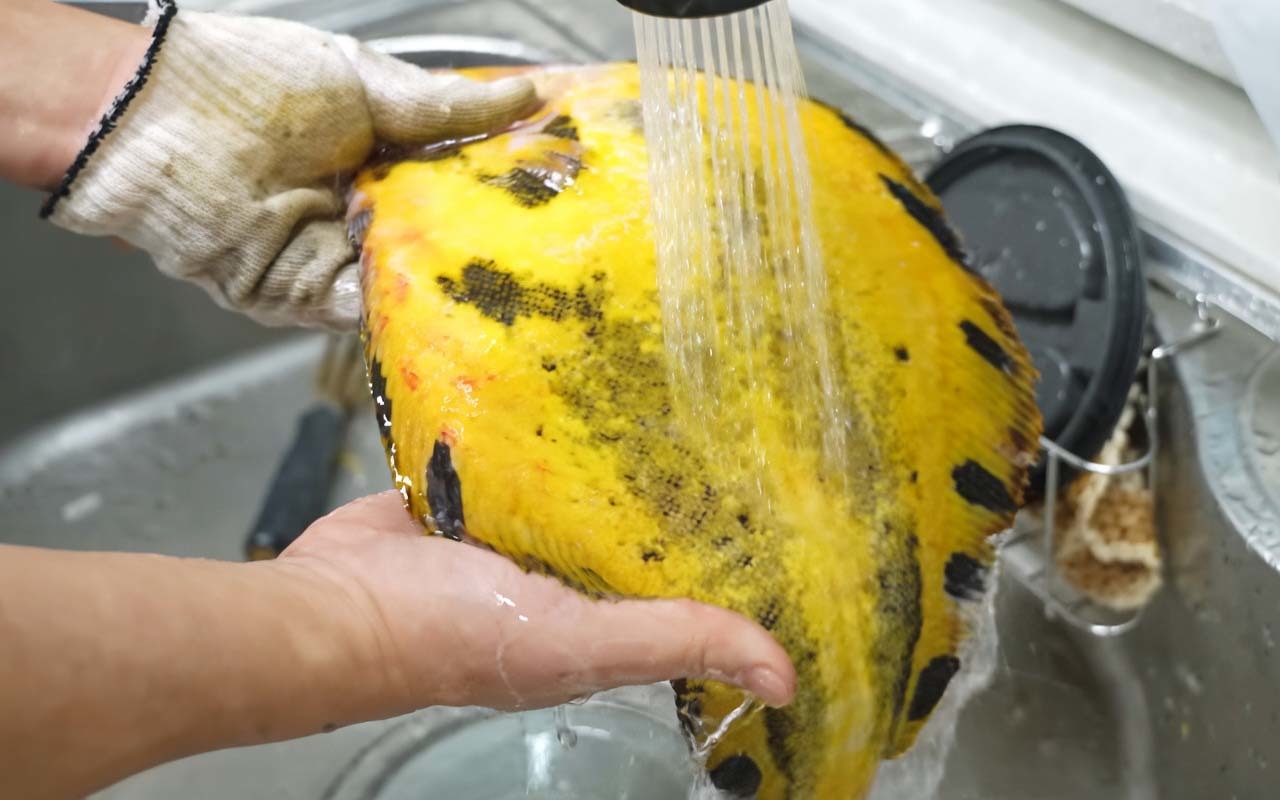
The yellow flounder’s scientific/common name in Korean is 노랑가자미, and in Japan it’s called matsukawa-karei (まつかわかれい). “Matsukawa” means pine bark, a name inspired by the fish’s scale pattern, which resembles pine bark. Taxonomically it belongs to the Matsukawa genus and is closely related to similar-looking species like the barfin flounder. If you look only at the operculum, it’s so similar to the barfin flounder that the two are almost indistinguishable.
Domestic reports place it across the East Sea (the Sea of Japan), including Gangwon Province, and there are records of occasional catches in the West Sea, though Kim says he’s never heard a credible West Sea report himself. Its primary habitat is the cold waters of the Sea of Okhotsk and around Sakhalin, and the coasts of northern Honshu and Hokkaido in Japan. It can reach up to 70 cm (about 27.6 in) in length and can weigh over 10 kg (about 22 lb), making it a large flounder species.
Their rarity shows up in the data. Domestic seafood guides note that only a handful of yellow flounder are traded each year, and because people often don’t recognize their true name or value, they sometimes get sold as ordinary flounder. Of the roughly 30 flounder species found in Korea, the yellow flounder ranks with the lined and barfin flounders as a top-tier, expensive variety prized for taste. Kim described it as “the Hermès of flounders.”
Among flounders, the lined flounder and the barfin flounder are usually cited as the rarest. The lined flounder, known in restaurants as “ishigari,” currently goes for about ₩100,000–₩150,000 (roughly $75.00–$112.50) for large specimens in season. The barfin flounder is so rare that you might find one mixed in for every 5,000–10,000 fish. The yellow flounder in Kim’s video is even rarer than the barfin. “You can’t really count it as a species that regularly lives along Korea’s coasts,” Kim says. “Catches happen only by chance.”
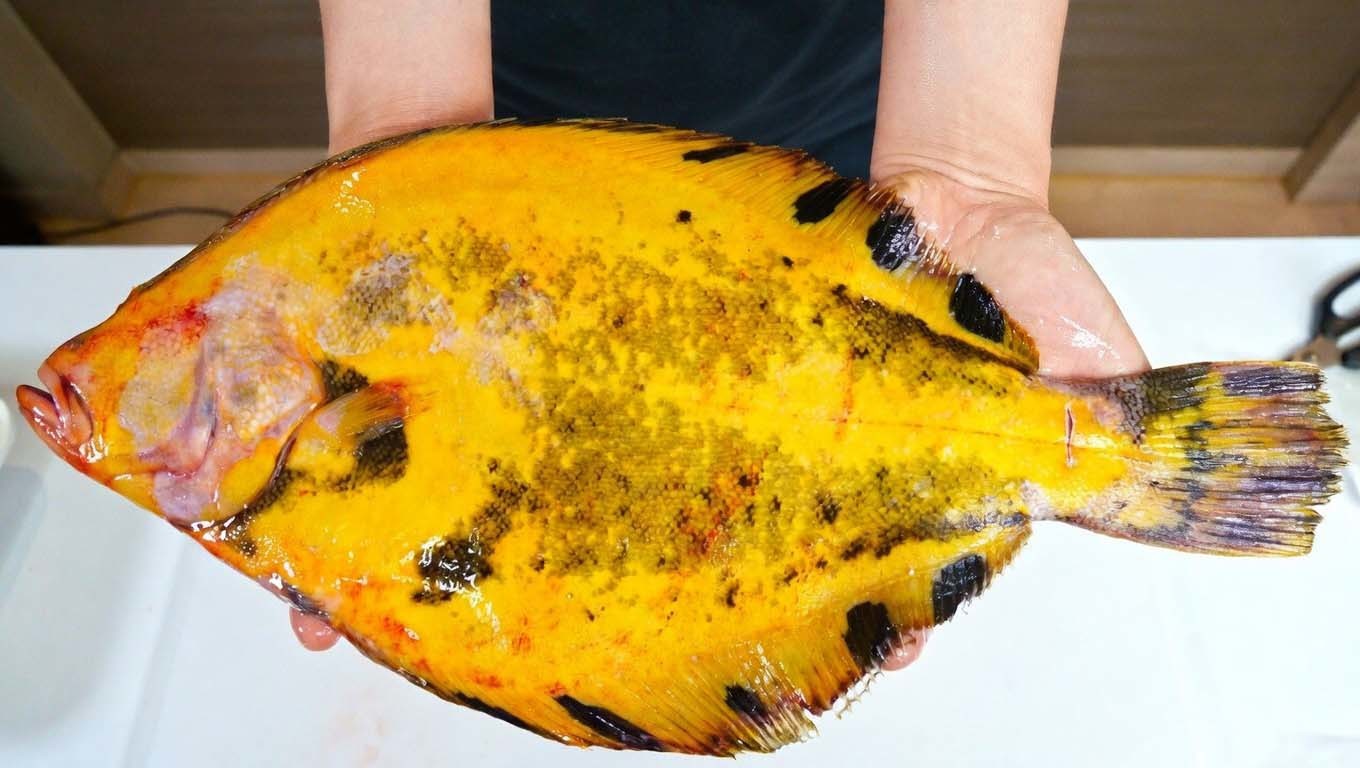
The specimen Kim obtained was a male. As the name suggests, the yellow coloring appears only in males; females are white and look much like the barfin flounder visually. Domestic guides note that males with yellow bellies tend to have the edge in both flavor and marketability.
Kim paid ₩270,000 (about $202.50) for this fish. It was expensive, but he decided someone who truly appreciates such a rare catch should buy it. He said he didn’t assume price alone would guarantee exceptional flavor, but after more than 15 years of searching without success, he didn’t want to miss the chance.
That said, the fish in the video wasn’t in peak condition. Its prime season runs from October through February, with the richest flavor typically just before spawning between December and February. The filming took place slightly outside that best window. On top of that, the fish sat in a tank for four days after purchase, which leached some nutrients, and the flesh hadn’t fully reached its ideal texture.
During preparation, Kim separated the liver and used it for braised dishes. He filleted the fish and dry-salted the flesh: he sprinkled it with saltwater and left it for 15–20 minutes to draw out surface moisture, then wiped it with thawing paper without rinsing. He said the brief aging process increased the flesh’s firmness. He also prepared sushi from the fish.
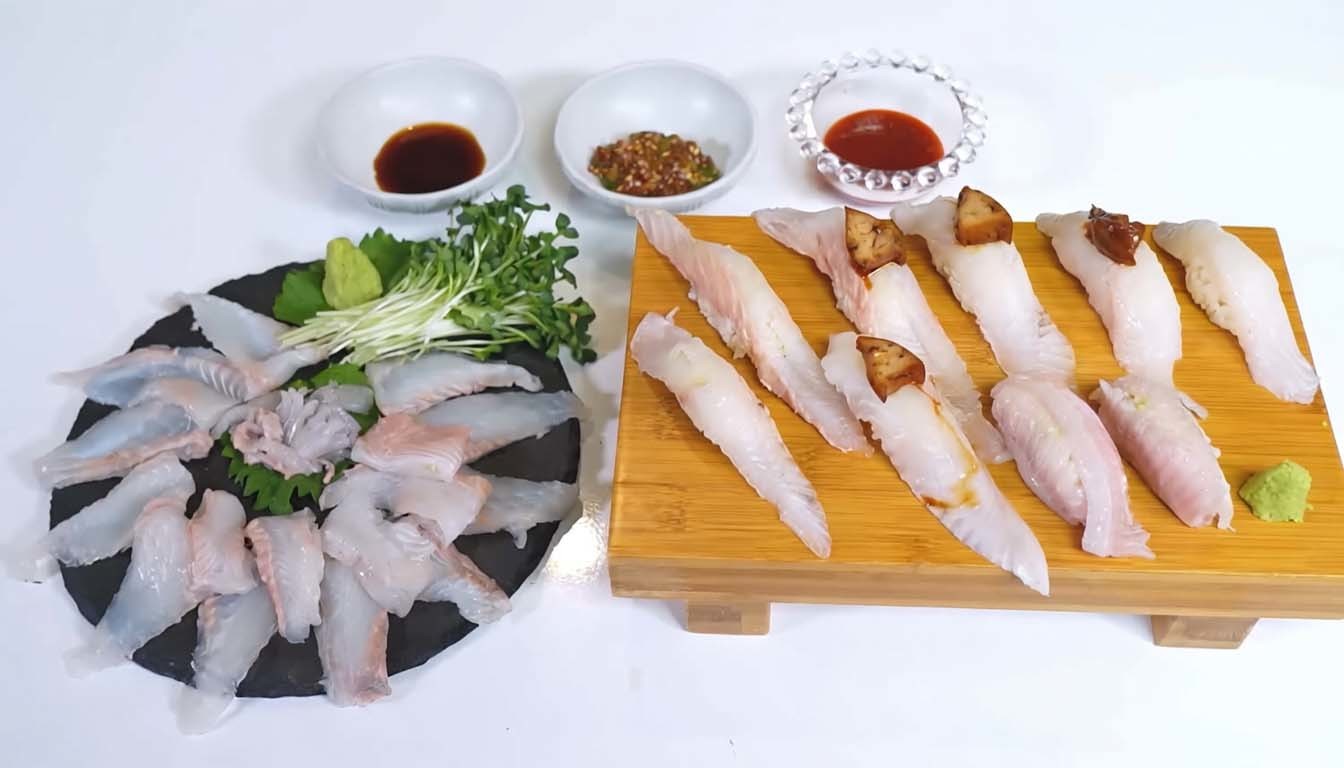
The taste surprised everyone. Kim said even when sliced thin, the flesh had a bounce that reminded him of pufferfish. The knife met resistance from the muscle fibers, so the texture felt firm, but once in the mouth it broke down into a pleasantly chewy bite that released savory umami. Compared to other flounders, it had notable fattiness and a rich, lingering finish. “I’ve never experienced this texture before,” he said. “Sea bass, halibut, red seabream, or rockfish don’t give you this.”
Before tasting, he warned himself against bias. After paying ₩270,000 for a rare fish, he knew there’s a mental trap where the price can make you expect greatness regardless of the actual taste. He called that a kind of self-gaslighting and tried to remove that bias to judge objectively. His verdict: it was delicious, but not worth paying ₩270,000 for again. He estimated a fair price would be around ₩80,000–₩100,000 (about $60.00–$75.00).
Kim asked viewers to report any landings of larger specimens, saying, “There’s no guarantee I’ll see a yellow flounder again in my lifetime. If anyone sees a 2–3 kg (about 4.4–6.6 lb) specimen or larger at auction, please let me know.”
Staff who tasted the sashimi agreed: “The first bite isn’t overpowering, but the flavor keeps lingering as you chew,” and “You don’t get this texture from halibut, red seabream, or rockfish.” One staffer compared the aged texture to that of aged pufferfish but noted an added umami depth that pufferfish lacks, ranking yellow flounder as the top flounder for sashimi.
Get your daily personal horoscope—how will your day go?