Fish cakes—the friendly ingredient that greets you when you open the fridge—can transform an ordinary meal into a restaurant-worthy side in minutes.
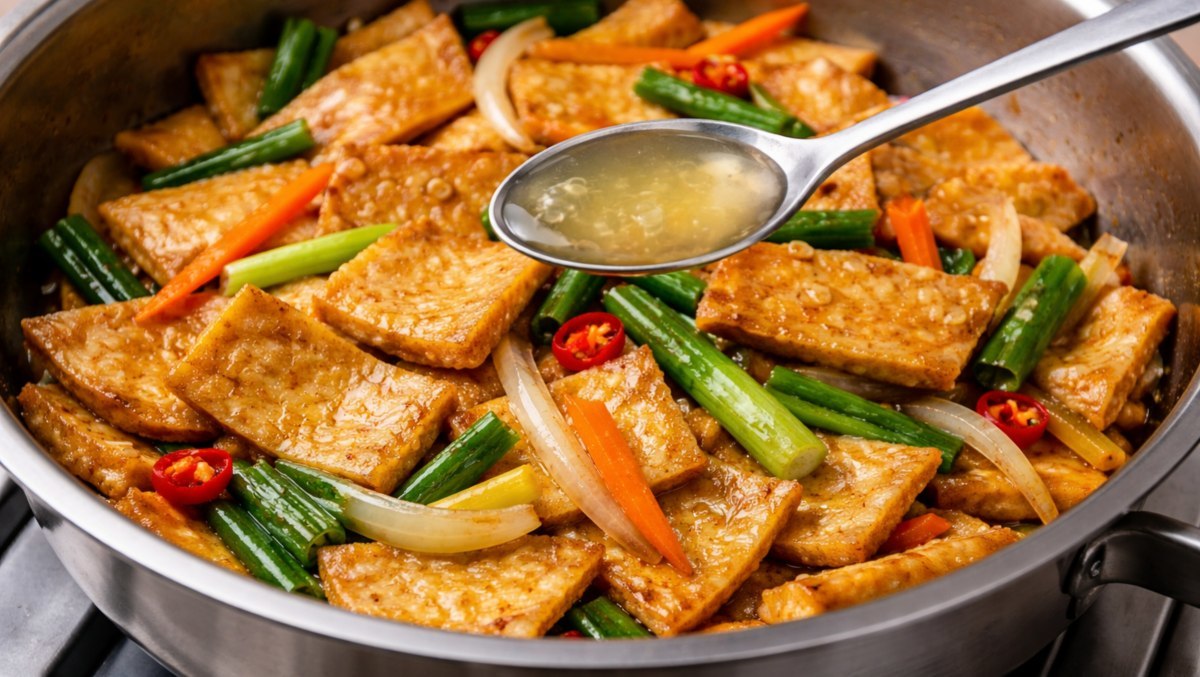
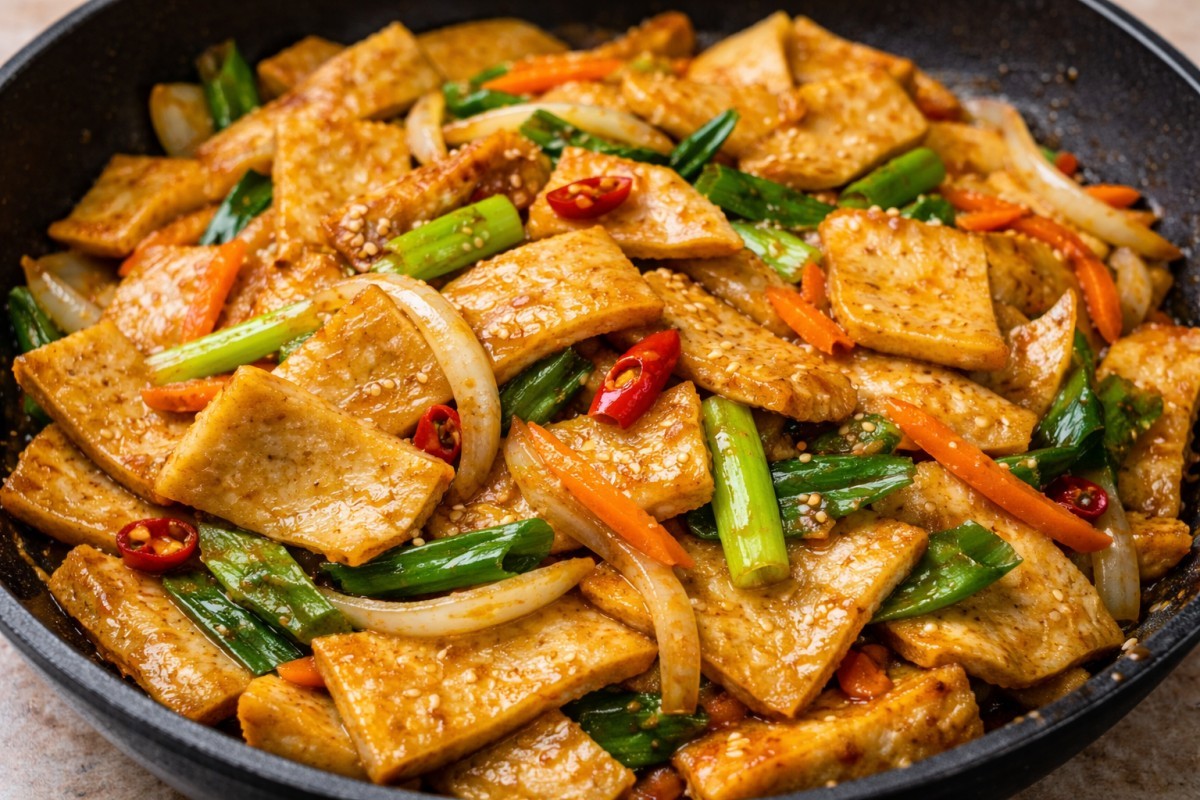
Even cooking beginners shouldn’t be intimidated—basic pantry seasonings deliver depth that rivals a pro. Give it a try tonight: serve a warm, homemade pan of stir-fried fish cakes to your family and enjoy a cozy, satisfying meal together.
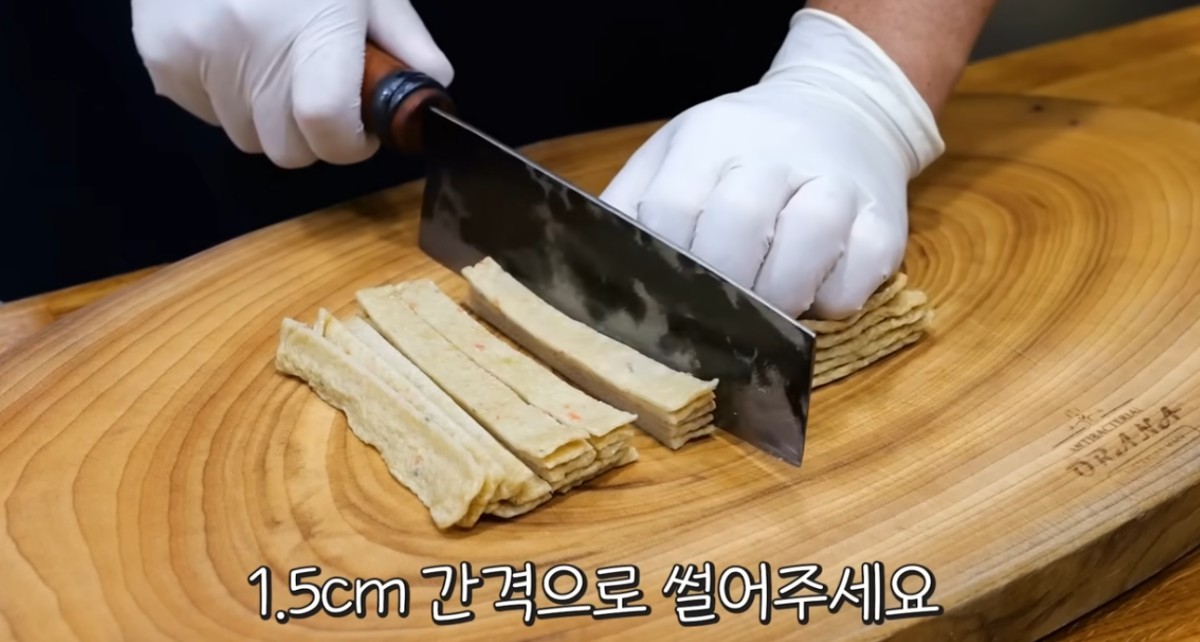
Next, prep the vegetables. Slice half an onion into slightly chunky strips. Thinly slice five garlic cloves, and halve 15 shishito peppers.
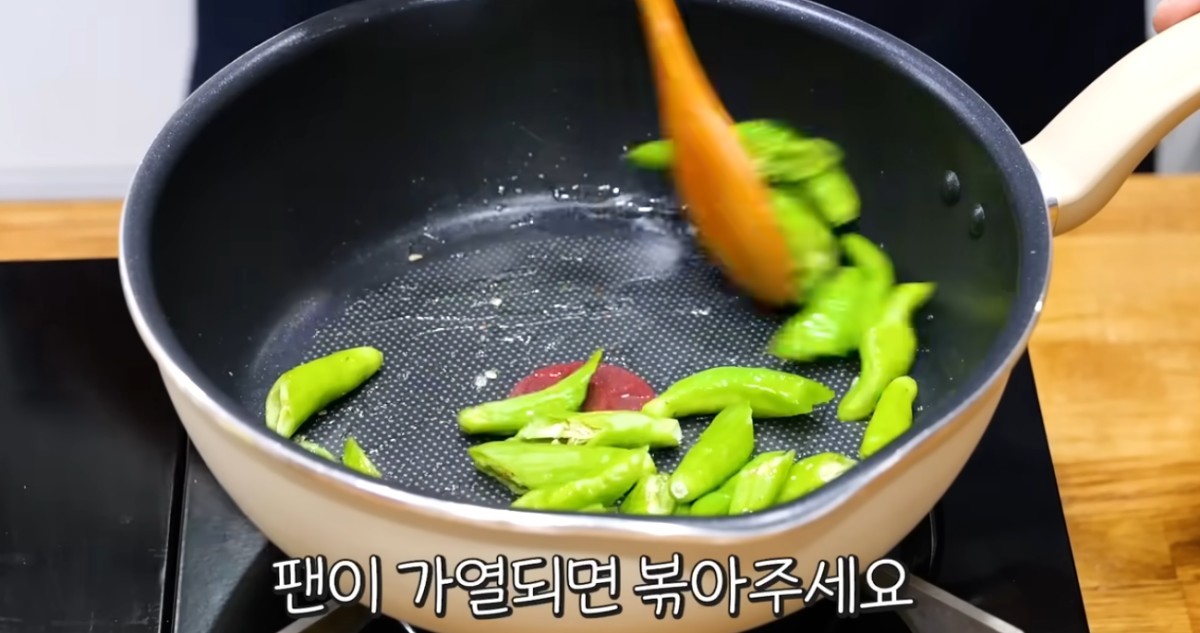
When the peppers are lightly cooked, add the prepared onion and garlic and continue stir-frying over medium heat.
After about a minute, add the sliced fish cakes. Pour in two tablespoons of mirin, one tablespoon of dark soy sauce, and two tablespoons of water to prevent sticking. Add two tablespoons of chili oil and one tablespoon of oyster sauce to deepen the flavor.
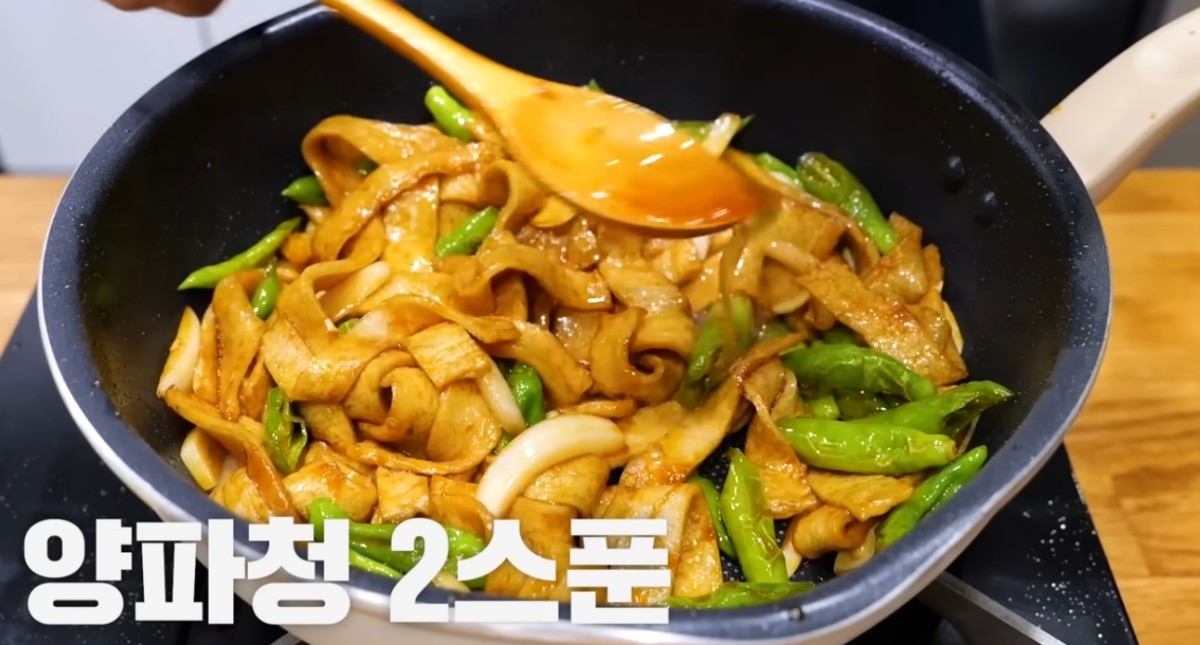
Lower the heat to medium-low after adding the syrup. When the dish is almost done, toss in a tablespoon of toasted sesame seeds if you like, turn off the heat, and mix everything together. You’ll end up with a delicious shishito-and-fish-cake stir-fry that’s widely appealing.
The key ingredient, onion syrup, is made by marinating equal parts onion and sugar and letting it mature. It tenderizes meat, removes fishy odors from seafood, and adds a glossy finish to braised dishes when used instead of corn syrup. Onion syrup may also introduce beneficial microbes that aid digestion. If you don’t have it on hand, mix a small amount of minced onion juice into oligosaccharide syrup for a similar effect.
The recipe’s star vegetable, shishito peppers, is rich in vitamin C, which helps the body absorb the protein in fish cakes. Their capsaicin can also boost metabolism. When fried in oil, the peppers’ beta-carotene—an oil-soluble nutrient—becomes easier to absorb. Slowly stir-frying these vegetables over medium heat releases fragrant flavored oil and maximizes the fish cakes’ savory profile.
![[Cartoon] Single-panel comic based on the article / Wikitree](https://contents-cdn.viewus.co.kr/image/2026/04/CP-2022-0028/image-f65fbadd-075f-4f74-bd49-4ad59e5bc1ea.jpeg)
Many fish cakes are fried during production, so they can retain oxidized oils or additives on the surface. For a cleaner taste, briefly rinse the fish cakes with hot water in a sieve before cooking.
![[Cartoon] Single-panel comic based on the article / Wikitree](https://contents-cdn.viewus.co.kr/image/2026/04/CP-2022-0028/image-10fe2a92-5fe7-46d5-8eca-5ee82a1d4bc1.jpeg)
◆ How to use leftover fish cake
To store partially used fish cakes, lightly brush the surface with cooking oil and place them in an airtight container to prevent moisture loss and hardening. If frozen fish cake has dried out, soak it for about 10 minutes in lukewarm water with one tablespoon of sugar; osmotic absorption will help rehydrate them and restore a bouncy texture.
![[Cartoon] Single-panel comic based on the article / Wikitree](https://contents-cdn.viewus.co.kr/image/2026/04/CP-2022-0028/image-f57bf1cc-69e1-4141-9166-75db0b7b6585.jpeg)
You can also reinvent leftovers into new dishes. Slice remaining fish cake into thin strips about 0.3 cm (about 0.12 in) wide and blanch briefly in boiling water to make excellent fish-cake “noodles.” Use them in place of somyeon (thin wheat noodles) in cold noodle bowls, or toss them in a spicy bibim sauce for a fun twist. Replacing rice cakes with fish-cake noodles in tteokbokki creates a chewier, more textural experience.
“Fish cake japchae,” which swaps glass noodles for fish cake, cooks quickly and offers a unique chew. Julienne fish cake, onion, carrot, and bell pepper to similar thicknesses, then quickly stir-fry them in a soy-based sauce. Because you don’t need to soak anything, fish-cake japchae is great for lunchboxes. You can also use blanched whole fish cake as a wrap instead of seaweed or lettuce—fill it with vegetables and meat for a flavorful bite without extra seasoning. Wrapping marinated thinly sliced pork belly in thin square fish cake, rolling it, and grilling it makes a tasty “fish cake roll grill.”
Your daily personal horoscope report! How will your day go?