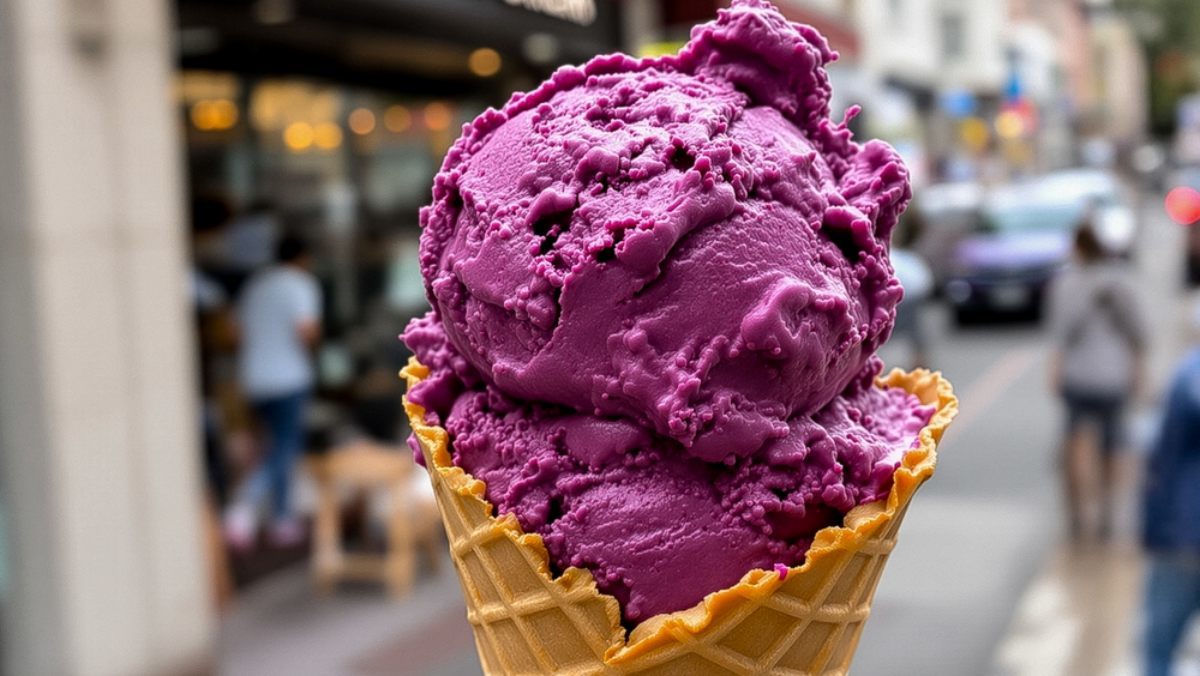
Purple is suddenly everywhere on cafe menus — in lattes, cakes, donuts and shakes. That striking hue comes from ube. This vibrant violet root, a Filipino staple, rode social media from the U.S. and Europe and has now made a splash on South Korea’s café scene.
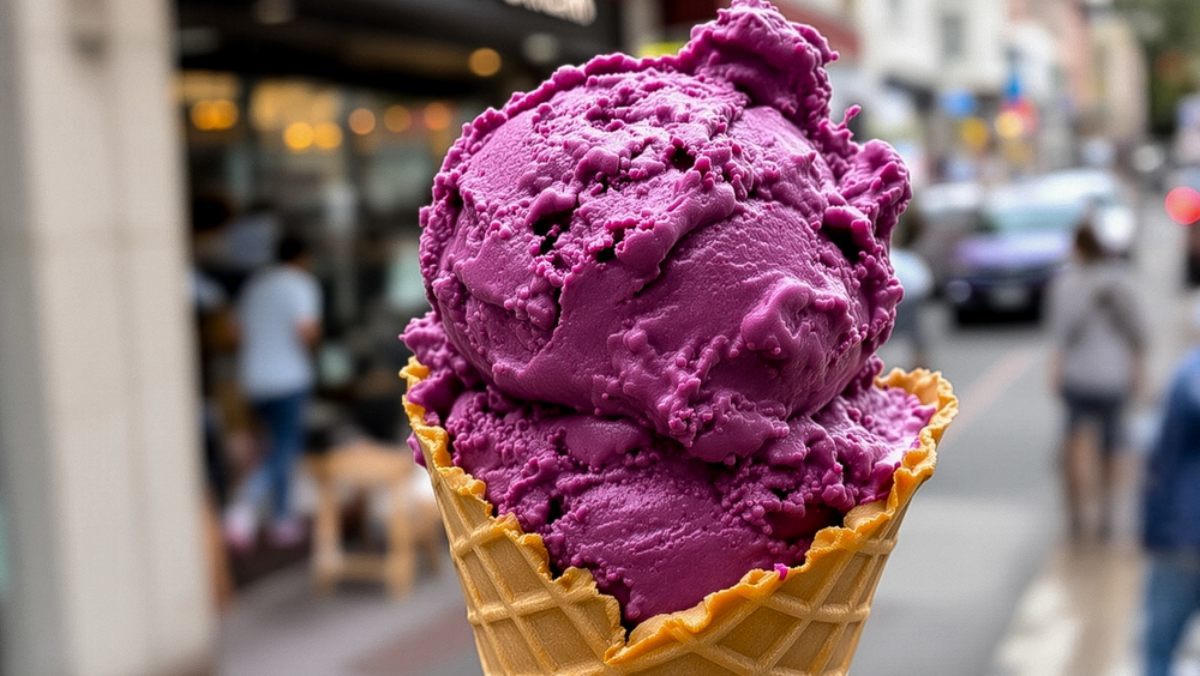
After Dubai’s chewy cookies and the butter tteok craze, the industry is watching ube as the next major dessert trend.
What is ube?
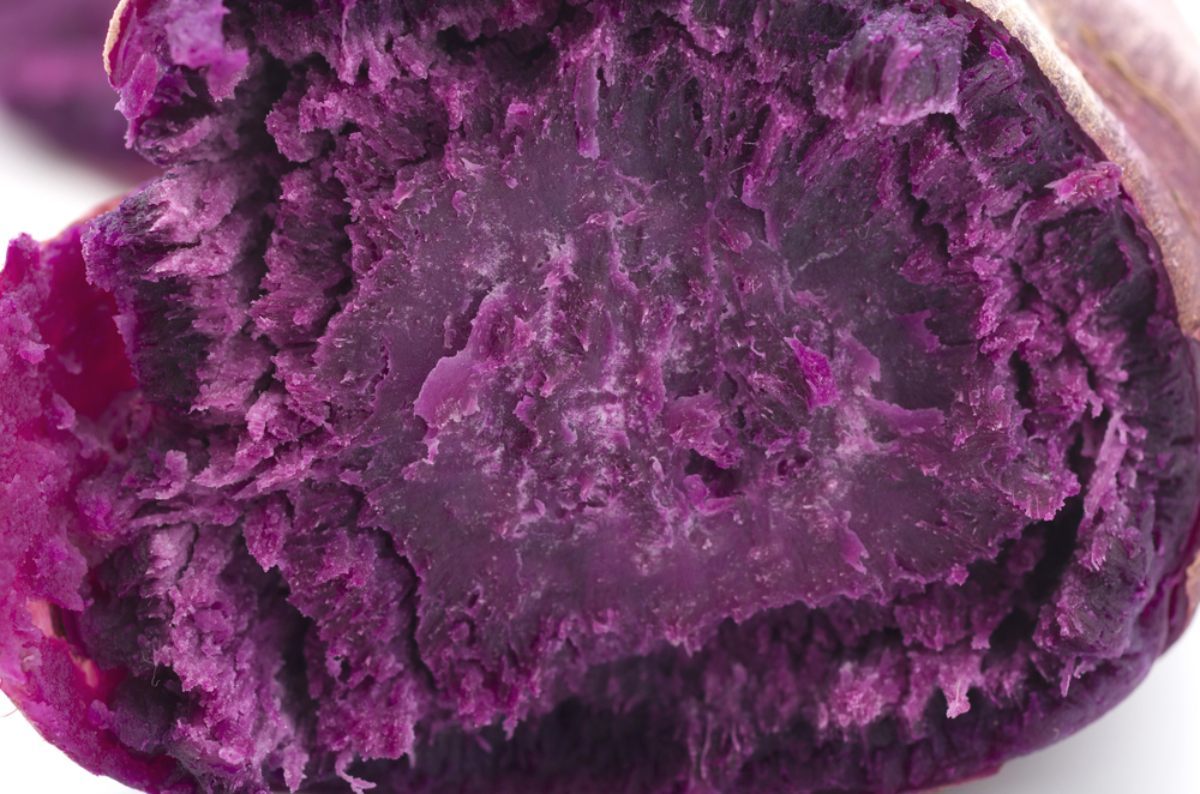
Ube is a purple yam grown across the Philippines, Southeast Asia and Pacific islands. It looks similar to the purple sweet potato familiar in Korea, but it’s a different species. When sliced open, its flesh shows a deeper, more vivid purple than the typical purple sweet potato, and its flavor is distinct.
Its taste is sweet and nutty, often described as a blend of vanilla and toasted nuts. Unlike purple sweet potato or taro, ube lacks earthly or bitter notes, and it isn’t as astringent as matcha. Its creamy, smooth sweetness pairs effortlessly with milk, cream and coffee, which makes it an ideal base for lattes, ice cream and cakes.
Ube also scores points for nutrition. It’s rich in anthocyanins, antioxidants found in blueberries and red wine that may help reduce inflammation and support blood pressure. It also contains potassium, vitamin C and dietary fiber, and at one point was even labeled a superfood. That makes ube a natural fit for today’s “healthy pleasure” trend among wellness-minded consumers.
Ube in the Philippines
In the Philippines, ube has long been an everyday ingredient, used from street stalls to upscale restaurants and even as souvenir treats. The most iconic preparation is ube halaya: steamed and mashed ube simmered with butter and condensed milk until it becomes a jam-like spread that people enjoy on bread or use in other desserts.
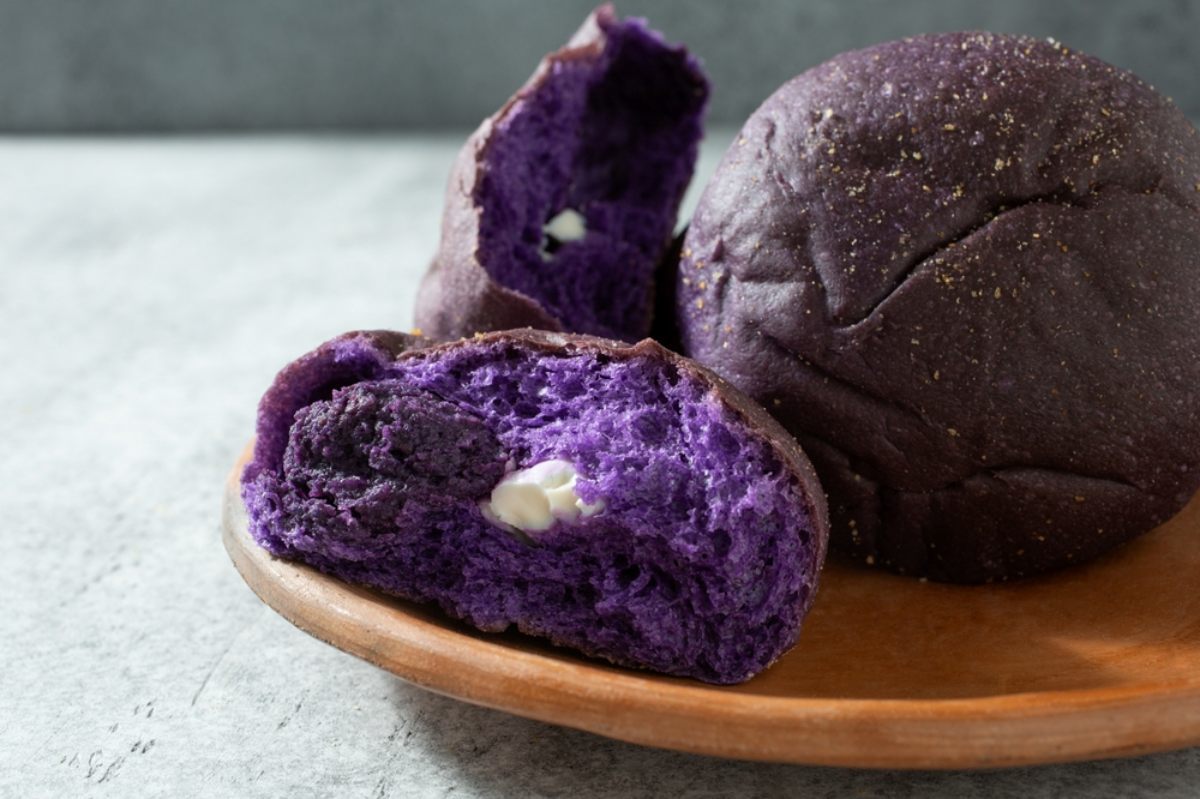
Another classic is halo-halo, a Filipino shaved-ice dessert topped with sweet beans, jellies and fruit, crowned with a scoop of ube ice cream — a nationwide favorite in the country’s intense heat. Ube is also blended into puto (a Filipino rice cake), producing purple rice cakes, and it’s long been used in bubble tea ingredients.
Ube first started turning heads globally in U.S. cities with large Filipino communities, like Los Angeles and New York. Local Filipino restaurants and bakeries there popularized ube ice cream, cakes and lattes before the flavor spread more widely.
Instagram and TikTok played a huge role in bringing ube to mainstream American attention. Because ube delivers a naturally vivid purple without artificial dyes, it pops on social feeds. Hashtags like “ube latte” and “ube ice cream” helped introduce the flavor to younger Americans who weren’t familiar with Filipino cuisine. The trend even spawned the term “Ubecore,” describing how ube’s purple aesthetic became its own visual concept.
Market research firm DataSential reported that ube mentions on U.S. restaurant menus roughly tripled by 2025 compared with 2021. Retailers such as Costco, Trader Joe’s and Walmart followed with ube ice cream, cheesecakes and spreads. Starbucks in the U.S. helped normalize the flavor by offering an “Iced Ube Coconut Macchiato.”
Japanese flavor company T. Hasegawa named ube its “Flavor of the Year” for 2024, citing growing social media interest in natural food colors and predicting that ube’s vivid purple and mellow taste would appeal widely. Korea’s aT (Korea Agro-Fisheries & Food Trade Corporation) referenced that report and flagged ube as a trend to watch.
Why it’s being billed as the next matcha
Ube is getting attention because it could fill the space matcha left behind. Matcha dominated cafés and desserts for years, moving from lattes into ice cream, cakes, makgeolli and even cocktails, creating a “green dessert” era.
Matcha, however, has a clear love-it-or-hate-it profile: its bitter, grassy notes can be off-putting to newcomers. Ube, by contrast, is sweet, smooth and broadly appealing, so it’s easier for mainstream consumers to embrace. Industry insiders say ube’s flavor has low entry barriers, and its bold color makes it perfect for social-media-friendly menu items.
Visually, ube is an advantage: it yields a deep, vivid purple without artificial coloring. With growing consumer resistance to synthetic dyes, brands value ingredients that deliver natural, eye-catching hues. Young customers who prioritize visuals for social sharing also tend to favor brightly colored dishes — another reason ube is catching on fast.
Moves in the Korean cafe market
Once major franchises joined in, awareness surged. Twosome Place launched three seasonal ube drinks in April 2026 — Ube Latte, Ube Cafe Latte and Ube Shake — plus a spoonable ube dessert. Twosome Place said the Ube Latte ranked No. 1 in the non-coffee drinks category and No. 4 among all drinks during its first three days (April 6–8). For a market usually dominated by coffee, a non-coffee beverage hitting fourth place overall is a remarkable feat.
Starbucks Korea added fuel to the trend by offering a limited “Ube Basque Cheesecake” at 100 stores nationwide from April 14. A Starbucks Korea representative said they tested the product in select stores first to gauge customer response before deciding on wider distribution.
Dessert brand Noted expanded its lineup with six new ube items — Ube Milky Cream Donut, Ube Dubai Purple Donut, Ube Latte, Ube Cafe Latte, Cream Ube Latte and Cream Ube Matcha Latte — signaling a strategy to use powdered ube across both drinks and baked goods.
Keyword-analysis platform BlackKiwi reported roughly 34,000 searches for “ube” on Korean portals between late February and March 2026, and estimated about 48,000 searches for April. Younger consumers from the MZ and Alpha generations have been posting ube drink and dessert photos on social media and sharing “I bought this” posts after ordering ube powder online.
A Twosome Place spokesperson said they timed the domestic launch after analyzing global social-media reactions, search trends and market movements in places like the U.S., and factoring in local consumer response. “Once a trend forms, how quickly you turn it into products becomes a key competitive factor,” the spokesperson said.
Proven abroad, quickly adopted at home
Ube’s spread in Korea reflects a familiar pattern for recent dessert trends. Dubai’s chewy cookies started in the Middle East, blew up on TikTok, and then arrived in Korea. Butter tteok gained traction after a Shanghai bakery menu circulated on Korean social media and spread from Seongsu and Hongdae nationwide. The pattern is clear: social media validates a trend overseas, trend-setting neighborhoods adopt it, and franchises scale it across the country.
Industry watchers expect ube to follow the same path. But some raise quality concerns. As interest in this novel ingredient grows, some cafés focus only on achieving a purple hue without preserving ube’s unique flavor; others sell purple sweet potato products labeled as “ube.” Consumers who’ve tasted authentic ube abroad have publicly criticized these practices.
Professor Lee Eun-hee of Inha University’s Consumer Studies department said, “With purple ube filling the space matcha left, interest will grow because ube offers appealing flavor, color and potential health benefits. Still, we need to see whether it evolves from a short-lived fad into a lasting category.”
Enjoy it at home
Ube grows in hot, humid subtropical climates, so it’s difficult to cultivate in Korea. On the domestic market, it’s usually sold as frozen paste or powder. You can easily find ube powder on online marketplaces. Dissolve about two scoops of ube powder in warm milk for a simple at-home ube latte, and customize it with milk foam or an espresso shot if you like.
Ube powder also works well in pancake batter, cookies and cakes to create purple baked treats. Social media is full of home-made ube latte and ube pancake recipes shared by buyers who tried powdered ube themselves.
If matcha led the green-dessert era, purple might be next. This long-standing Filipino ingredient has traveled via social media and the global food market to earn a spot on Korea’s café menus.