Keeps that just-cooked flavor even when refrigerated with anti-staling technology
Partnered with Lotte to form 'Team MD'—a year of research that greatly improved moisture and texture
Ten All-New Triangle Gimbap items launch April 7; new signature mayonnaise developed
Uses Samgwang rice milled within three days; technology to expand to kimbap and sushi
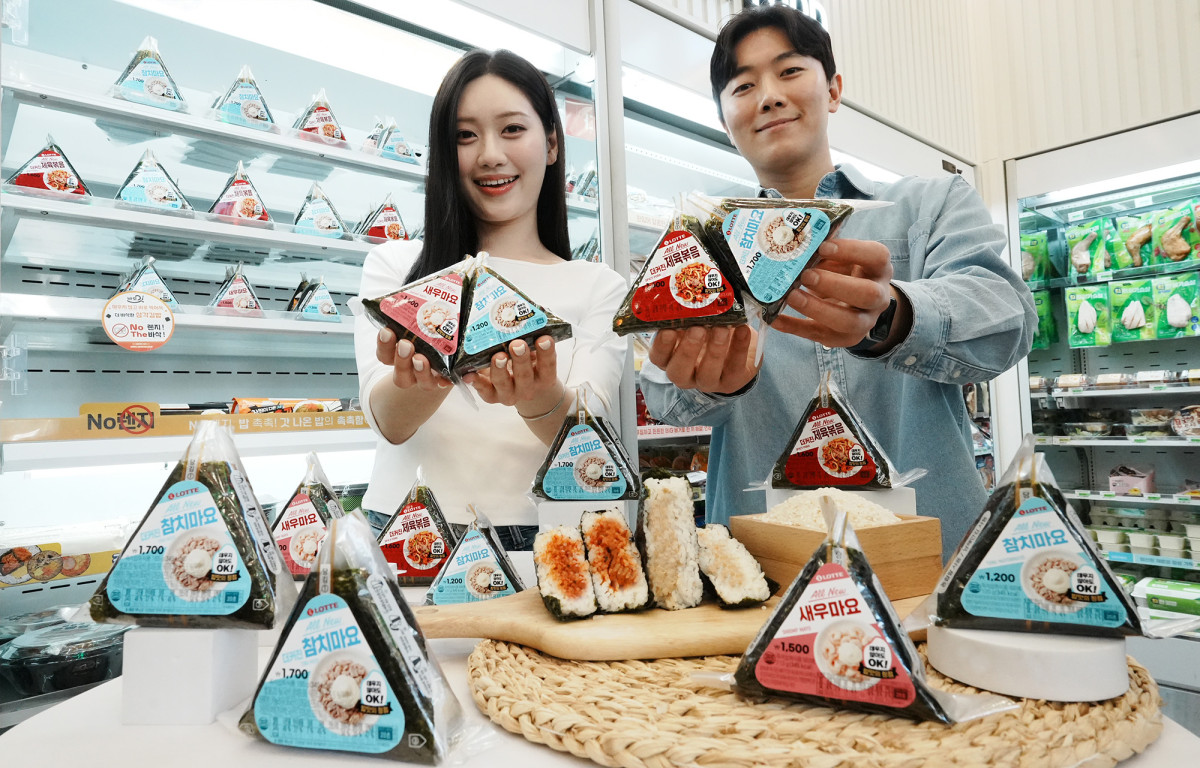
7-Eleven—the chain that helped make triangle gimbap a staple in Korea—has announced another bold innovation.
On March 24, 7-Eleven unveiled a new technology that preserves the taste and texture of freshly cooked rice even when the product remains refrigerated and isn’t microwaved. As part of its Rice Project, the company says it has fundamentally upgraded rice quality in ready-to-eat convenience meals and will introduce 10 All‑New Triangle Gimbap items starting April 7.
7-Eleven first popularized Korean-style triangle gimbap when it launched the product in 1999. About 25 years later, the company launched an extensive research initiative aimed at rethinking the product’s core appeal.
To do that, 7-Eleven International teamed up with domestic partners Lotte Wellfood and the Lotte Central Research Institute to form Team MD. Experts across product planning, research, and production spent more than a year developing anti-staling and moisture-retention techniques for refrigerated rice, leading to this new breakthrough.
The Rice Project focuses on the single most important element of convenience-store meals: the rice. 7-Eleven commissioned a professional research firm to survey customers and found that 32.8% of people heat their purchases in a microwave, 24.2% eat them as-is, and 43.0% said it depends on the product.
Convenience foods today move through a refrigerated distribution system from production to sale. Eating them straight from the fridge kept the seaweed crisp but left the rice hard; heating made the rice tender but often made the seaweed soggy.
7-Eleven addressed all of those issues. By strengthening internal protein bonds, the company reduced rice hardening over time. Lab tests show that even after 48 hours in refrigeration, rice kept about 5% more moisture and showed roughly a 10% improvement in texture compared with existing products. That means customers can enjoy both crispy seaweed and moist rice straight from the fridge—no reheating needed.
7-Eleven also dialed in the overall flavor profile. The company optimized ingredient mixes, sauce levels, and cooking water for each product, and developed a new mayonnaise tailored for triangle gimbap to boost nuttiness and umami.
The All‑New Triangle Gimbap line launching April 7 includes 10 items: seven refreshed best-sellers and three new varieties. To celebrate, 7-Eleven will run a half-price trial event on the 7-Eleven app from April 8 to April 28.
The company has maintained strict standards for rice quality. Since 2016, 7-Eleven has used only Samgwang rice, which the Rural Development Administration named top quality. The company also requires rice to be milled within three days of cooking—a rule applied to the All‑New Triangle Gimbap. Combining this high-quality rice with new technology could help boost domestic rice consumption.
7-Eleven’s boxed meal sales have posted double-digit growth—40% in 2023, 20% in 2024, and 20% in 2025—driven in part by higher-quality rice options for single-person households. Building on this triangle gimbap innovation, 7-Eleven plans to expand the technology to other rice-based convenience foods like kimbap and sushi.